 Seba.Health
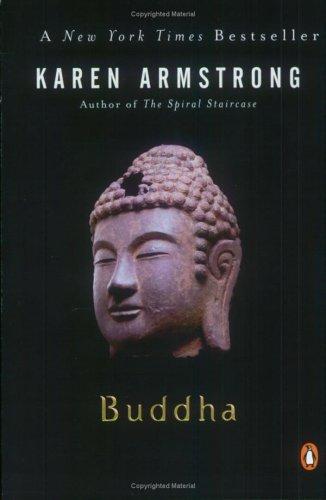
Key Takeaways
- Armstrong's Buddha is not a biography of a man but an anatomy of how an autobiographical philosophy — one inseparable from the life that produced it — became an archetype that dissolved the very category of personality it appeared to depend upon.
- The book's most radical interpretive move is positioning anatta (no-self) not as metaphysical speculation but as a phenomenological discovery made through the practice of mindfulness, thereby locating the Buddha's revolution in attention rather than doctrine.
- By framing the Buddha alongside the cakkavatti (world-conquering monarch) throughout, Armstrong constructs a sustained political theology: the Sangha is presented as an alternative civilization whose power derives precisely from the renunciation of ego that worldly kingdoms cannot survive.
The Buddha’s “Autobiography” Inverts the Western Premise That Selfhood Is the Ground of Meaning
Armstrong opens with a paradox that never fully resolves: writing a biography of someone who spent forty-five years systematically dismantling the concept of a continuous self is, in some deep sense, a category error — and she knows it. She uses this tension as an engine. The Pali Canon presents Gotama not as a “fully-rounded personality” but as “a type rather than an individual,” someone whose enlightenment extinguished the very idiosyncrasies that Western biography feeds on. Where the Gospels preserve Jesus’s “sudden quips, thrusts and witticisms,” the Buddhist scriptures offer “an impression of a transhuman serenity” with “no sense of his likes and dislikes, his hopes and fears.” Armstrong does not treat this absence as a deficiency in the sources. She treats it as the point. The Buddha’s anatta doctrine — his insistence that the personality is merely “a succession of temporary, mutable states of existence” with “no fixed or changeless core” — renders conventional biography not merely inadequate but spiritually misleading. This is a direct challenge to the depth-psychological tradition from Jung onward, which locates the telos of individuation in an integrated Self. Where Jung’s model presupposes a stable psychic center that ego-consciousness approaches asymptotically (what Edinger in Ego and Archetype calls the ego-Self axis), the Buddha declared flatly that “the terms ‘self’ and ‘myself’ were simply conventions.” Armstrong does not adjudicate this dispute, but she stages it with precision, and any reader moving between Buddhist and Jungian frameworks must reckon with the gulf she exposes.
Mindfulness Is Not Contemplation but a Technology for Dissolving the Illusion of Continuity
Armstrong’s treatment of sati (mindfulness) is the analytical spine of the book and its most consequential contribution. She shows that the Buddha’s “constant self-appraisal and attention to the fluctuations of everyday life” was not passive observation but an active instrument of deconstruction. Through mindfulness, “the bhikkhu acquired a ‘direct knowledge’ of the Truth that nothing could be relied upon, that everything was impermanent.” This was not philosophical conviction arrived at by argument; it was a somatic, yogic realization — “more deeply rooted and immediate than any that could be produced by rational deduction.” Armstrong is explicit that the Buddha “had no time for the ecstatic trances of the brahmins,” insisting instead on sobriety. Here she draws an implicit but sharp distinction from the ecstatic traditions analyzed by Mircea Eliade in Shamanism, where altered states serve as vehicles for transcendence. The Buddha’s path runs in the opposite direction: it is through the refusal of ecstasy, through the disciplined observation of each sensation as it “rose and fell away,” that liberation occurs. This makes the Buddha’s method structurally closer to what Bessel van der Kolk describes in The Body Keeps the Score — the therapeutic insistence on tracking bodily states in real time — than to any mystical tradition. Armstrong quietly establishes that modern somatic psychology reinvented a wheel the Buddha set rolling in the Deer Park at Isipatana.
The Fire Sermon Reveals That Liberation Requires the Death of Attachment, Not the Refinement of Desire
Armstrong reads the Fire Sermon at Gaya as the Buddha’s most devastating rhetorical act: a complete inversion of Vedic symbolism in which the sacred fire that sustained brahminical civilization becomes the emblem of everything that traps consciousness. “The three fires of greed, hatred and ignorance were an ironic counterpart to the three holy fires of the Vedas.” The brahmins, by tending their ritual flames, were “simply fueling their own egotism.” This is not mere polemics; it is a structural insight about how religious systems can institutionalize the very attachment they claim to cure. Armstrong draws out the political implications by pairing the Buddha’s career against the cakkavatti throughout the narrative. The kings of Kosala and Magadha — drunk with authority, obsessed with greed — both meet violent, degraded deaths, while the Buddha “walked feebly but with great confidence toward the obscure little town where he would attain the parinibbana.” The monarchies “were fueled by selfishness, greed, ambition, envy, hatred and destruction”; the Sangha offered “another way of life that did not have to impose itself so violently.” Gabor Maté’s argument in In the Realm of Hungry Ghosts — that addiction is the normative condition of a culture organized around craving — finds a 2,500-year-old precursor here. The Buddha diagnosed an entire civilization as addicted to upadana (clinging), whose root meaning, Armstrong notes, is “fuel.” The cure was not moderation but extinction.
Compassion Is Not an Addition to Enlightenment but Its Structural Condition
One of Armstrong’s subtlest arguments concerns the relationship between Nibbana and compassion. She resists the common reading that the Buddha first achieved personal liberation and then, as an afterthought, decided to teach. Instead, she shows that compassion was “an essential component of the Buddha’s enlightenment” itself. The legend that Gotama “was born from his mother’s side at the level of her heart” is, she writes, “a parable of the birth of the spiritual human being. Only when we learn to live from the heart and to feel the suffering of others as if it were our own do we become truly human.” The practice of the four “immeasurables” — sending benevolent feelings to the four corners of the earth — was not a supplementary exercise but one of “the chief ways in which he had gained ceto-vimutti, the release of enlightenment.” To remain in private Nibbana would have been “entering a new kind of pleasure-palace,” a repetition of the very enclosure Gotama fled as a young man. Armstrong thus frames the Mahayana-Theravada split not as a doctrinal divergence but as a tension inherent in the original teaching: both the Arahant ideal and the Bodhisattva ideal “had seized upon important virtues; both, perhaps, had also lost something.”
This book matters for depth psychology not because it is a work of depth psychology, but because it forces the question that depth psychology has mostly avoided: whether the Self that Jungian individuation seeks to integrate is itself a form of upadana — spiritual fuel that keeps the fire burning. Armstrong does not answer this. She does something more useful: she presents, with scholarly rigor and narrative clarity, a complete alternative anthropology in which the dissolution of self is not psychic death but the precondition for being fully alive. For anyone navigating between the Western insistence on a centered Self and the Buddhist insistence on its illusory nature, this remains the most lucid map of the territory.
Sources Cited
- Armstrong, K. (2001). Buddha. Penguin Lives. ISBN 978-0-14-303436-5.
- Epstein, M. (1995). Thoughts Without a Thinker: Psychotherapy from a Buddhist Perspective. Basic Books.
- Jung, C. G. (1958). Psychology and Religion: West and East (CW 11). Princeton University Press.