 Seba.Health
Key Takeaways
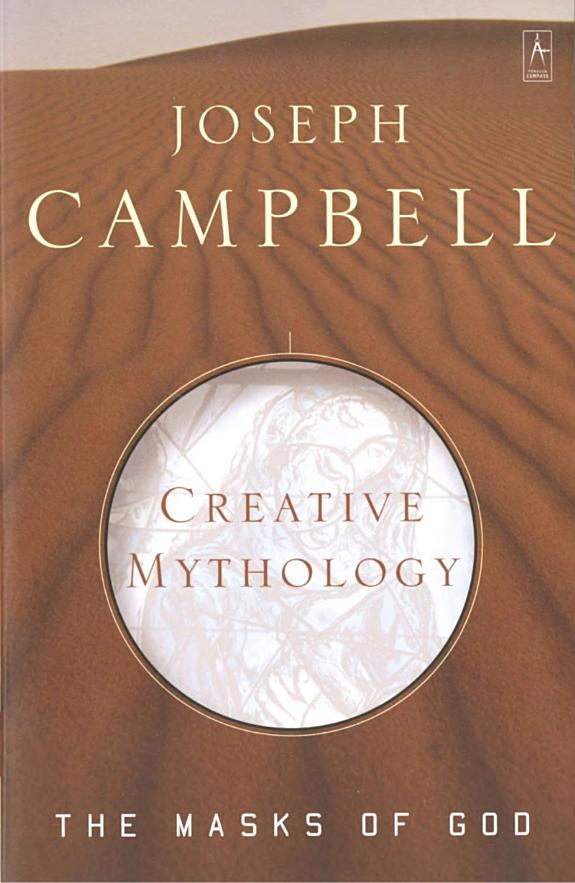
- Campbell's fourth volume overturns the logic of the preceding trilogy by reversing the causal arrow: where Primitive, Oriental, and Occidental Mythology showed collective systems shaping individuals, Creative Mythology argues that in the modern West the individual artist has become the sole legitimate generator of myth.
- Campbell's reading of Wolfram von Eschenbach's Parzival constitutes a covert historicization of Jungian individuation, locating the ego-Self drama not in the clinic but in twelfth-century romance, seven centuries before analytical psychology named the dynamic.
- By positioning Joyce and Mann as functional successors to the shaman — distinguished from their archaic counterpart only by their loss of collective ritual protection — Campbell redefines literary modernism as a genuine mythogenetic practice rather than an aesthetic movement.
The Fourth Volume Is Not a Supplement but the Thesis to Which the Entire Tetralogy Was Prologue
Campbell’s foreword to the completed Masks of God describes a “single symphony” of spiritual history, with its themes “announced, developed, amplified and turned about, distorted, reasserted, and, in a grand fortissimo of all sections sounding together, irresistibly advancing to some kind of mighty climax.” The first three volumes — Primitive, Oriental, and Occidental — lay out the inherited mythological orders: the biologically grounded rituals of primal societies, the inward-turning cosmologies of Asia, and the historically charged salvation dramas of the West. Creative Mythology does not simply add a modern chapter; it overturns the logic of all three. Where the prior volumes traced how collective mythological systems shaped individuals, this volume argues that in the modern West the direction has reversed. The individual — specifically the artist — now generates mythology from direct experience, without the sanction of priest, scripture, or tribal consensus. Campbell had announced this category as early as Primitive Mythology, where he named “creative mythology” as the tradition “which can be said to have had its origin with the Greeks, to have come of age in the Renaissance, and to be flourishing today in continuous, healthy growth, in the works of those artists, poets, and philosophers of the West for whom the wonder of the world itself — as it is now being analyzed by science — is the ultimate revelation.” The fourth volume is where that promissory note is finally cashed. What had seemed a classificatory convenience turns out to be Campbell’s ultimate claim: that the mythological future belongs not to collective doctrines but to individual vision.
The Grail Legend Functions as a Depth-Psychological Diagnosis of Western Individuation
Campbell’s most original contribution in Creative Mythology is his reading of the medieval Grail romances — particularly Wolfram von Eschenbach’s Parzival — as the first full articulation of what Jung would later call individuation. The Grail knight does not follow a path laid down by ecclesiastical authority; he enters the forest “where it is darkest and there is no path.” This is not metaphor in a decorative sense. Campbell treats it as a historical watershed: the moment Western consciousness formally broke from the Oriental and Occidental mythological modes, both of which subordinated individual experience to transpersonal or institutional frameworks. The Grail hero’s quest is validated not by dogma but by the authenticity of his own suffering and compassion — Parzival’s failure to ask the healing question at his first visit to the Grail Castle being, in Campbell’s reading, an exact analogue to the psychological failure of the uninitiated ego to confront the wounded Self. This connects directly to Edward Edinger’s formulation of the ego-Self axis in Ego and Archetype: both Campbell and Edinger locate the central drama of psychic life in the individual’s capacity to sustain a conscious relationship with a transpersonal center, but Campbell historicizes this drama, showing that the literary tradition of the Grail anticipated the clinical insights of analytical psychology by seven centuries. James Hillman’s later insistence in Re-Visioning Psychology that the soul’s reality is imaginal rather than literal finds an unexpected precursor here: Campbell’s Grail knights inhabit a world where the literal fact of the quest is always secondary to its imaginal depth, its capacity to “open” rather than “ground” (to use Hillman’s own distinction about the function of myth).
Joyce and Mann Replace the Shaman as the Carriers of Mythological Consciousness
The second half of Creative Mythology is dominated by extended readings of James Joyce and Thomas Mann — not as literary critics typically read them, but as practitioners of a living mythological function. Campbell had already co-authored A Skeleton Key to Finnegans Wake in 1944, and his immersion in Joyce’s architectonics of myth shapes the entire methodological stance of the volume. For Campbell, Joyce’s technique of layering Homeric, Christian, and Hindu motifs into the texture of ordinary Dublin life is not allusion but genuine mythogenesis: the creation of a new sacred narrative adequate to the conditions of modern secular consciousness. Mann’s use of the Joseph story serves the same function — myth reanimated not through institutional repetition but through individual artistic conscience. This parallels Campbell’s earlier observation in Primitive Mythology that “mythology — and therefore civilization — is a poetic, supernormal image, conceived, like all poetry, in depth, but susceptible of interpretation on various levels.” The shaman, whom Campbell had identified in the first volume as the earliest human being to devote a lifetime to the “serious use of myth hermetically, as a way to psychological metamorphosis,” now finds his modern counterpart in the literary artist. The continuity is precise: both the shaman and the Joycean novelist undergo a spiritual death and resurrection through their craft. But the modern artist operates without the protection of collective ritual, which is both the freedom and the existential danger of creative mythology. This is why Campbell insists that creative mythology is not merely personal expression — it must touch what Adolf Bastian called the “elementary ideas” beneath the “ethnic” costumes, or it collapses into mere subjectivity.
Why Creative Mythology Matters: The Only Mythological Mandate That Cannot Be Inherited
What makes this volume irreplaceable within the depth psychology library is its unflinching confrontation with a problem that neither Jung nor Hillman fully resolved: what happens to the mythological function when all inherited mythologies have been relativized by comparative scholarship? Jung’s answer was the individuation process; Hillman’s was the cultivation of an imaginal sensibility. Campbell’s answer is more radical and more demanding: the modern individual must become a mythmaker. Not by inventing fantasies, but by living with such transparency to the archetypal ground that one’s life itself becomes a mythological statement. The Grail knight, the Joycean artist, the Zen practitioner — all converge on this single imperative. Creative Mythology is the only work in Campbell’s corpus that addresses the reader not as a student of myth but as a potential agent of it. For anyone grappling with the collapse of inherited meaning-systems — religious, political, psychological — this volume provides not comfort but a compass: the insistence that the “mythogenetic zone” is, finally, the individual human heart in its dialogue with the world, and that no institution, no tradition, and no therapist can do that work for you.
Sources Cited
- Campbell, J. (1968). *Creative Mythology: The Masks of God, Volume IV*. Viking Press.
- Campbell, J. (1959). *Primitive Mythology: The Masks of God, Volume I*. Viking Press.
- Campbell, J. (1962). *Oriental Mythology: The Masks of God, Volume II*. Viking Press.
- Campbell, J. (1964). *Occidental Mythology: The Masks of God, Volume III*. Viking Press.
- Campbell, J., & Robinson, H. (1944). *A Skeleton Key to Finnegans Wake*. Harcourt, Brace.
- von Eschenbach, W. (c. 1210). *Parzival*. (Medieval romance; no single publisher.)
- Edinger, E. (1972). *Ego and Archetype*. Putnam.
- Hillman, J. (1975). *Re-Visioning Psychology*. Harper & Row.