 Seba.Health
Key Takeaways
- Campbell reads the Occidental mythological tradition not as spiritual progress but as a sustained ontological rupture in which the separation of God from creation disabled myth's core psychological function of linking the unconscious to practical action.
- The Greek mystery tradition — Eleusinian, Dionysian, Orphic — is reframed not as pagan backdrop to Christianity but as a competing initiatory program that preserved symbolic consciousness against the Levantine drive toward historicization and dogma.
- The Celto-Germanic mythologies, including the Grail cycle, constitute the repressed content of Western civilization, surfacing in troubadour poetry, alchemy, Romanticism, and depth psychology as the return of what orthodoxy suppressed.
The West’s Founding Mythological Error Was Not Theological but Ontological
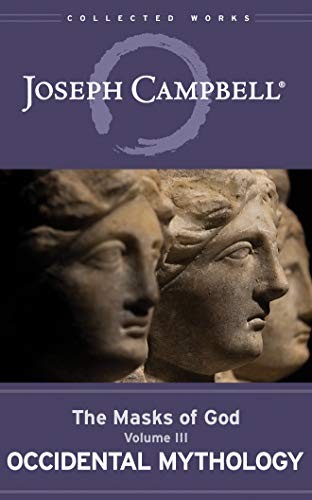
Campbell’s third volume in the Masks of God series accomplishes something that no comparative mythology before it had done with such precision: it traces the Occidental mythological tradition not as a triumphant unfolding of spiritual progress but as a sustained ontological rupture. Where Oriental Mythology explored cultures that maintained the identity of the divine ground with the manifest world — Brahman is Atman, samsara is nirvana — Occidental Mythology maps the consequences of a civilization that declared them separate. The God of Zoroaster, of the Hebrew prophets, of orthodox Christianity and Islam stands outside creation, judges it, and commands it. Campbell does not treat this as a mere doctrinal preference. He treats it as a mutation in mythological consciousness with cascading psychological effects: guilt replaces participation, obedience replaces initiation, and historical time — linear, unrepeatable, aimed at apocalypse — replaces the cyclical cosmological time that governed every prior mythological system. This is the core argument of the volume, and it connects directly to what Campbell established in Primitive Mythology: that myth functions to link “the unconscious to the fields of practical action, not irrationally, in the manner of a neurotic projection, but in such fashion as to permit a mature and sobering, practical comprehension of the fact-world to play back, as a stern control, into the realms of infantile wish and fear.” The Occidental mythologies, by severing symbol from nature and subordinating both to dogma, disabled precisely this function.
The Greek Counter-Tradition Is Not Decoration but the Psyche’s Resistance to Literalism
One of Campbell’s most consequential moves in this volume is his refusal to treat the Greco-Roman mythological inheritance as merely the pagan backdrop to Christianity. He reads the Greek tradition — from the Homeric epics through the mystery cults of Eleusis and Orphism to the Neoplatonists — as a living counter-mythology that preserved the symbolic, initiatory function of myth against the Levantine drive toward historicization. Where the Hebrew tradition insisted that Moses actually parted the Red Sea, that the covenant was an actual historical event between a real God and a real people, the Greek mythological mind understood — as Campbell phrases it elsewhere — that “the symbols speak for themselves” and that the figures of mythology are “not merely symptoms of the unconscious but also controlled and intended statements of certain spiritual principles.” The Eleusinian mysteries, the Dionysian rites, the Orphic descent: these are not primitive survivals but sophisticated technologies of psychological transformation, closer in function to what Jung described as active imagination than to anything in the Levantine prophetic tradition. Campbell’s argument here resonates powerfully with Erich Neumann’s work in The Origins and History of Consciousness, where the hero’s journey through mythological stages represents the ego’s emergence from the uroboric unconscious. But Campbell adds a historical dimension Neumann lacks: he shows that the West contained two competing mythological programs — one initiatory and symbolic, the other legalistic and literal — and that the triumph of the latter over the former produced the specific spiritual crisis of modernity.
The Celto-Germanic Stream Carries What Orthodoxy Repressed
Campbell devotes sustained attention to the mythologies of the Celtic and Germanic peoples not out of Romantic nostalgia but because he identifies in them a third strand of Occidental mythology that neither the Levantine nor the Greco-Roman traditions fully contain. The Grail legends, the Arthurian cycles, the Norse cosmogony of Yggdrasil and Ragnarök — these preserved a nature-mysticism and an individual quest motif that orthodox Christianity systematically suppressed. The Grail quest in particular becomes, for Campbell, the proto-form of what he will call “creative mythology” in Volume IV: the individual’s direct experience of the transcendent, unauthorized by any priestly institution, validated only by the integrity of the seeker’s own vision. This is the thread that connects Wolfram von Eschenbach to Dante to Joyce. Campbell’s manifesto for the tetralogy, preserved in his Asian Journals, declared that the “moral object of the book is to find for Western Man suggestions for the furtherance of his psychological opus through a transformation of unconscious into conscious symbols.” Occidental Mythology is where that project becomes most urgent, because it is here that the suppression of symbol by dogma is most fully documented. The Celto-Germanic material is not peripheral; it is the repressed content of Western civilization, and like all repressed content, it returns — in the troubadours, in alchemy, in Romanticism, in depth psychology itself.
Why This Volume Remains the Indispensable Middle Term
For anyone working within the depth psychological tradition — whether through Jung, Hillman, or Neumann — Occidental Mythology provides what no purely psychological text can: a historical etiology of the Western psyche’s characteristic disorders. The inflation of ego-consciousness, the tyranny of the superego masked as divine law, the dissociation of nature and spirit, the compulsive literalism that mistakes the menu for the meal — these are not merely clinical observations but the psychological residues of specific mythological choices made across three millennia. Campbell’s insistence, carried through from The Hero with a Thousand Faces, that “mythology is psychology misread as biography, history, and cosmology” finds its most demanding test case here, because the Occidental traditions are precisely the ones that most aggressively resist this reading. They insist on their historicity. They punish symbolic interpretation as heresy. The book’s deepest contribution is to show that this insistence is itself a mythological posture — the most powerful and least self-aware mask of God in the entire tetralogy. No other single volume maps the mythological archaeology of the modern Western unconscious with this scope and this specificity.
Sources Cited
- Campbell, J. (1964). *Occidental Mythology: The Masks of God, Volume III*. Viking Press.
- Campbell, J. (1959). *Primitive Mythology: The Masks of God, Volume I*. Viking Press.
- Campbell, J. (1962). *Oriental Mythology: The Masks of God, Volume II*. Viking Press.
- Campbell, J. (1968). *Creative Mythology: The Masks of God, Volume IV*. Viking Press.
- Campbell, J. (1949). *The Hero with a Thousand Faces*. Pantheon Books.
- Neumann, E. (1954). *The Origins and History of Consciousness*. Pantheon Books.