 Seba.Health
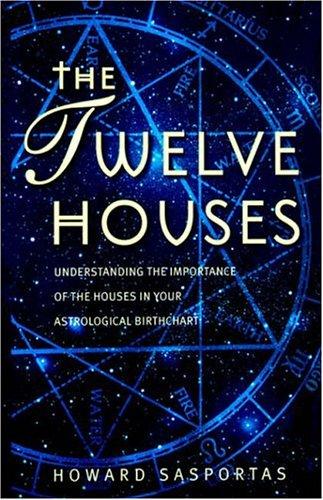
Key Takeaways
- Sasportas rejects the event-oriented filing-cabinet model of the houses and replaces it with a projective architecture in which a planet's placement describes the *a priori* image the psyche carries into that domain rather than the fate that befalls it there, aligning astrological interpretation with Jung's archetypal expectation and with Hillman's insistence in *Re-Visioning Psychology* that image precedes event.
- The book's disciplined hermeneutic recovery of each house's meaty archetypal kernel -- the 11th as the urge to become something greater than we already are, the 12th as the dissolution of boundary between self and totality -- treats traditional catalogues of association as diverse phenotypic expressions of a single archetypal genotype, exactly as a Jungian analyst reads a symptom cluster for its underlying complex.
- The interpretation of the Gauquelin findings -- Mars, Saturn, and Moon clustering in cadent rather than angular houses -- inverts the traditional hierarchy of power by demonstrating that the houses where ego is weakest are the houses where character is forged, translating Jung's individuation logic into astrological structure and pushing Rudhyar's threefold schematism in *The Astrological Houses* into lived psychological territory.
The Houses Are Not Places Where Things Happen to You — They Are the Psyche’s Projective Architecture
Sasportas opens with a philosophical claim that most readers absorb without recognizing its radicalism: “a person’s reality springs outward from his or her inner landscape of thoughts, feelings, expectations and beliefs.” This is not a polite nod to subjectivity. It is a wholesale rejection of the event-oriented astrology that dominated the tradition for centuries, in which houses functioned as filing cabinets for fate — the 7th house contained your marriage, the 10th house contained your career, and the astrologer’s job was inventory. Sasportas replaces this static model with something closer to what James Hillman describes in Re-Visioning Psychology: the image precedes the event. A planet in a house does not predict what will happen in that domain; it describes the a priori image the psyche carries into that domain, the filter through which raw experience is metabolized into personal reality. His example is precise and devastating: a woman with Pluto in the 7th does not merely encounter Plutonian partners — she is predisposed from birth to perceive partnership through Pluto’s lens, and what she expects is what she finds. This is not confirmation bias dressed up in celestial language. It is an astrological articulation of what Jung called the archetypal expectation, the innate image that organizes perception before any content arrives. Liz Greene, writing the book’s preface, identifies this as the decisive contribution: “an individual has certain kinds of experiences in a particular sphere of life because that is how the psyche of the individual perceives, reacts to, and interprets that sphere of life.” The houses, in Sasportas’s hands, become what Edward Edinger’s ego-Self axis is in Ego and Archetype — a structural interface between the infinite and the particular, the point where archetypal energy incarnates in a specific life.
Symptom Clusters Have a Hidden Kernel — And So Do Houses
The book’s most disciplined intellectual move is its insistence on recovering the “meaty, archetypal kernel” beneath each house’s traditional catalogue of associations. Sasportas is openly contemptuous of the cookbook method: “While sometimes quite accurate, this way of interpreting houses is flat, boring and not very helpful.” His alternative is essentially depth-hermeneutic. Take the 11th house, traditionally labeled “Friends, Groups, Hopes and Wishes” — a list that looks arbitrary until Sasportas identifies the generative principle: “the urge to become something greater than we already are.” Friends and groups are vehicles for expanding beyond the isolated self; hopes and wishes are the imaginative faculty required to envision a self not yet realized. Once the kernel is grasped, the surface associations stop looking like an incoherent jumble and start behaving like what they are — the diverse phenotypic expressions of a single archetypal genotype. This is exactly how a Jungian analyst reads a symptom cluster: the presenting complaints (insomnia, rage, compulsive hand-washing) appear unrelated until the underlying complex is identified, at which point they become intelligible as variations on a theme. Greene explicitly praises this method in her preface, noting that Sasportas “provides the essential meaning which underlies all these apparently disparate themes connected with one house.” The 12th house chapter is the supreme demonstration. Institutions, self-sacrifice, the collective unconscious, and the Gauquelin correlation with career success all cohere once Sasportas articulates the 12th house principle: the dissolution of the boundary between self and totality. His image of Heaven and Hell — identical tables, identical extra-long utensils, but in Heaven each person feeds the other — is a parable that rivals anything in Hillman’s mythological arsenal for communicating the telos of a psychological structure.
The Cadent Houses Reverse the Hierarchy of Power — And Confirm Individuation’s Paradox
Sasportas devotes unusual attention to the Gauquelin findings, and his interpretation of them is more theoretically daring than it first appears. Traditional astrology placed angular houses (1st, 4th, 7th, 10th) at the top of the power hierarchy — these are the houses of action, initiation, visible impact. The Gauquelins found the opposite: Mars for athletes, Saturn for scientists, and Moon for writers clustered in cadent houses (12th, 9th, 6th, 3rd). Sasportas does not merely report this anomaly; he explains it through the logic of his own system. The cadent houses are where we distribute, readjust, and reorient energy. The 12th house compels us to surrender the separate self to something larger; the 9th drives us toward truth and guiding principles; the 6th and 3rd force us to define ourselves against others. These are precisely the operations Jung identified as the engines of individuation: confronting the inferior function, submitting ego to Self, differentiating personal identity from collective expectation. The implication is subversive: the houses where ego is weakest are the houses where character is forged. This resonates with Dane Rudhyar’s contention in The Astrological Houses that each quadrant follows a threefold logic of action, reaction, and result — but Sasportas pushes Rudhyar’s schematism into lived psychological territory by demonstrating that the “result” phase (the cadent house) is not a diminishment but a transformation.
Why This Book Remains Irreplaceable for Depth-Psychological Practice
For anyone working at the intersection of astrology and depth psychology — the territory co-created by Greene, Sasportas, and the Centre for Psychological Astrology they founded together — this book solves a problem no other text addresses with comparable rigor: it provides the missing grammar. Planets are the vocabulary, signs the syntax, but houses are the contexts of meaning without which interpretation remains abstract. Sasportas’s insistence that houses are interior as much as exterior — that Pluto in the 4th means not “your home will be dangerous” but “you carry an image of home as dangerous” — translates directly into clinical utility. It gives the practitioner a precise instrument for identifying where a client’s unconscious projective field is most active, and therefore where consciousness can most productively intervene. No other book on the houses operates at this level of psychological sophistication while remaining structurally disciplined enough to serve as a teaching text. It is the bridge between Rudhyar’s philosophical architectonics and Greene’s clinical depth, and it earns its place as the foundational grammar of psychological astrology.
Sources Cited
- Sasportas, Howard (1985). The Twelve Houses: An Introduction to the Houses in Astrological Interpretation.