 Seba.Health

Key Takeaways
- James did not defend religion against science; he weaponized empiricism against its own reductionist tendencies, demonstrating that the *effects* of religious experience are measurable even when their causes are not, thereby creating the epistemological space in which all depth psychology would subsequently operate.
- The four marks of mystical experience James identified—ineffability, noetic quality, transiency, and passivity—function not as a taxonomy of the sacred but as a diagnostic protocol for distinguishing genuine psychic transformation from its imitations, a protocol that Jung, Otto, and the entire transpersonal tradition inherited without always acknowledging.
- James's radical empiricism is the philosophical precondition for Alcoholics Anonymous: Bill Wilson's "white light experience" could be taken seriously as psychologically transformative precisely because James had already established that subjective experience carries its own evidential weight independent of theological or neurological explanation.
James Turned the Scientific Gaze Inward Not to Explain Religion Away but to Grant Subjective Experience Ontological Standing
William James delivered the Gifford Lectures in 1901–02 at the precise historical moment when Freud’s psychoanalytic project was hardening into a reductionist program that would treat religion as “just an illusion.” James moved in the opposite direction—not toward credulity but toward a more demanding empiricism. His central methodological innovation was to distinguish sharply between the origins of religious experience and its fruits. Whether a conversion arises from epilepsy, emotional crisis, or nitrous oxide is, for James, irrelevant to the question of its truth. What matters is whether the experience produces lasting transformation in the life of the person who undergoes it. This is not relativism; it is pragmatism raised to metaphysical seriousness. By insisting that “the truth of any experience in life is solely dependent upon the meaning and value that one ascribes to it,” James constructed what he called radical empiricism—the framework that allowed psychological investigation to honor the numinous without surrendering to dogma. Richard Tarnas recognizes this as James’s paradigmatic contribution: the insistence on “an open universe, inner and outer, and an intellectual and spiritual posture of radical openness to its mystery.” Without this epistemological ground-clearing, Jung’s concept of the numinous, Rudolf Otto’s mysterium tremendum, and the entire project of transpersonal psychology would have had no legitimate intellectual home within the modern world.
The Varieties Established That Mystical States Are Not Pathology but a Distinct Mode of Cognition
James’s taxonomy of mystical experience—ineffability, noetic quality, transiency, passivity—is deceptively simple. Its force lies in the second criterion: noetic quality. James insisted that mystical states are not mere feelings but states of knowledge, carrying “a curious sense of authority for aftertime.” This is a radical claim within a scientific culture that equated knowledge exclusively with propositional, reproducible data. James’s own experiment with nitrous oxide crystallized his conviction: “Our normal waking consciousness, rational consciousness as we call it, is but one special type of consciousness, whilst all about it, parted from it by the filmiest of screens, there lie potential forms of consciousness entirely different.” This passage became canonical not because it is poetic but because it is empirically grounded in James’s own phenomenological observation. It forbids, as he put it, “a premature closing of our accounts with reality.” Hillman would later push this further, arguing that psychology itself is “a variety of religious experience” and that the Gods are “the archetypal premises within all experiences.” But Hillman’s move—reversing James by examining “psychological observations through religious positions”—is possible only because James had already demonstrated that religious experience yields genuine psychological data. The Varieties is the hinge on which that reversal turns.
James’s Account of Conversion Provided the Theoretical Architecture for Twelve Step Recovery
The most consequential legacy of the Varieties may be its direct influence on Bill Wilson and the formation of Alcoholics Anonymous. James documented case after case of individuals—not saints or monastics but ordinary people, including a police officer walking home from his shift—who underwent sudden, involuntary psychic transformations that permanently restructured their relationship to themselves and the world. James noticed that these conversions overwhelmingly occurred outside traditional religious channels, suggesting that “something inherent within the human psyche brings them about, quite apart from one’s connection to any particular religious dogma.” This insight became foundational for Wilson, who read the Varieties the day after his own “white light experience” at Towns Hospital in December 1934. As Cody Peterson documents, Wilson used James’s framework alongside Jung’s prescription for “a vital spiritual experience” to construct the Twelve Steps as a program that deliberately bypassed religious convention while preserving the transformative mechanism James had identified. Jung’s famous letter to Wilson in 1961—describing the alcoholic’s craving as “the equivalent, on a low level, of the spiritual thirst of our being for wholeness”—is itself a Jamesian move: it locates the meaning of addiction not in its biochemistry but in its symbolic function. The entire architecture of recovery, from surrender to spiritual awakening, is a practical application of radical empiricism: the truth of the experience is validated by whether the person stops drinking and begins to live differently.
The Reconciliation of Opposites Is James’s Deepest and Most Jungian Insight
The passage most often overlooked in the Varieties is James’s account of his own mystical illumination, where he reports that “the keynote of it is invariably a reconciliation. It is as if the opposites of the world, whose contradictoriness and conflict make all our difficulties and troubles, were melted into unity.” Tarnas identifies this as the mysterium coniunctionis—the union of opposites that Jung would develop into the central goal of individuation. James arrived at this insight experientially rather than theoretically, and he was honest about its resistance to logical articulation: “This is a dark saying, I know, when thus expressed in terms of common logic, but I cannot wholly escape from its authority.” This is not the language of a philosopher hedging; it is the language of a man describing an encounter with something that exceeds his conceptual apparatus. The resonance with Jung’s later work on the coincidence of opposites in alchemical symbolism is unmistakable, and Tarnas is right to connect it to a recurring archetypal pattern. But what James contributes that Jung does not is the phenomenological honesty of the first-person report combined with the methodological rigor of the empiricist. He does not mythologize the experience; he simply refuses to dismiss it.
The Varieties matters today not as a historical curiosity but as an unresolved challenge. Depth psychology after James split into two streams: one (Freud’s) that explained religious experience away, and another (Jung’s, Hillman’s, the transpersonal tradition’s) that took it seriously as psychic reality. James stands before that split, holding both commitments simultaneously—rigorous empirical investigation and genuine openness to the numinous—without allowing either to colonize the other. No subsequent thinker has managed this balance with comparable integrity. For anyone navigating the intersection of psychology, spirituality, and personal transformation, the Varieties remains not a starting point to be surpassed but a standard to be met.
Sources Cited
- James, W. (1902). The Varieties of Religious Experience: A Study in Human Nature. Longmans, Green. ISBN 978-0-14-039034-6.
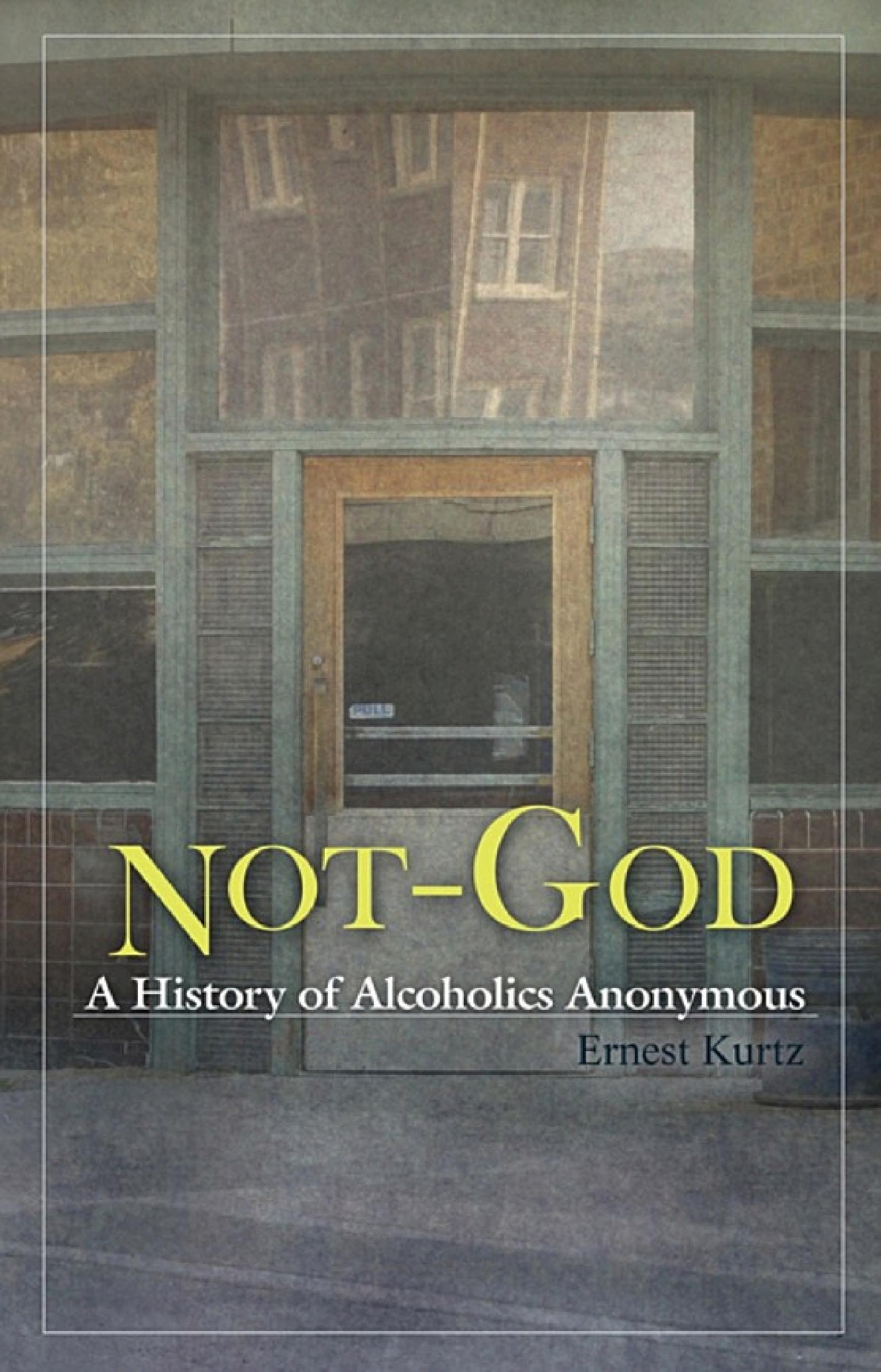
- Kurtz, E. (1979). Not God: A History of Alcoholics Anonymous. Hazelden. ISBN 978-1-56838-078-0.