 Seba.Health
Key Takeaways
- Schaberg's meticulous reconstruction of the Big Book's composition process inadvertently reveals that the text most AA members treat as received scripture was in fact a contested, collectively negotiated document — a finding that reframes the Twelve Steps less as divine dictation and more as what Hillman would call a "healing fiction" whose power lies precisely in its collaborative, mythic construction.
- By documenting Wilson's claim that the Twelve Steps "flowed out" of him without conscious deliberation, Schaberg provides primary-source evidence for what Jungian psychology identifies as the transcendent function at work — the ego stepping aside so that archetypal material can organize itself through a human vessel.
- The book demonstrates that the Big Book's creation was shaped as much by political conflict, financial desperation, and interpersonal suspicion among early members as by spiritual inspiration, establishing that the birth of a transformative myth always carries a shadow — a truth depth psychology insists upon but hagiographic AA history routinely suppresses.
The Big Book Was Not Revealed — It Was Fought Into Existence, and That Changes Everything
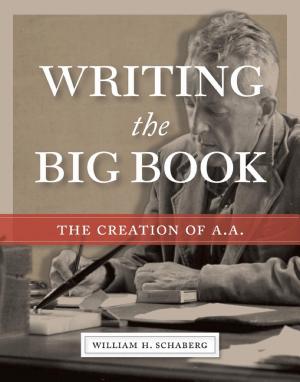
William Schaberg’s Writing the Big Book: The Creation of A.A. (2019) accomplishes something rare in the literature surrounding Alcoholics Anonymous: it treats the foundational text not as sacred writ but as a historical artifact with fingerprints, erasure marks, and battle scars. Through exhaustive archival research — manuscript drafts, multilith copies, correspondence, financial records, and recorded talks — Schaberg reconstructs the contested, politically charged, often acrimonious process by which Bill Wilson and a small circle of early sober alcoholics produced the 1939 text that would become the spiritual foundation for millions. The significance of this undertaking for depth psychology is enormous. As Cody Peterson observes in The Shadow of a Figure of Light, Wilson himself described writing the Twelve Steps in a state of ego-dissolution: “I didn’t seem to be thinking at all as I wrote. The words just flowed out of me.” Schaberg does not dismiss this account, but he surrounds it with the material conditions that made it possible — unemployment, failed hospital schemes, the fracture with the Oxford Group, Frank Amos’s intervention, and the deep skepticism of the Akron members who believed Wilson was “trying to turn a profit on the spiritual principles they were practicing.” The mystical moment, in other words, emerged from a field of friction. This is exactly what Jung’s model of individuation predicts: the transcendent function does not operate in a vacuum but activates precisely when conscious plans collapse and the ego is cornered.
Wilson’s Automatic Writing Is a Case Study in the Transcendent Function
Schaberg’s documentation of Wilson’s compositional process deserves close attention from anyone working with Jung’s concept of the transcendent function. Wilson completed the first draft of the Twelve Steps “in perhaps half an hour,” numbering them afterward and finding — with apparent surprise — that they totaled twelve, which he “connected with the twelve apostles.” He had begun with a rational intention to “broaden and deepen the basic concepts” but reports that conscious deliberation ceased almost immediately. Jung described exactly this phenomenon in his commentary on the secret of the Golden Flower: “The art of letting things happen, action through non-action… became for me the key that opens the door to the way.” Peterson draws the parallel explicitly, noting that Wilson “tapped an unsuspected inner resource” that resembled what Jung called the transcendent function — the psyche’s capacity to synthesize conscious and unconscious contents into a new symbolic product when the ego relinquishes control. What Schaberg adds to this psychological reading is the historical granularity: Wilson was not meditating in serene withdrawal. He was financially desperate, socially marginalized, and writing against the active resistance of many in his own fellowship. The transcendent function, Schaberg’s evidence implies, does not require peace; it requires extremity. This aligns with Hillman’s insistence in Re-Visioning Psychology that pathologizing — the soul’s movement through disintegration — is itself a royal road to soul-making: “Falling apart makes possible a new style of reflection within the psyche.”
The Collective Resistance to the Big Book Mirrors the Archetypal Tension Between Senex and Puer
One of Schaberg’s most psychologically resonant findings is the depth of opposition Wilson faced from the Akron contingent, who were older in sobriety and still embedded in Oxford Group orthodoxy. They regarded Wilson’s book project with suspicion — as an unnecessary, grandiose, and potentially corrupting innovation. This tension maps directly onto what Hillman theorizes in Senex & Puer: the senex consolidates, grounds, and disciplines while the puer flashes with insight and invention. The Akron members embodied senex authority — tradition, wariness of change, loyalty to established forms. Wilson was the puer: restless, visionary, improvising. Schaberg shows that the Big Book emerged not despite this polarity but through it. The Akron members’ reluctant contributions of personal stories for the back of the book, their insistence on moderating Wilson’s theological language, and their political maneuvering around the manuscript all shaped the final text into something neither pole could have produced alone. The coniunctio of senex and puer — what Hillman argues must occur for genuine psychological creativity — is visible in the very structure of Alcoholics Anonymous: Wilson’s didactic chapters followed by the polyphonic multiplicity of personal narratives. Schaberg, without using Jungian vocabulary, has written a case study in archetypal dynamics.
Schaberg Reveals the Big Book as Healing Fiction — Not Lie, but Living Myth
Hillman’s central argument in Healing Fiction — that the fictions generated by the psyche are not lies but the very medium through which soul-making occurs — finds unexpected confirmation in Schaberg’s research. The Big Book is not a medical textbook, not a theological treatise, and not a memoir. It is, as Hillman would say, a “soul story” whose power derives not from empirical accuracy but from its capacity to give readers “a plot to live by.” Schaberg demonstrates that Wilson shaped, revised, and strategically edited the narrative to maximize persuasive and transformative impact — choosing which stories to include, calibrating the theological temperature, negotiating the precise wording of the Steps with input from atheists and believers alike. This is poiesis in the deepest sense: the making of soul through the imagination of words. Peterson recognizes as much when he calls the Twelve Steps “a myth of expanding consciousness which has now spread to every corner of the globe.” What Schaberg uniquely contributes is the archaeology beneath the myth — the drafts, arguments, and compromises that reveal a living document wrestling itself into existence.
For anyone working at the intersection of depth psychology and addiction, Schaberg’s book is indispensable not because it demystifies the Big Book but because it re-mystifies it in the right way. It shows that the text’s authority does not depend on Wilson as a solitary prophet receiving tablets on a mountaintop. It depends on something far more psychologically interesting: a broken man, surrounded by skeptics, financially ruined, channeling archetypal material through a process he could not fully control — and a community that shaped that material, grudgingly, into the most influential recovery document in modern history. No other book provides this level of documentary evidence for how a cultural myth is actually born.
Sources Cited
- Schaberg, W.H. (2019). Writing the Big Book: The Creation of A.A. Central Recovery Press. ISBN 978-1-949481-28-0.