 Seba.Health
Key Takeaways
- Schoen's central innovation is treating addiction not as a failure of will or a neurochemical accident but as a theomachic event—a literal war between archetypal powers within the psyche—thereby relocating the etiology of addiction from the medical model to the problem of evil itself.
- The book demonstrates that Jung's 1961 letter to Bill Wilson is not a peripheral curiosity but the Rosetta Stone for understanding why the Twelve Steps work psychologically: they ritualize the ego's surrender to the Self in a culture that has systematically severed the dark side of the God-image.
- By naming addiction as the site where archetypal evil forces its way into consciousness, Schoen bridges Jung's *Answer to Job* and the pragmatic spirituality of AA, revealing that the alcoholic's "bottom" is structurally identical to Job's confrontation with Yahweh's shadow.
Addiction Is a Theophany of the Dark God, Not a Disease of the Brain
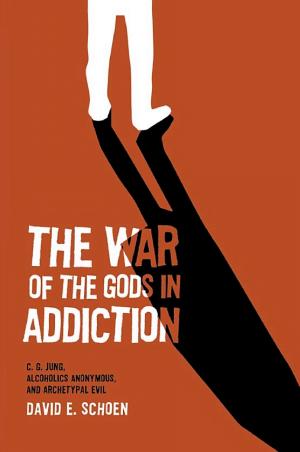
David Schoen’s The War of the Gods in Addiction performs a radical reframing that neither the clinical addiction field nor mainstream Jungian psychology had fully accomplished before its publication. The book’s governing thesis is that addiction constitutes an eruption of archetypal evil into personal life—that the compulsive drinker or drug user is not merely sick but is caught in a cosmogonic battle between opposing divine forces within the psyche. Schoen draws this directly from Jung’s use of “medieval language” in his 1961 letter to Bill Wilson, where Jung wrote that “the evil principle prevailing in this world leads the unrecognized spiritual need into perdition” and named the adversary outright as “the Devil.” Where most commentators treat this letter as a charming footnote to AA’s founding mythology, Schoen treats it as a clinical and theological key. He reads Jung’s insistence on the Devil not as metaphor or rhetorical flourish but as a precise psychological statement: the energy that the Western tradition projects onto Satan is the same autonomous complex that seizes the addict. This places Schoen in direct conversation with Jung’s Answer to Job, where the Devil functions as Yahweh’s shadow—“the only being in the universe to have Yahweh’s ear,” a spoilsport whose function is to force consciousness forward through suffering. The addict, in Schoen’s reading, is Job: crushed by a Self-imposed crisis that the ego did not author and cannot evade.
The Privatio Boni Is the Psychological Root of Addiction’s Cultural Explosion
Schoen’s most structurally ambitious argument connects the Western Church’s theological suppression of evil to the modern epidemic of addiction. He draws on Jung’s critique of the privatio boni—the doctrine that evil is merely the absence of good—to argue that the collective denial of the dark half of the God-image produced a psychic enantiodromia of catastrophic proportions. When the Church fathers insisted on an all-good deity and banished Lucifer to ontological irrelevance, the repressed archetypal energy did not vanish; it went underground into the collective unconscious and erupted as compulsive, self-destructive behavior on a civilizational scale. This is the “war of the gods” of Schoen’s title: not a metaphor for internal conflict but a description of what happens when one archetypal pole is systematically denied. Edward Edinger’s work in Ego and Archetype and The New God-Image provides essential scaffolding here; Edinger argued that consciousness itself is “the original sin” and that the ego’s alienation from the Self produces inflation and subsequent collapse. Schoen extends this by insisting that addiction is the specific pathological form this collapse takes when the culture’s dominant religious symbol has been emptied of its shadow. The alcoholic’s “bottom” is not merely personal catastrophe—it is the individual expression of a collective theological failure. Cody Peterson’s subsequent The Shadow of a Figure of Light builds on exactly this insight, reading Wilson’s Big Book as an unconscious projection of the paradoxical Self that the Church’s fractured God-image could not contain.
The Twelve Steps as Ritual Confrontation with Archetypal Evil
What distinguishes Schoen from purely theoretical Jungian commentators is his insistence that the Twelve Steps are not simply therapeutic techniques but constitute a ritual process for integrating the very archetypal evil that Western religion expelled. Steps Four through Ten—the moral inventory, confession, and amends sequence—function as a structured encounter with the personal shadow, but Schoen argues their deeper efficacy lies in reconnecting the practitioner to the transpersonal dark side of the God-image. This is why, as Jung told Rowland Hazard, neither psychotherapy nor conventional religion could cure him: therapy addresses the personal shadow but rarely touches the archetypal layer, while conventional religion actively reinforces the split. Only an experience of the numinosum—the raw affective power beneath religious symbols—can produce the psychic reorganization that sobriety requires. Schoen demonstrates that Wilson intuited this when he wrote that “a mere code of morals or a better philosophy of life” was insufficient, and when he crafted the deliberately open formulation “God as we understood Him.” Wilson’s genius, in Schoen’s reading, was creating a ritual container elastic enough to hold the paradoxical God-image that orthodox Christianity had shattered. James Hillman’s observation that “the gods have become diseases” resonates powerfully here: if the repressed divine returns as symptom, then addiction is the return of the banished god, and recovery is the act of restoring that god to consciousness.
The Ego as “Suffering Bystander” Redefines Surrender
Schoen recasts the AA concept of surrender—so often trivialized as passive resignation—through Jung’s formulation that “the ego is a suffering bystander who decides nothing but must submit to a decision and surrender unconditionally.” This is not weakness but an accurate description of the ego-Self relationship under archetypal pressure. The addict’s repeated failure to stop through willpower is not evidence of moral deficiency but proof that the ego is subordinate to a supraordinate psychic agency. Schoen’s reading transforms Step One (“We admitted we were powerless”) from a confession of defeat into an epistemological breakthrough: the recognition that the ego is not the center of the psyche. This parallels Erich Neumann’s account in The Origins and History of Consciousness of the ego’s emergence from, and continued dependence upon, the uroboric unconscious. The addict who “hits bottom” has been forced by the Self into precisely the ego-death that the hero myth dramatizes—and the Twelve Steps provide the vessel for the return.
Schoen’s book matters now more than when it was published because the addiction crisis has only deepened while the dominant cultural response remains split between pharmacological reductionism and moralistic shaming—the same opposition between materialist science and the privatio boni that Jung diagnosed. The War of the Gods in Addiction is the only book in the depth psychology library that names addiction as the specific pathology of a culture that has declared war on half of its own God-image, and it provides the theoretical architecture for understanding why no purely medical or purely devotional approach will ever be sufficient. It forces the reader to sit with a deeply uncomfortable proposition: that the darkness destroying the addict is divine, and that healing requires not its elimination but its conscious integration.
Sources Cited
- Schoen, D. E. (2009). The War of the Gods in Addiction: C.G. Jung, Alcoholics Anonymous and Archetypal Evil. Chiron Publications.
- Jung, C. G. (1951). Aion: Researches into the Phenomenology of the Self. CW 9ii.
- Edinger, E. F. (1972). Ego and Archetype. Shambhala.