 Seba.Health
Key Takeaways
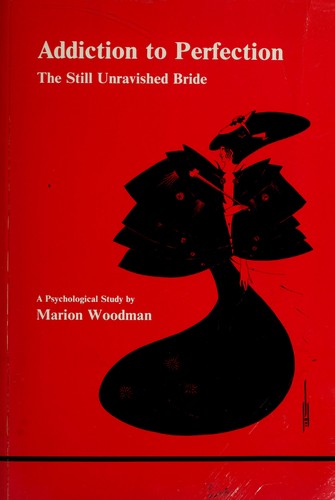
- Woodman's central thesis — that perfection is structurally identical to death — reframes addiction not as a failure of will but as the psyche's desperate protest against a life unlived, making the symptom itself the beginning of cure.
- The book reveals that eating disorders function as distorted sacred rituals: the binge recapitulates ancient goddess rites (milk, grain, sweetness), exposing a spiritual hunger that no caloric calculus can address.
- Woodman's distinction between perfection and completeness — drawn from Jung but made clinically operational — provides the most precise diagnostic tool in the Jungian literature for understanding why high-functioning individuals collapse into compulsion.
Perfection Is Not a Virtue but a Death Drive: Woodman’s Radical Reframing of Addiction
Marion Woodman opens Addiction to Perfection with a scene of social ease — a cast party — that instantly pivots toward the uncanny. A man crosses the room to say goodbye because he has “some serious drinking to do.” That sentence carries the book’s entire argument. The serious addict is not a failed hedonist. The serious addict is keeping a covenant — silent, compulsive, sacred in structure if demonic in execution. Woodman’s genius lies in recognizing that addiction to perfection is not metaphorical: it is the master addiction from which all others derive. “To move toward perfection is to move out of life, or what is worse, never to enter it.” The driven professional, the anorexic fasting toward translucence, the obese woman armored against contact — all are attempting to become works of art, which is to say, objects immune to time, suffering, and the mess of incarnation. Woodman draws the Jung citation that separates perfection from completeness with surgical precision: “The Christ-image is as good as perfect… while the archetype denotes completeness but is far from being perfect.” Where Edward Edinger, in Ego and Archetype, traces the ego’s inflation and alienation from the Self as a structural problem of consciousness, Woodman locates the same inflation in the body itself — in the muscles that refuse to soften, the stomach that refuses to hold food, the will that grinds life into performance. The addiction is not a defect of character; it is what happens when the ego tries to occupy archetypal territory. Perfection belongs to the gods. The human who seizes it becomes a frozen figure on Keats’s Grecian urn — “for ever panting, and for ever young” — which is another way of saying forever dead.
The Body Is the Unconscious Made Visible: Eating Disorders as Failed Initiation Rites
Woodman’s most original contribution is her insistence that the body is not a symbol of the psyche but the psyche’s material reality. “The body is the soul in action.” This is not poetic license; it is a clinical principle. When a woman cannot swallow (anorexia), she is refusing the negative mother. When she gorges and purges (bulimia), she is reenacting the desperate cycle of wanting and rejecting maternal nourishment. The body becomes, in Woodman’s phrase, “an elaborate metaphor” — but a metaphor that bleeds, starves, and dies. This places Woodman in direct dialogue with Sylvia Brinton Perera’s Descent to the Goddess, which traces feminine initiation through Inanna’s descent to the underworld. Woodman endorsed Perera’s work publicly, and the resonance is structural: both authors understand that the feminine must pass through a death — a stripping — before it can be reconstituted. But where Perera works primarily through myth, Woodman works through flesh. The anorexic’s fast is a failed descent: she enters the underworld of starvation but lacks the ritual container to return. The analyst, Woodman argues, must become the positive mother — the nourishing ground — that the original mother could not provide. Without that ground, the ego cannot cut the umbilical cord to the devouring complex. Fear of abandonment at twenty-five is structurally identical to fear of abandonment at twenty-five days. Nothingness is always nothingness.
The Binge as Broken Sacrament: Addiction’s Liturgical Structure
One of the book’s most startling passages describes the ritual structure of the binge. The serious binger plans Friday night with liturgical precision: disconnects the phone, locks the door, prepares foods that include something sweet, something made with milk, something made with grain — “exactly the foods used in the ancient goddess rituals.” There is “tremendous anticipation that they’re about to move out of the unbearable two-dimensional world and into the presence of divine sweetness and nourishment.” This is not self-indulgence; it is a debased sacrament. The ego seeks to cross into sacred space, to surrender to the divine, but without consciousness the ritual collapses into oblivion rather than transformation. Jung’s letter to Bill Wilson — “the craving for alcohol is the equivalent, on a low level, of the spiritual thirst of our being for wholeness” — is the theological spine of this argument. Woodman extends it beyond alcohol to every form of compulsion: the wolf energy in addicts’ dreams (wolves being sacred to Apollo, the god of creativity) is a ferocious hunger that does not know its own name. The task is not to kill the wolf but to redirect it. This places Woodman’s work alongside James Hollis’s later explorations of the “unlived life” in The Middle Passage and Swamplands of the Soul, where meaning-deprivation drives compulsion. But Woodman arrived at the body-soul nexus first, and more viscerally. Hollis works from existential anxiety; Woodman works from the gut.
Dreams of Concentration Camps: The Cultural Dimension of the Perfection Complex
Woodman refuses to let the reader reduce addiction to individual pathology. The perfection complex is cultural. Parents who demand 100 percent achievement are transmitting a patriarchal inheritance that goes back generations. In its most extreme form, Woodman says without flinching, “it’s what happened in Nazi Germany. They sought to create a race of supermen, and anything that did not fit in with that rigid concept was killed.” The dreams of her analysands — filled with concentration camps, soldiers killing women, baby girls being raped, animals having limbs torn off — are not personal fantasies but collective symptoms. The instinct itself is being distorted. This is where Woodman’s work connects to the broader Jungian analysis of culture that runs through Erich Neumann’s The Origins and History of Consciousness and into Edward Edinger’s The Creation of Consciousness. Neumann traced patriarchal consciousness as the hero’s separation from the maternal unconscious; Edinger saw in that separation the necessary agony of the ego’s individuation from the Self. Woodman adds a third movement: the patriarchal ego, having separated from the feminine, now turns its perfecting drive against the body itself, producing a culture in which matter — the feminine ground of all life — is experienced as the enemy. The result is epidemic addiction, because the instincts, denied their sacred dimension, erupt in compulsive and demonic form.
For anyone encountering depth psychology today, Addiction to Perfection does what no other book in the tradition does: it makes the body the primary text of psychological interpretation. It is not a book about eating disorders. It is a book about what happens when a civilization forgets that matter is sacred — and what the body, in its relentless symptom-making, is trying to remember on our behalf. Woodman’s work remains the indispensable bridge between Jungian analytical psychology and somatic experience, the place where the archetypal image meets the nerve ending.
Sources Cited
- Woodman, M. (1982). Addiction to Perfection: The Still Unravished Bride. Inner City Books. ISBN 978-0-919123-11-3.
- Jung, C.G. (1954). The Practice of Psychotherapy. Collected Works, Vol. 16. Princeton University Press. ISBN 978-0-691-01870-7.