 Seba.Health
Key Takeaways
- Keltner's taxonomy of awe inadvertently recapitulates the phenomenology of the numinous as formulated by Rudolf Otto and absorbed by Jung, but strips it of metaphysical depth—producing an empirical map of a territory whose ontological status the book refuses to adjudicate.
- By grounding awe in vagus nerve activation, collective effervescence, and prosocial behavior, Keltner effectively reduces what depth psychology treats as the ego's encounter with the archetypal to a measurable physiological event—a move that simultaneously validates and domesticates the experience.
- The book's most radical contribution is its insistence that awe is quotidian rather than extraordinary, which aligns it more closely with Thomas Moore's ensouled ordinary life than with the peak-experience tradition of Maslow, even as Keltner never engages the soul tradition directly.
Awe as Numinosity Without Metaphysics: The Gains and Costs of Empirical Enchantment
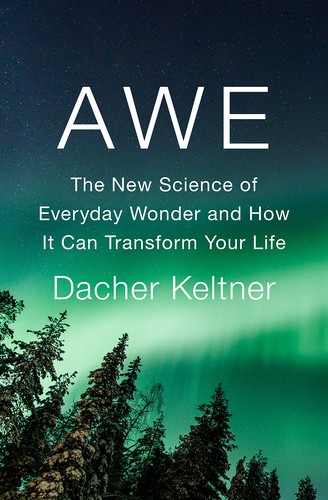
Dacher Keltner’s Awe arrives at a peculiar juncture in the Western intellectual tradition. The modern mind, as Richard Tarnas meticulously traces in Cosmos and Psyche, has oscillated between a hermeneutics of suspicion and a hermeneutics of trust, with the former decisively dominating since Bacon and Descartes. Keltner’s project represents a striking attempt to rehabilitate trust—trust in the overwhelming, the vast, the mysterious—while remaining firmly inside the empirical apparatus that suspicion built. The result is a book that documents with exceptional rigor what Rudolf Otto called the mysterium tremendum et fascinans, the numinous encounter that stops the ego cold, and yet categorically avoids the question that haunted Otto, James, and Jung alike: whether that encounter discloses something real about the structure of the cosmos or merely something useful about the structure of the nervous system. Keltner catalogs eight varieties of awe—moral beauty, collective effervescence, nature, music, visual design, spirituality, life and death, and epiphany—and links each to measurable outcomes: reduced inflammation, increased vagal tone, enhanced prosocial behavior, diminished narcissism. The data are compelling. But the philosophical stakes are enormous precisely because they go unacknowledged. Jung described the numinous as autonomous, tricksterlike, beyond anticipation or control; Keltner describes it as something you can cultivate through awe walks and gratitude practices. The distance between these two claims is the distance between encountering a god and scheduling a wellness intervention.
The Vagus Nerve Is Not the Soul, but It May Be the Soul’s Footprint
Keltner’s most consequential empirical finding—that awe activates the vagus nerve, triggers cytokine reduction, and shifts the self toward what he calls “the small self”—deserves serious engagement from the depth psychological tradition rather than dismissal. Michael Conforti’s archetypal field theory holds that fields organize behavior by creating complementary and compensatory relationships within their sphere of influence; the archetype activates the complex, which orients the individual toward a set of experiences extending as far as the field permits. If we read Keltner through Conforti, the vagal response to awe is not the experience itself but a somatic registration of the individual’s entry into a field that exceeds personal consciousness. The “small self” Keltner documents—the dissolution of ego-boundaries, the felt sense of being part of something vast—maps precisely onto what Jungian psychology calls the relativization of the ego in the face of the Self. Keltner provides physiological evidence that this relativization is not merely a metaphor or an intrapsychic event but an embodied, measurable state shift. This is genuinely important. Where Keltner falls short is in treating the shift as the destination rather than the threshold. For Jung and his successors, the ego’s dissolution before the numinous is the beginning of a process—individuation—not its endpoint. Keltner’s awe dissolves the ego momentarily and then returns the individual to prosocial functioning; depth psychology insists that if the ego does not metabolize and integrate what it has encountered, the experience remains aesthetic rather than transformative. The difference is between being moved and being changed.
The Everyday Sacred: Where Keltner Meets Moore and Parts Ways with Maslow
The most underappreciated dimension of Awe is Keltner’s relentless insistence that awe is not reserved for mountaintops and cathedrals. He finds it in a stranger’s unexpected kindness, in a child’s laughter, in the pattern of light through a window. This emphasis places him in surprising proximity to Thomas Moore’s Care of the Soul, which argues that “when imagination is allowed to move to deep places, the sacred is revealed” and that “the sacred appears when imagination achieves unusual depth and fullness.” Moore’s claim that attending to soul in ordinary things leads to a more individual life resonates with Keltner’s data showing that awe experiences deepen personal meaning and social connection simultaneously. Both thinkers reject the modernist segregation of the sacred into institutional religion and the extraordinary. Yet Keltner and Moore diverge at the crucial pivot point of interiority. Moore insists that soul requires descent—into dreams, into shadow, into “that emotion we don’t want to feel.” Keltner’s awe is almost entirely a movement upward and outward: toward vastness, toward collective bonding, toward wonder. His taxonomy has no room for what Moore calls the dark angels, no space for the terrifying face of the numinous that Otto named the tremendum. Keltner acknowledges that awe can accompany experiences of threat—storms, encounters with death—but he consistently frames even these as ultimately positive, as gateways to meaning-making and post-traumatic growth. The depth tradition knows better. James Hillman’s insistence in The Soul’s Code that the extraordinary is the more comprehensive category—that “the exceptional cannot be understood by amplifying the commonplace”—cuts against Keltner’s democratization of awe in a productive way. Keltner shows that commonplace awe is real and consequential; Hillman would counter that the commonplace version, however beneficial, must not be mistaken for the shattering encounter with the daimon that restructures a life from its foundations.
What This Book Illuminates and What It Cannot See
For someone approaching depth psychology today, Awe serves as a vital bridge document. It demonstrates, with the authority of peer-reviewed science, that the experiences depth psychology has always privileged—numinosity, ego-dissolution, participation in something greater than the personal—are not projections of a pre-scientific mind but measurable features of human embodiment. Keltner gives the skeptical modern reader permission to take seriously what Jung, Otto, and James insisted upon: that the encounter with the vast and mysterious is constitutive of psychological health, not incidental to it. At the same time, the book illuminates by its very limitations what empirical science cannot do alone. Tarnas argues that “our intellectual quest for truth can never be separated from the cultivation of our moral and aesthetic imagination,” and that a merely reductive, objectifying judgment will forever miss the deeper truths of both spiritual life and the cosmos. Keltner’s awe is meticulously mapped but ontologically homeless—a powerful experience with robust health outcomes that the book cannot locate within any cosmology larger than evolutionary fitness. For readers who want the map, Awe is indispensable. For those who want to know what territory the map describes, the journey continues into the depths Keltner charts from the surface.
Sources Cited
- Keltner, D. (2023). Awe: The New Science of Everyday Wonder and How It Can Transform Your Life. Penguin Press. ISBN 978-1-9848-7968-4.
- Stellar, J. E., John-Henderson, N., Anderson, C. L., Gordon, A. M., McNeil, G. D., & Keltner, D. (2015). Positive affect and markers of inflammation: Discrete positive emotions predict lower levels of inflammatory cytokines. Emotion, 15(2), 129–133.
- Shiota, M. N., Keltner, D., & Mossman, A. (2007). The nature of awe: Elicitors, appraisals, and effects on self-concept. Cognition and Emotion, 21(5), 944–963.