 Seba.Health
Key Takeaways
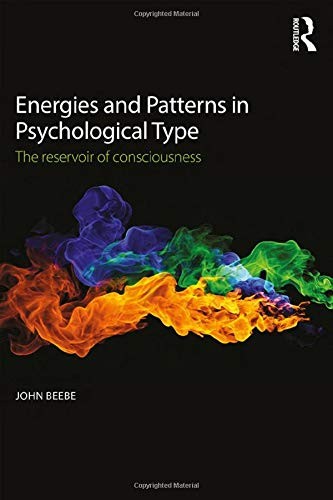
- Beebe's eight-function, eight-archetype model transforms Jungian typology from a classification system for people into a structural map of how consciousness differentiates itself through archetypal complexes — making it, in his own formulation, not Jung's ego psychology but his self psychology.
- The book's central metaphor of a "reservoir of consciousness" reframes the relationship between complexes and awareness: the same structures that fragment and restrict the ego are the very wellsprings from which new capacities for consciousness emerge, a paradox that parallels Kalsched's thesis about trauma's self-care system.
- Beebe's innovation of assigning archetypal roles (hero, father/mother, puer/puella, anima/animus, opposing personality, senex/witch, trickster, demonic personality) to each of the eight function-attitude positions does something no prior typological system attempted — it explains *why* a given type of consciousness is deployed with a particular emotional tone, moral valence, and interpersonal style, rather than merely noting that it exists.
Typology Is Not Classification but a Structural Theory of How Consciousness Emerges from the Archetypal Unconscious
John Beebe’s Energies and Patterns in Psychological Type dismantles the longstanding prejudice — held even within analytical psychology — that Jung’s typology is a surface-level sorting exercise irrelevant to depth work. Beebe traces the genealogy of this dismissal to the disastrous context of Jung’s 1913 Munich Congress paper, where proposing a superordinate framework that subsumed Freud and Adler guaranteed that type theory would be shunned by psychoanalysts and underestimated by Jungians for generations. The book’s corrective is radical: typology is not about typing people but about differentiating the dialogic positions of complexes within a single psyche. Beebe takes seriously Jung’s claim that complexes are “capable of consciousness” and demonstrates that these fragments arrange themselves according to the same structural logic as the type system. Each function-attitude occupies a numbered position, and each position is governed by a specific archetype — hero, father/mother, puer/puella, anima/animus for the four ego-syntonic positions, and opposing personality, senex/witch, trickster, and demonic personality for the four shadow positions. The function does not merely exist; it is carried by an archetype, which means its expression is always charged with the particular energy, moral stance, and behavioral signature of that archetype. This is why an ENTP’s extraverted intuition feels heroic and grandiose, while the same person’s introverted feeling — occupying the shadow trickster position — operates with underhanded cunning. The insight collapses the artificial barrier between typology and depth psychology, revealing them as two faces of the same structural reality.
The Spine-and-Arms Model Gives Clinical Specificity to What von Franz and Hillman Left Metaphorical
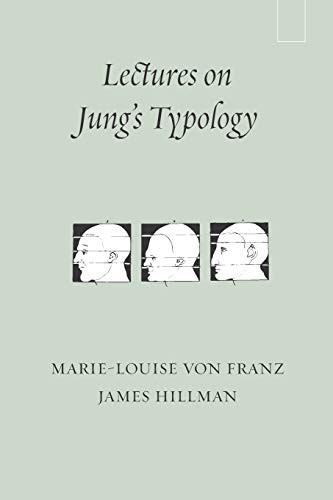
Marie-Louise von Franz famously called the inferior function “the door through which all the figures of the unconscious come,” and James Hillman elaborated the anima as the archetype of soulful reflection. Beebe absorbs both insights but submits them to structural precision. His “spine” of personality — the axis running from superior function (hero/heroine) through inferior function (anima/animus), with their opposite-attitude shadows (opposing personality and demonic personality) — constitutes the irreducible core of how a person’s consciousness is characteristically deployed. The “arms” — auxiliary (father/mother) and tertiary (puer/puella) with their respective shadows (senex/witch and trickster) — extend the model laterally. This architectural language is not decorative. It gives clinicians a way to diagnose precisely which archetypal complex has seized a patient’s behavior in a given moment: is the client wielding the hero’s competence, the puer’s inflated vulnerability, or the trickster’s sabotage? Beebe’s autobiographical honesty here is striking — he recounts dreaming of Lyndon Johnson as an image of his own dominant extraverted intuition, “high-handed, crafty, a bit out of touch with the actual readiness of those around me.” This is type theory as lived phenomenology, not abstract taxonomy, and it extends the clinical utility of Edinger’s ego-Self axis concept by specifying which kind of ego-consciousness is active and which archetype is inflating or deflating it at any given moment.
The Reservoir Metaphor Bridges Kalsched’s Trauma Theory and Kohut’s Self Psychology Through Typological Structure
The book’s subtitle — The Reservoir of Consciousness — is not casual. Beebe explicitly draws on Donald Kalsched’s observation in The Inner World of Trauma that “the self-same powers that seem so set on undermining our efforts… are the very reservoir from which new life, fuller integration, and true enlightenment derive.” Beebe’s model operationalizes this paradox. The shadow function-attitudes — those same consciousnesses that manifest as the opposing personality’s obstruction, the trickster’s deception, or the demonic personality’s destructiveness — are not pathologies to be eliminated but capacities waiting to be engaged. Beebe explicitly integrates Kohut’s “little-s” self, Fordham’s defenses of the self, Neumann and Edinger’s ego-Self axis, and Hillman’s archetypal psychology into a single framework organized by typological structure. The “person in the psyche,” as Charles Klaif named it, emerges when the eight function-attitudes come together to form an “alembic” — a container for self-experience born of the dynamic relations between the functions. This integrative move is Beebe’s deepest contribution: he demonstrates that individuation is not a single heroic arc but a polyphonic process in which eight distinct modes of consciousness, each archetypal in character, gradually learn to collaborate. Christopher Bollas’s notion of “psychic genera” — creative incubation points that generate new links in the mind — finds its structural home in Beebe’s model as the moment when a previously unconscious function-attitude, held in shadow by its opposite, is finally brought into conscious dialogue.
Why Jung’s Red Book Confirms That Typology Was Always Depth Psychology in Disguise
Beebe’s chapter on The Red Book as a work of conscience reveals something that readers of Shamdasani’s edition routinely miss: that Jung’s confrontation with the unconscious was itself a typological event. The invasion of the Anabaptists — demanding, concrete, desperate for geographical specificity — represents introverted sensation, the function maximally distant from Jung’s native introverted intuition. Beebe argues that the payoff from this encounter was the extraordinary descriptive precision of Psychological Types Chapter X, where Jung deploys introverted sensation with a mastery that his conscious standpoint alone could never have achieved. The inferior function, accessed through the anima figure Salome, becomes the generative source of Jung’s most lasting theoretical achievement. This is the reservoir metaphor enacted in biography: the most alien consciousness, the one that threatens to overwhelm, is precisely the one that produces the most durable contribution.
For anyone encountering depth psychology today through the gateway of personality typology — the MBTI, the online type communities, the pop-psychological reduction of Jung to four letters — Beebe’s book is the only work that demonstrates, with clinical evidence, autobiographical candor, and rigorous archetypal reasoning, exactly how and why typology reaches all the way down to the Self. No other text makes the bridge between Isabel Briggs Myers and James Hillman, between the MBTI instrument and the confrontation with the unconscious, with this degree of structural specificity. It does not merely argue that typology matters for depth work; it shows that depth work has always been, whether practitioners knew it or not, typological.
Sources Cited
- Beebe, J. (2017). Energies and Patterns in Psychological Type: The Reservoir of Consciousness. Routledge.
- Jung, C.G. (1921). Psychological Types. Collected Works, Vol. 6. Princeton University Press.
- von Franz, M.-L. and Hillman, J. (1971). Lectures on Jung's Typology. Spring Publications.