 Seba.Health
Key Takeaways
- Bosnak's book is not an introduction to dream interpretation but a manual for inducing a specific shift in consciousness — from rational decoding to what he calls "image consciousness" — that treats the dream as a place to inhabit rather than a text to translate.
- The book's circular architecture, beginning and ending with the same bulldog-and-angel figures, enacts the alchemical process it describes: the *coincidentia oppositorum* is not argued but performed across the reader's own experience of the material.
- By insisting that resistance, inferiority, and confusion at the start of dreamwork are not obstacles but diagnostic instruments, Bosnak quietly overturns the competence model of clinical interpretation and aligns dreamwork with the apophatic traditions of unknowing.
The Dream Is Not a Text but a Place: Bosnak’s Radical Inversion of Interpretive Dreamwork
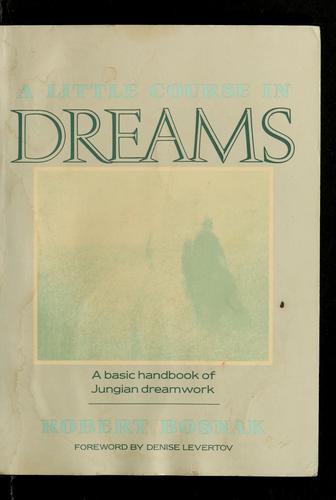
Robert Bosnak opens A Little Course in Dreams not with theory but with himself in a car, stuck in traffic, caught mid-reverie between the nocturnal image world and the demands of a clinical day. This staging is deliberate. The book’s entire argument rests on the premise that the dream is a spatial reality — not a cipher to be decoded, not a message from the unconscious, but an environment with its own atmosphere, distances, textures, and inhabitants. Every technique Bosnak teaches follows from this single ontological commitment: if the dream is a place, then the dreamer’s task is to return there, move through it, and engage its figures as autonomous presences. This is what separates Bosnak from the dominant traditions he inherits. Freud’s Interpretation of Dreams treats the dream as a rebus whose latent content must be extracted through free association. Jung’s amplification widens the symbolic field but still operates from waking consciousness outward. Bosnak’s method — refined over two decades and later formalized as “embodied imagination” in his 2007 Embodiment — insists on movement in the opposite direction: into the image, through meticulous sensory reconstruction, until the boundary between dream memory and active imagination dissolves. The professor who encounters the young black man on the jungle gym does not need to know what the figure “means”; he needs to stand close enough to hear what the figure says. “Don’t be so uptight, man! Hang loose!” That utterance arrives not from interpretation but from proximity.
Resistance as Instrument: The Epistemology of Feeling Defeated by the Dream
One of the book’s most quietly radical claims appears in the workshop chapter on the underwater rabbit. Bosnak confesses to the group that he has “no idea what to do with this dream” and that it feels like “stainless steel” to him. Rather than treating this as a failure of technique, he identifies it as the dream’s own atmosphere pressing against rational consciousness. The inferiority, the panic, the desire to flee into associative chains — these are not noise; they are data. This inverts the standard clinical posture. Where ego psychology demands competence and where even Hillman’s archetypal psychology asks the practitioner to see through images with imaginative agility, Bosnak asks the dreamworker to be defeated first. The stumbling of rationality is itself the threshold. He writes that “daytime consciousness stumbles when confronted with a kind of logic that is essentially alien to it” and calls this stumbling “a painful event, surrounded by a multitude of resistances.” The parallel to Henry Corbin’s mundus imaginalis — which Bosnak explicitly cites — is unmistakable: the imaginal world is not accessed by cleverness but by a kind of epistemological surrender, a willingness to let one’s habitual categories of sense crack open. Jung arrived at a similar threshold when he “let himself drop” into active imagination, landing in “a soft, sticky mass.” Bosnak takes Jung’s autobiographical episode and turns it into a repeatable discipline, one that begins not with visionary courage but with the honest acknowledgment of bewilderment.
Mercury as Structural Principle: The Alchemical Frame That Holds the Book Together
The concluding chapters reveal that the book itself is what the alchemists called a vas hermeticum — a sealed vessel in which transformation occurs. The dream that opens the text presents Angie, the beautiful Saint Bernard, locked in mortal combat with a bloodthirsty bulldog. The dream that closes it presents a “Persian bulldog” — a surrealistic fusion of the two, walking upright, wearing clothes, speaking. Between these two images, the reader has passed through nigredo (the filthy underworlds of Stella’s crash, Ginger’s mud, the professor’s run-down neighborhood), albedo (the cool, reflective moon-consciousness of amplification and mirroring), and rubedo (the fiery erotic energy of Stella’s doctor, the orange-red carrot at Ginger’s root). Bosnak names this transformation explicitly as Jung’s transcendent function — the emergence of a third thing from sustained attention to irreconcilable opposites. But where Jung tends to describe this function abstractly, Bosnak demonstrates it through the lived texture of his own dream series. The healing angel and the power-hungry neck-breaker prove to be two faces of Mercury, the god who is simultaneously pharmacon as poison and pharmacon as cure. This is not metaphor applied to dreams from outside; it is the structure the dreams themselves generate when held in disciplined reflection. The alchemical framework here functions differently than it does in, say, Edward Edinger’s Anatomy of the Psyche, where alchemical operations are systematized into diagnostic categories. Bosnak’s alchemy is experiential and processual — closer to Jung’s own late wrestling with the Mysterium Coniunctionis than to any textbook rendering.
The Political Unconscious of Dreamwork
A passage easy to overlook — tucked into the chapter on Mercury — makes a claim that extends dreamwork beyond the consulting room. Bosnak argues that the nuclear threat is “directly connected with the power of the imagination’s archaic homicidal lust” and that unless this raw destructive impulse is recognized and felt through at the level of image, Mercury “may deceive us and subjugate us to a paranoid and deathly dread of the homicidal urge of our adversaries.” Writing in the Cold War moment of 1986, Bosnak channels Jung’s 1942 Eranos lecture on the Spiritus Mercurius and extends it: mass mania — whether fascist, nuclear, or ideological — is wild Mercury loosed from the bottle, imagination refusing containment. Denise Levertov’s foreword underscores this dimension, noting “the political value of increasing our attention to those powerful aspects of our being that go uncomprehended in the ignored dreamlife of billions.” This is not an afterthought. It is the book’s deepest implication: that the discipline of returning to dream images, holding them in reflection without acting them out, is not merely therapeutic but civilizational.
For a reader encountering depth psychology today, A Little Course in Dreams remains irreplaceable not because it explains dream symbolism — dozens of books do that — but because it teaches a specific mode of consciousness. It is the clearest existing manual for what it actually feels like to cross the threshold from waking cognition into image-reality and to work there with discipline rather than fantasy. No other book in the tradition makes the phenomenology of that crossing so palpable, so honest about its difficulty, or so precise about its rewards.
Sources Cited
- Bosnak, R. (1986). A Little Course in Dreams. Shambhala Publications.
- Jung, C.G. (1974). Dreams. Collected Works, Vols. 4, 8, 12, 16. Princeton University Press.
- Hillman, J. (1979). The Dream and the Underworld. Harper & Row.