 Seba.Health
Key Takeaways
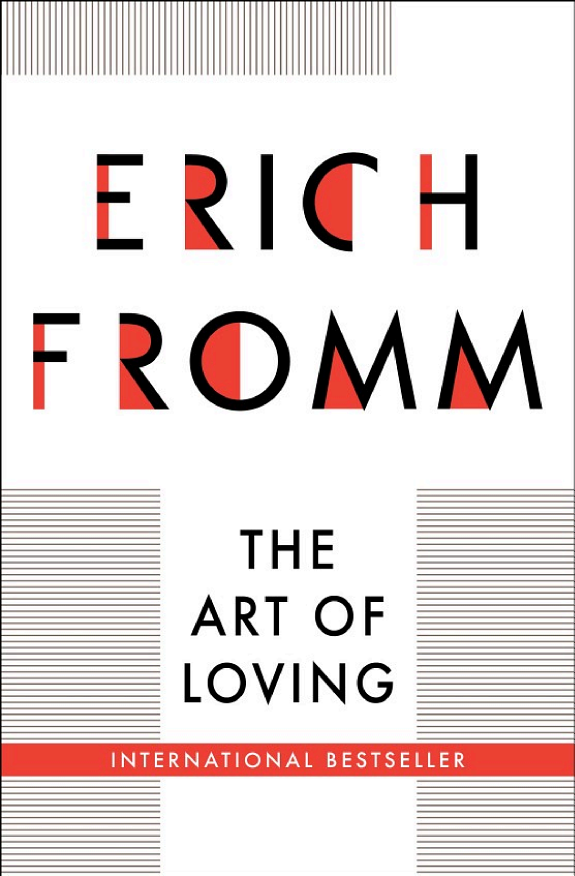
- Fromm's central move is not to psychologize love but to ontologize it: love is the structural answer to the problem of human separateness, making it prior to personality, prior to relationship, and prior to any therapeutic framework that would reduce it to attachment or affect regulation.
- The distinction between symbiotic union and mature love functions as a diagnostic axis more powerful than most clinical typologies—it identifies the precise mechanism by which domination and submission masquerade as intimacy, anticipating the trauma-bonding literature by decades.
- Fromm's insistence that love is indivisible—that one cannot love a partner without loving strangers, cannot be productive in love while remaining unproductive in all other spheres—constitutes a radical critique of the compartmentalized self that consumer capitalism both produces and requires.
Love as Ontological Necessity, Not Emotional Achievement
Fromm opens not with feelings but with metaphysics. The foundational claim of The Art of Loving is that human consciousness itself—awareness of separateness, mortality, helplessness—generates an existential prison from which love is the only non-pathological escape. “The experience of separateness arouses anxiety; it is, indeed, the source of all anxiety.” This is not a therapeutic observation but a philosophical one, placing Fromm in direct conversation with Kierkegaard’s concept of anxiety as the dizziness of freedom and anticipating Rollo May’s later elaboration in Love and Will. Where Fromm departs from both existentialism and orthodox psychoanalysis is in his refusal to treat love as compensation or sublimation. Love does not console the separate self; it resolves the condition of separateness at its root. The Genesis narrative of Adam and Eve becomes, in Fromm’s reading, not a story about sin or sexuality but about the birth of human consciousness and the shame that attends unbridged separation. This exegetical move—reading nakedness as ontological exposure rather than moral failure—places Fromm closer to Jung’s mythological hermeneutics than to Freud’s drive theory, even as Fromm remained a committed critic of Jungian thought. The point is structural: every pseudo-solution to separateness (orgiastic states, conformity, compulsive work) fails because it does not achieve interpersonal fusion with preserved integrity. Only love accomplishes this paradox.
Symbiotic Union as the Shadow of Love
The book’s most clinically potent contribution is the taxonomy of symbiotic union—masochistic submission and sadistic domination—presented as the counterfeit of mature love. Fromm describes masochism as the attempt to dissolve separateness by making oneself “part and parcel of another person who directs him, guides him, protects him; who is his life and his oxygen.” The sadist performs the same operation in reverse, incorporating the other into an inflated self. Both achieve “fusion without integrity.” This framework anticipates by decades what Judith Herman would document in Trauma and Recovery regarding the bonds formed under conditions of captivity and coercive control. Fromm’s insight that the sadist and masochist are structurally identical—that “usually a person reacts in both the sadistic and the masochistic manner, usually toward different objects”—dismantles the popular notion that abuser and victim occupy fixed, opposing positions. His example of Hitler, sadistic toward people but masochistic toward fate and “the higher power of nature,” is not merely illustrative but diagnostic: it reveals how totalitarian psychology operates through the same symbiotic mechanisms that structure dysfunctional intimate relationships. Where Gabor Maté’s later work in In the Realm of Hungry Ghosts would trace addiction to the failure of early attachment, Fromm identifies the deeper grammar: addiction, conformity, and domination are all attempts to solve the problem of separateness without the discipline and courage that genuine love requires.
The Indivisibility Thesis and the Critique of Capitalist Selfhood
Fromm’s most radical and most neglected argument is the indivisibility of love. “There is no ‘division of labor’ between love for one’s own and love for strangers.” This claim demolishes the bourgeois arrangement in which one maintains warm private relationships while treating the marketplace as a zone of instrumental exchange. Fromm names what he calls “fairness ethics”—the Golden Rule reduced to balanced transaction—as the characteristic moral achievement of capitalism, and insists it is categorically different from love. Fairness “means not to feel responsible, and one, distant and separate; it means to respect the rights of the other, but not to love him.” This analysis places Fromm in sharp tension with the entire self-help tradition that his book inadvertently spawned. He is not offering techniques for better relationships within an unchanged social order. He is arguing that a “production-centered, commodity-greedy society” structurally excludes love, and that only the non-conformist can resist its logic. The connection between self-love and love of others—Fromm’s careful demolition of the idea that selfishness and self-love are identical—reinforces this point. The selfish person “does not love himself too much but too little; in fact he hates himself.” Neurotic unselfishness, equally, is diagnosed as a symptom of the same incapacity. Fromm here converges with Winnicott’s later concept of the false self: the compliant, other-oriented persona that masks a fundamental inability to be alive. Both thinkers recognize that genuine self-possession is the precondition for genuine relatedness, not its opposite.
Faith, Courage, and the Productive Orientation as Love’s Prerequisites
The final chapters on practice are often dismissed as thin, but they contain Fromm’s most demanding insight: that love requires the same discipline, concentration, and patience as any art, and that its practice is inseparable from the quality of one’s entire life. “If one is not productive in other spheres, one is not productive in love either.” This is not self-improvement rhetoric but a statement about the unified character structure that love demands. Fromm’s concept of “rational faith”—not belief in doctrine but trust in the potentialities of growth—functions as the psychological equivalent of what Edinger, in Ego and Archetype, would call the ego-Self axis: a living connection to one’s own depth that makes risk, commitment, and creative action possible. The courage Fromm describes is explicitly distinguished from nihilistic bravado; it is “the courage of love,” rooted in affirmation rather than despair.
For readers encountering depth psychology today, The Art of Loving offers something no other text in the tradition provides with such economy: a unified theory connecting existential ontology, character analysis, social criticism, and spiritual practice through a single organizing principle. It is not a book about how to love better. It is a book about what kind of being you must become for love to be possible at all—and what kind of society would need to exist for that becoming to be anything other than a heroic exception.
Sources Cited
- Fromm, Erich (1956). The Art of Loving.