 Seba.Health
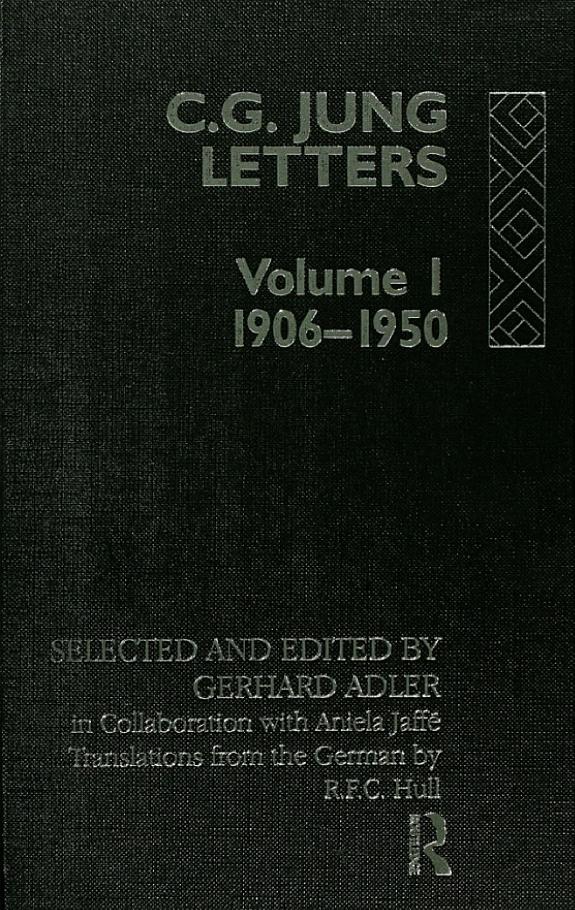
Key Takeaways
- The letters reveal that Jung's formal published concepts—from the collective unconscious to synchronicity—were not delivered ex cathedra but forged dialectically through epistolary combat with correspondents who misunderstood him, making the volume a live record of how Jungian thought was shaped by resistance.
- The systematic destruction and suppression of Jung's most personal letters (to Toni Wolff, to his wife, to many analysands) means this volume is not a window into Jung's psyche but a carefully curated persona document, and reading it without acknowledging that editorial shadow distorts everything it appears to reveal.
- Jung's repeated insistence on the distinction between God and God-image, documented through letter after letter to theologians and clergy, constitutes the single most sustained epistemological argument in his entire oeuvre—more rigorous in the letters than in any formal work, precisely because correspondents kept collapsing the distinction and forcing him to sharpen it.
Jung’s Letters Are Not Autobiography but a Workshop in Which Concepts Were Stress-Tested Against Living Interlocutors
The Collected Works present analytical psychology as a finished architecture. Letters Volume 1 dismantles that illusion. What emerges from these 1,600-odd letters spanning 1906 to 1950 is a thinker whose key formulations—libido as psychic energy rather than sexual drive, the empirical status of the archetype, the boundary between psychology and metaphysics—were not arrived at through solitary contemplation but through the friction of exchange. The very first letter in the collection, to Freud in October 1906, already carries the seed of the later rupture: Jung praises Freud’s “psychological views” while explicitly distancing himself from the sexual theory and the therapy of abreaction, noting that “your therapy seems to me to depend not merely on the affects released by abreaction but also on certain personal rapports.” This is not deference. It is a young clinician identifying the transference phenomenon before he has language for it, testing his intuition against the founder. The letter to Karl Abraham that follows shows the same pattern—Jung thinking out loud, positioning himself. The Collected Works, particularly Freud and Psychoanalysis (CW 4), present the break with Freud as a doctrinal divergence crystallized in Symbols of Transformation. The letters show it was a slow, grinding negotiation conducted sentence by sentence, in which the personal and the theoretical were never separable—exactly as Jung later argued in “Freud and Jung: Contrasts” (1929), where he insisted that the personality of the investigator is an irreducible element of any psychological formulation.
The Editorial Shadow: What Is Absent from This Volume Matters as Much as What Is Present
Gerhard Adler’s introduction is remarkably transparent about the volume’s lacunae, and this transparency itself demands interpretation. Jung’s letters to his wife Emma were proscribed by the family. His letters to Toni Wolff were destroyed—by Jung himself, after her death in 1953. The Freud correspondence was excluded at Jung’s own request, deferred for decades because “the waves of animosity are still running so high.” Letters to analysands were withheld on grounds of discretion; letters before 1931 are sparse because Jung kept no copies. What remains, then, is a corpus selected for “intrinsic interest, whether scientific, personal, or historical”—but stripped of its erotic, transferential, and domestic registers. Anyone who reads this volume as a portrait of the whole man is reading a persona. The concept of persona, which Jung developed precisely during the period these letters cover (most fully in Two Essays on Analytical Psychology, CW 7), applies to the volume itself. This is not a criticism of the editors; it is a hermeneutic fact. The letters to clergy, which Jung himself labeled “Pfarrerbriefe” and flagged for publication, represent the face he wanted to show posterity: the empiricist, the careful distinguisher of psychological from metaphysical claims. Aniela Jaffé, who also shaped Memories, Dreams, Reflections, was a co-curator of both projects, and the relationship between these two editorial constructions—the autobiography and the letters—deserves scrutiny as a double self-portrait, each compensating for the omissions of the other.
The God-Image Letters Constitute Jung’s Most Sustained Epistemological Argument
Adler notes that a “certain repetitiveness” marks the collection, particularly around the distinction between God and the God-image and around Jung’s empirical method. This repetitiveness is not a flaw; it is the evidence of a man who understood that his central epistemological claim was the one most consistently misheard. In letter after letter to theologians—and later to Victor White, whose correspondence bridges both volumes—Jung insists that he speaks as a psychologist about psychic facts, not as a metaphysician about transcendent realities. This distinction, which undergirds Answer to Job (CW 11) and the entire late theology, is nowhere more rigorously argued than in the pastoral letters, because the clergy kept forcing the collapse Jung was trying to prevent. Read alongside Edward Edinger’s The New God-Image or Erich Neumann’s The Origins and History of Consciousness, the letters reveal that Jung’s theological psychology was not a late-life eccentricity but a thread running from the earliest correspondence forward—already implicit in the 1906 letter to Freud, where Jung insists that what matters is the psychological dimension, not the causal-reductive one.
The Letters Map the Emergence of Synchronicity and Alchemy Not as Intellectual Interests but as Personal Necessities
The volume covers the period in which Jung moved from psychiatry through the Freud years, the “confrontation with the unconscious,” the discovery of alchemy via Richard Wilhelm and The Secret of the Golden Flower (1929), the Eranos lectures, and the first formulations of synchronicity. The letters to J. B. Rhine (including the famous 1934 letter accompanied by the photograph of the “exploded knife”) show Jung not as a speculative mystic but as a man attempting to build an empirical case for acausal orderedness, corresponding with a parapsychologist in the language of experimental design. The letters to Heinrich Zimmer, to Olga Fröbe-Kapteyn (founder of Eranos), and to Richard Wilhelm reveal the intellectual network through which alchemy and Eastern thought entered Jung’s system—not as abstract influences but as living conversations. The volume makes visible what the Collected Works necessarily flatten: the social ecology of ideas.
This volume matters because it is the only place where the reader can watch Jung’s concepts in their pre-crystallized state—still molten, still responsive to pressure. The Collected Works give you the temple; the letters give you the quarry. For anyone working with Jungian ideas clinically or theoretically, the difference between a concept received as doctrine and a concept understood as a hard-won formulation against specific misunderstandings is the difference between orthodoxy and living thought.
Sources Cited
- Jung, C.G. (1973). Letters Volume 1: 1906-1950.