 Seba.Health
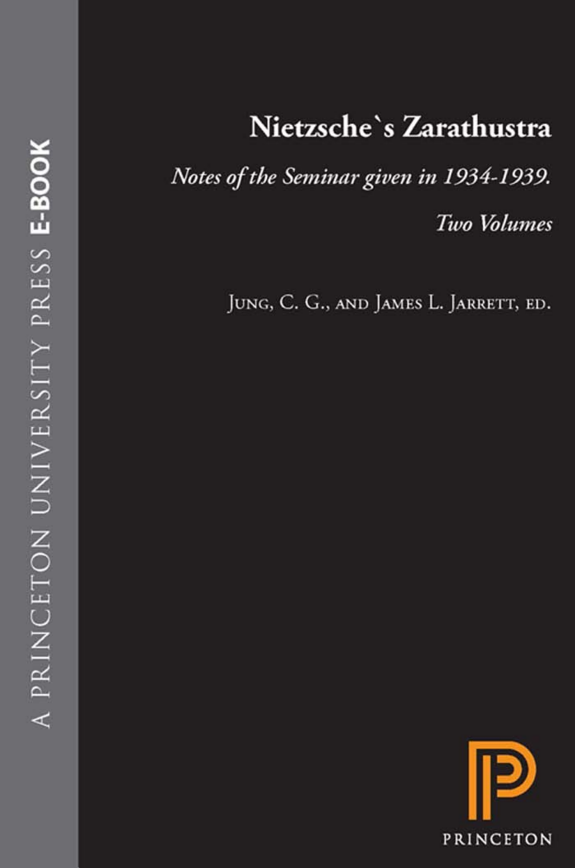
Key Takeaways
- Jung's Zarathustra seminar is not a commentary on Nietzsche's philosophy but a five-year clinical demonstration that poetic inspiration and psychotic inflation share the same archetypal mechanism—differentiated only by the ego's capacity to avoid identification with what speaks through it.
- The corpse that Zarathustra carries is Jung's most sustained image for what happens to the personal life of anyone seized by an archetype without psychological means of disidentification: Nietzsche the man became the dead thing dragged behind Nietzsche the prophet.
- The seminar constitutes Jung's only extended, real-time analysis of how a single modern individual's encounter with the Self foreshadowed—and psychologically mirrored—the collective possession that overtook Europe between 1934 and 1939, making the text simultaneously a depth-psychological case study and a political warning.
Nietzsche’s Inflation Is Not a Biographical Curiosity but the Central Diagnostic Category of the Seminar
Jung opens the seminar in May 1934 with a warning: “it is a hell of a confusion and extraordinarily difficult.” This is not false modesty. The difficulty he identifies is not literary or philosophical but clinical—the near-impossibility of tracking an ego that has merged with an archetype and therefore cannot recognize its own dissolution. Jung reads Zarathustra as the transcript of a possession. Nietzsche’s own verse—“Da wurde eins zu zwei und Zarathustra ging an mir vorbei” (“Then one became two and Zarathustra passed by me”)—is cited repeatedly as evidence that Nietzsche momentarily perceived the figure as autonomous, then immediately collapsed back into identification because “having no psychological concepts, it did not become a problem to him.” The numinosum, Jung insists, is “not an opinion” but “a psychological fact that happens to people.” When Nietzsche declared God dead, he did not eliminate the numinous; he displaced it into himself. Zarathustra became the vessel, and Nietzsche became inflated—“filled with air, tremendous”—a condition Jung distinguishes sharply from mere grandiosity. This is the same mechanism Edward Edinger would later formalize as the ego-Self axis in Ego and Archetype: when the ego fails to differentiate itself from the Self, inflation and alienation alternate catastrophically. Jung’s seminar provides the raw phenomenological material that Edinger later systematized.
The Corpse Companion Reveals Identification’s Lethal Cost to Personal Life
One of the seminar’s most penetrating moments comes in the October 1934 session, when Jung analyzes Zarathustra’s refusal to abandon the dead rope-dancer. The rope-dancer, Jung argues, is “the human form of Zarathustra, Nietzsche himself as the human being.” The corpse carried through the rest of the book is Nietzsche’s unlived personal existence—his body, his relationships, his capacity for ordinary human connection. “This is in fact the gloomy aspect of Zarathustra, a cloud hanging over the whole book—Nietzsche being dragged along by that figure.” Jung’s insight here anticipates what Marion Woodman would later describe as the body’s abandonment during psychic inflation: the spirit soars while the flesh becomes a thing to be carried. The jester who kills the rope-dancer is “the negative aspect of Zarathustra,” the shadow side of the archetype itself, demonstrating that an unconscious figure “could prevail against the human being to such an extent that the latter would be destroyed.” Jung’s reading converts a poetic episode into a diagnostic schema: inspiration without disidentification produces a corpse. The creative process, he tells the seminar, “is not your own doing. It simply takes you and uses you.” The question is whether you know that—or whether, like Nietzsche, you say “But I wanted to!” like the child who falls from the chair.
The Seminar Is a Political Document Disguised as a Psychological One
Jung conducted this seminar from 1934 to 1939. The dates are not incidental. He tells his audience that Nietzsche “was a man of the future; his peculiar psychology was that of a man who might have lived today, after the great catastrophe of the world war.” The seminar’s analysis of how an individual can be seized by an archetypal figure and lose all personal judgment doubles as Jung’s reading of what was happening to Germany. The God-State, he observes, replaces the God-Anthropos: “they will believe in a God-State instead of the God-Anthropos, but a God-State is just as invisible, just as abstract, as the former God.” Nietzsche’s inflation—his declaration that God is dead followed by his own divinization—mirrors the collective process whereby a culture that kills its gods does not become secular but transfers the numinosum to political leaders and national myths. Jung was explicit: “Perhaps I am the only one who takes the trouble to go so much into the detail of Zarathustra… nobody actually realizes to what extent he was connected with the unconscious and therefore with the fate of Europe in general.” This makes the seminar a companion text to Jung’s essays on Wotan and the psychology of Nazism, but far more granular—a session-by-session demonstration of how archetypal possession works at the individual level before it erupts collectively. The parallel to Erich Neumann’s The Origins and History of Consciousness is instructive: where Neumann mapped the collective evolution of ego-consciousness through mythological stages, Jung here tracks the de-evolution of a single extraordinary consciousness back into mythological identification.
The Remedy Jung Proposes Is Active Imagination, Not Interpretation
Jung’s therapeutic counter-prescription emerges most clearly when he imagines advising Nietzsche directly: “Be your humble self, say you know nothing… if you feel that there is somebody who wants to talk, give him a chance, clear out of your brain and leave it a while to the old man. Then make notes of it, take it down and see what he says.” This is a precise description of active imagination—the method Barbara Hannah, a seminar member, would later elaborate in Encounters with the Soul. Jung is not asking Nietzsche to suppress Zarathustra but to relate to him as other. The sacrifice of identification is the precondition for knowing what the figure is worth: “only when you detach, when you make that sacrifice, do you know what it is worth.” This prescription reframes the entire seminar as something more than literary criticism or philosophical dialogue. It is a demonstration, across five years of weekly meetings, of what happens when a human being encounters the Self without the tools to survive the encounter. No other text in the Jungian corpus performs this demonstration at such length and with such specificity. For anyone working with inflation, creative possession, or the relationship between genius and psychopathology, this seminar remains the indispensable primary source—not because it explains Nietzsche, but because it uses Nietzsche to show exactly where the line falls between revelation and madness, and what practice might keep a person on the livable side of it.
Sources Cited
- Jung, C.G. (1988). Nietzsche's Zarathustra: Notes of the Seminar Given in 1934-1939.