 Seba.Health

Key Takeaways
- Sedgwick's central provocation is that Jung's alchemy, mythology, and religious investigations are "private research" — and that the actual clinical legacy worth defending is the radical claim that the therapist's personality *is* the method, making countertransference the spine of Jungian psychotherapy rather than symbolic amplification.
- The book redraws the axis of Jungian work from vertical (ego-to-Self) to horizontal (unconscious-to-unconscious between therapist and patient), which effectively relocates individuation from an intrapsychic heroic journey to a relational, intersubjective event — decades before relational psychoanalysis would claim this territory as its own.
- By distinguishing Jungian psychotherapy from both classical Jungian analysis and psychoanalytically-informed Jungian analysis, Sedgwick creates a third clinical position: one that retains Jung's insistence on mutual transformation but strips away the archetypal inflation that has kept Jungian practice walled off from mainstream psychotherapy.
The Therapist’s Wound, Not the Patient’s Symbol, Is the Engine of Jungian Treatment
Sedgwick opens with a claim that reorganizes the entire Jungian clinical tradition: the therapeutic relationship, not dreams, not archetypes, not the ego-Self axis, is what Jung actually bequeathed to future therapists. “Many people think it is about dreams, or ‘archetypes,’ but it’s not, at least not primarily. It’s about psychotherapy in the context of a personal emotional interchange.” This is not diplomatic framing. Sedgwick is making an editorial decision about what counts in Jung’s output, and he does so with startling directness — calling Jung’s investigations into religion, alchemy, and mythology “a kind of private research, an exploration of symbolism and psychological depths that was personally meaningful but of less critical importance to psychotherapy.” This is a remarkable sentence from a Jungian analyst. It sets the book apart from virtually every other introduction to Jung, which typically treats the alchemical and mythological material as the crown jewels. Sedgwick treats them as backdrop. What matters is the countertransference neurosis — the therapist’s own infection by the patient’s pathology, and the mutual transformation that follows. Jung, in Sedgwick’s reading, brought psychotherapy not the transference neurosis (Freud’s contribution) but the countertransference neurosis: “the therapist’s participation in this event.” The wounded healer is not an inspirational metaphor here but a clinical mechanism. The therapist’s open wound is the driving force of treatment, and half the work consists in the therapist examining himself. Edward Edinger’s framing of the ego-Self axis as the central developmental dynamic is, in Sedgwick’s implicit argument, too vertical — it keeps the drama inside the patient’s psyche rather than locating it where Jung repeatedly insisted it belonged: in the chemical mixture of two personalities.
Jung’s “Chemical Metaphor” Is a Theory of Relational Psychotherapy Avant la Lettre
The book’s deepest theoretical move is the shift from vertical to horizontal. Sedgwick makes this explicit: “the main concern is less a patient’s vertical, ego-to-unconscious relationship with himself alone, or the therapist’s somewhat superior position to the patient. The focus is now on a horizontal, unconscious-to-unconscious relationship between therapist and patient.” This is a direct challenge to the classical Jungian model articulated by analysts like Ann Belford Ulanov, who summarizes analysis as facilitating “conversation between ego and Self.” Sedgwick acknowledges this position only to set it aside. His Jungian psychotherapy is not about the Self at all, at least not in the capitalized, numinous sense. It is about what happens when two indefinite, irrational factors meet and form a new compound. Jung’s alchemical metaphor — two chemical substances that, upon combination, are both transformed — becomes in Sedgwick’s hands not a mystical image but a clinical description of intersubjectivity. This places Sedgwick in direct dialogue with the relational turn in psychoanalysis (Stephen Mitchell, Jessica Benjamin) and with the intersubjective tradition (Stolorow, Atwood), though he argues that Jung arrived at these positions decades earlier. The point is not priority for its own sake; it is that Jungian psychotherapy has always been relational, and the tradition’s failure to communicate this has left it “damned elusive” to clinicians who might otherwise find it congenial.
Against the Persona Medici: Why Therapeutic Impasse Is Not Failure but Method
One of the book’s most clinically alive passages concerns the therapist’s temptation to hide behind the professional persona — what Jung called the persona medici, which Sedgwick glosses as “a defensive distancing or posturing through appearances and expertise.” The apotropaic stance — “designed to avert evil” — is the therapist’s refusal to be infected. Sedgwick argues that this refusal constitutes a retraumatization of the patient, because what the patient seeks is “a real presence.” This aligns powerfully with Donald Winnicott’s notion that the analyst must survive the patient’s destructiveness without retaliating, and with Ferenczi’s experiments in mutual analysis, which Sedgwick references carefully, noting that “the difference between mutual affective involvement and role reversal is a crucial one.” The therapist gets hooked — must get hooked — but does not become a patient. Sedgwick describes the mid-phase of therapy as a zone of productive impasse: “It may be necessary to be caught. It is as if the patient’s pathology demands the mutual stuckness (infection, woundedness) in order to be fully grounded and then healed in the here and now.” This is a far cry from the classical analytic ideal of interpretive clarity dissolving resistance. It is closer to what Michael Fordham called the “interactional dialectic,” a term Sedgwick notes “never caught on, perhaps due to its philosophical sound.” But Sedgwick’s own language — infection, woundedness, stuckness, chemical mixing — is deliberately non-philosophical, deliberately bodily, deliberately unsettling.
The Mutative Affective Experience Replaces Interpretation as the Agent of Change
Sedgwick coins a phrase — “mutative affective experience” — that synthesizes Jung’s insistence on synthesis over analysis, Alexander and French’s corrective emotional experience, and Strachey’s concept of the mutative interpretation, while subordinating all of them to affect. “The point of therapeutic leverage in a therapeutic transference is therefore primarily on affect rather than interpretation.” Interpretation becomes understanding, and understanding emerges from affective mutuality rather than from the therapist’s separate, superior knowing. “The smartest thing a therapist can do is hear and speak in the patient’s own language.” This is a direct inversion of the analyst-as-expert model. Jung’s own statement — that resistance may indicate the therapist’s “understandings rest on false assumptions” — functions here not as a Jungian truism but as a clinical principle with teeth: the patient’s resistance is diagnostic of the therapist’s failure to participate, not of the patient’s failure to comply.
This book matters today because it does something no other Jungian introduction attempts: it strips the Jungian clinical tradition down to its relational core and argues that this core — not typology, not individuation in the heroic-mythic sense, not active imagination — is Jung’s actual contribution to psychotherapy. For readers who have absorbed Jung through Edinger’s symbolic lens or Hillman’s archetypal reimagining, Sedgwick’s insistence on the primacy of the two-person field is a necessary corrective. It relocates the numinous from the image to the encounter.
Sources Cited
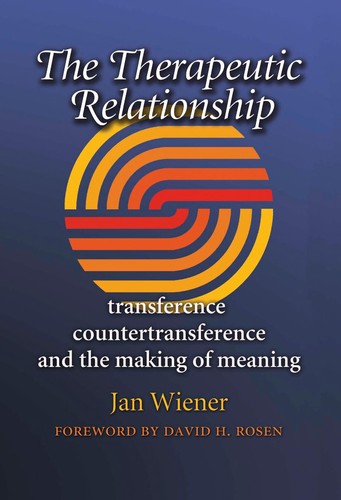
- Sedgwick, D. (2001). An Introduction to Jungian Psychotherapy: The Therapeutic Relationship. Brunner-Routledge.
- Sedgwick, D. (1994). The Wounded Healer: Countertransference from a Jungian Perspective. Routledge.
- Jung, C.G. (1946). The Psychology of the Transference. In Collected Works, Vol. 16. Princeton University Press.