 Seba.Health
Key Takeaways
- Von Franz does not argue for a metaphysical unity of psyche and matter; she assembles empirical and symbolic evidence that the division itself is an artifact of ego-consciousness, a polarity imposed by the structure of our perception rather than by the structure of reality.
- The book's most radical move is treating number not as an abstract quantity but as the most primitive self-manifestation of spirit in matter—a claim that repositions mathematics as a depth-psychological phenomenon and reframes the entire history of natural science as unconscious archetypal activity.
- By linking Jung's synchronicity concept to the medieval unus mundus and to Ficino's magical mandalas, von Franz constructs a lineage showing that the "psyche-matter problem" is not a modern epistemological puzzle but the central preoccupation of Western esotericism, now re-encountered at the frontier of quantum physics.
The Psyche-Matter Split Is a Perceptual Artifact, Not an Ontological Fact
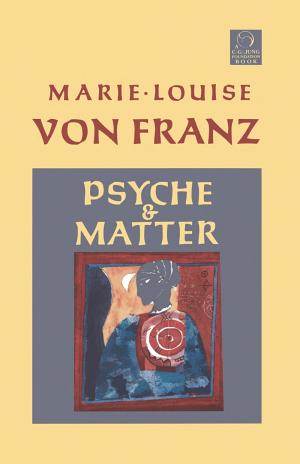
Marie-Louise von Franz opens and closes this collection with a single devastating claim: the distinction between psyche and matter is not a discovery about reality but a limitation of consciousness. “Psyche cannot be totally different from matter, for how otherwise could it move matter? And matter cannot be alien to psyche, for how else could matter produce psyche?” she writes, channeling Jung’s own formulation. The spectral model she deploys—with an “infrared” somatic pole and an “ultraviolet” archetypal pole—is not a casual metaphor but a diagnostic instrument. At both extremes, automatism reigns: compulsive instinct on one side, fanatical possession by an idea on the other. Freedom exists only in the narrow middle band of ego-consciousness, and it is precisely this narrow band that generates the illusion that “inner” and “outer” are fundamentally different categories. Von Franz completes the spectrum into a ring with a dotted line behind the visible arc, positing a “potential unitary reality of psyche and matter” that can never be directly observed but that manifests indirectly through synchronistic events, parapsychological phenomena, and the strange convergence of mathematical constructions with physical behavior. This is not idealism and not materialism; it is a refusal of both, grounded in the clinical fact that we only ever encounter psychic contents—some of which we label “material” and others “spiritual,” but all of which arrive through the same medium. Michael Conforti, in Field, Form, and Fate, later extended this line of reasoning through chaos theory and self-organization, but von Franz’s formulation remains the foundational one: the ring cannot be closed from our side. Only nature itself can perform the “physical reconstruction of psychic processes.”
Number Is the Bridge Between Spirit and Matter—and the Secret Origin of Natural Science
The most philosophically ambitious essays in this collection concern number and time. Von Franz insists, following Jung, that natural number is “the most primitive self-manifestation of spirit.” This is not numerology. She marshals evidence from paleolithic bone-markings (Alexander Marshack’s “time factoring”), Chinese qualitative number-symbolism (via Marcel Granet), Aristotle’s definition of time as “the number of continuous movement,” and the DNA double helix to argue that number is the archetypal form in which the unus mundus first becomes apprehensible to consciousness. The spiral—closed and interrupted, matrilineal and patrilineal—appears in Melanesian kinship systems, in the carbon-nitrogen cycle Jung analogized to the transformation formula of the Self, and in the genetic code. These are not loose analogies; von Franz treats them as independent eruptions of the same archetypal pattern across incommensurable domains. Her claim that all basic themes of Western physics derive from “the intuitive primal symbolic images of Greek natural philosophy” (citing S. Sambursky) reframes the history of science as unconscious archetypal projection—a position that resonates with Jung’s argument in Aion that the Christ-symbol and the alchemical lapis are parallel manifestations of the Self archetype across different cultural substrates. The implication is stark: physics does not escape the psyche; it is one of the psyche’s most elaborate products.
Synchronicity Is Not a Curiosity but the Empirical Evidence for the Unus Mundus
Von Franz devotes several essays to synchronicity, but her treatment differs from popular accounts in a critical way: she positions synchronistic events not as remarkable coincidences to be catalogued but as the only available empirical evidence for the unus mundus—the unitary reality underlying the psyche-matter split. The mandala, she argues (following Jung), is the psychological equivalent of this unity, and synchronicity is its parapsychological equivalent. She traces the lineage of this idea from the first-century alchemist Komarios, who identified the prima materia with the circular structure of the firmament, through Ficino’s Renaissance project of constructing a cosmic clock-mandala from gold, silver, and brass, to Jung’s formulation that “absolute knowledge”—the a priori awareness manifest in precognitive dreams and telepathic events—points toward a domain where the subject-object distinction dissolves. The Tang dynasty anecdote she includes, in which a volcanic eruption is read as a mirror of the empress’s psychic imbalance, is not presented as quaint exoticism but as a coherent epistemology: the Chinese assumption that matter mirrors psyche is the complement of the Western assumption that psyche mirrors matter, and both are partial truths. Frances Yates’s work on Giordano Bruno and the Hermetic tradition provides von Franz with historical corroboration that the mandala-as-divination-device was once a central intellectual technology, not a marginal superstition.
Jung’s Speculation on Psychic Intensity Anticipates the Hard Problem of Consciousness
One of the most electrifying passages in the book is von Franz’s exposition of Jung’s speculative letter to John R. Smythies, in which Jung proposes that the psyche should be understood as “unextended intensity” rather than as a body moving through time. The brain, in this model, is a transformer station converting the “relatively infinite tension or intensity of the psyche proper” into “perceptible frequencies of extensions.” Von Franz does not present this as settled science; she presents it as the most productive explanatory hypothesis available, because it accounts for ESP phenomena, mystical states, the intensification of psychic experience in schizophrenia, yogic reports of the Buddha-body emerging through the skull, and near-death experiences under a single framework. This is precisely the kind of bold speculative bridging that David Bohm’s implicate order attempts from the physics side and that Conforti later pursued through the lens of self-organizing systems. Von Franz’s unique contribution is to demonstrate that the alchemists already occupied this territory: they “approached matter not only from without in chemical experiments, but also from within by active imagination,” knowing that the observer’s psychological condition was implicated in the work. The rationalism of the seventeenth century drove spirit and matter apart; the task now, von Franz argues, is to reunite them “in a cleaner way”—not by collapsing the distinction but by recognizing the intermediate realm of “subtle bodies” that manifests whenever physics touches “untrodden, untreadable regions” and psychology admits forms of psychic life beyond personal consciousness.
This book matters today not as a historical curiosity but as the most rigorous attempt within the Jungian tradition to think the psyche-matter problem without retreating into either reductive materialism or mystical inflation. No other work in the depth-psychological canon so systematically integrates alchemical symbolism, quantum epistemology, number theory, and clinical observation into a single argumentative arc. For anyone struggling with the “hard problem” of consciousness from within a psychological rather than a neuroscientific framework, Psyche and Matter remains the essential starting point—not because it solves the problem, but because it demonstrates, with scholarly precision, that the problem itself is an archetypal configuration, and that the compulsion to solve it is itself a manifestation of the Self seeking its own unity.
Sources Cited
- von Franz, M.-L. (1988). Psyche and Matter. Shambhala Publications. ISBN 978-1-57062-620-3.
- Jung, C. G. (1960). Synchronicity: An Acausal Connecting Principle (CW 8). Princeton University Press.
- Pauli, W., & Jung, C. G. (2001). Atom and Archetype: The Pauli/Jung Letters, 1932-1958. Princeton University Press.