 Seba.Health
Key Takeaways
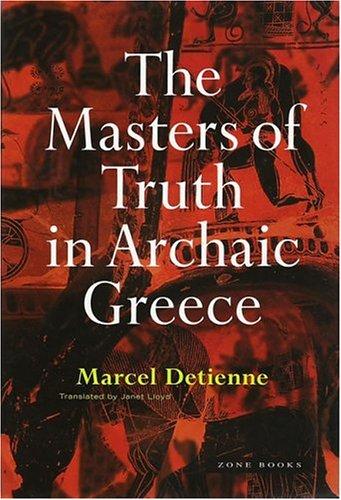
- Detienne demonstrates that *Aletheia* in archaic Greece was not a philosophical concept but a performed social power — a ritual speech-act wielded by poets, seers, and kings whose authority preceded and produced the later "rational" discourse philosophy claims as its origin.
- The book dismantles the standard narrative of the Greek "miracle" — the leap from myth to reason — by showing that the secularization of truth was not an epistemological breakthrough but a political redistribution: truth migrated from the mouth of the inspired singer to the center of the warrior assembly, from divine gift to agonistic contest.
- Detienne reveals that the opposition between *Aletheia* (truth) and *Lethe* (forgetting/concealment) is not a logical binary but a mythic topology — a spatial and psychological field in which memory, speech, and oblivion function as living forces, making his work an unacknowledged foundation for any depth psychology that takes the archaic psyche seriously.
Truth in Archaic Greece Was Not Discovered but Performed — and This Changes Everything About the “Origin” of Western Rationality
Marcel Detienne’s The Masters of Truth in Archaic Greece executes a precise demolition of one of Western philosophy’s most self-congratulatory myths: that truth emerged when the Greeks learned to think rationally, breaking free from the fog of myth. Detienne shows the opposite. In the archaic period — the world of Homer and Hesiod, of the basileus and the inspired poet — Aletheia was not a property of propositions or a correspondence between mind and world. It was an efficacious speech-act, a performative power exercised by specific social figures: the poet (aoidos), the seer (mantis), and the king of justice. These “masters of truth” did not argue for truth; they produced it through utterance. The poet’s song, backed by Mnemosyne and the Muses, did not “describe” the past — it made the past real, conferring glory (kleos) or oblivion on the dead. Truth here operates as what Detienne calls a “magico-religious” function: a word that acts, that creates the reality it names. This is not a primitive failure to distinguish fact from fiction. It is a fundamentally different ontology of speech, one in which language is world-constituting. Edward Edinger, in The Psyche in Antiquity, recognizes that the early Greek philosophers “were the first to articulate certain ideas and images that are central to the Western psyche,” but he reads this articulation as the emergence of archetypal content into conscious form. Detienne’s contribution is more radical: he shows that the very medium through which psychic content was articulated — inspired speech, ritual memory, the praise-blame polarity — was itself a psychic structure, not merely a vehicle for ideas but the living tissue of collective soul-life.
The Secularization of Truth Was a Political Event, Not an Intellectual Awakening
The decisive shift Detienne traces is from the poet’s inspired word to the warrior’s deliberative speech in the middle of the assembly. When the Greek military aristocracy placed the spoils of war es meson — “in the center” — for collective adjudication, they enacted a spatial revolution. Truth was no longer dispensed from a singular, divinely authorized mouth; it was contested in a shared, agonistic space. The circle of warriors replaced the throne of the king. Aletheia migrated from the domain of Memory and the Muses to the domain of Peitho (Persuasion) and Eris (Strife). This is the true genealogy of what later becomes philosophical logos — not a calm ascent from myth to reason, but a transfer of truth’s social location from the inspired periphery to the contested center. Detienne’s analysis here resonates powerfully with James Hillman’s insistence in Re-Visioning Psychology that “Greece” functions less as a historical geography than as “an inscape rather than a landscape, a metaphor for the imaginal realm.” But Detienne complicates Hillman’s aestheticized Greece by insisting on the material, institutional, and political dimensions of the transformation. The imaginal did not simply persist as an eternal reservoir of archetypes; it was actively reorganized by shifts in social practice — the rise of the hoplite phalanx, the emergence of the polis, the decline of the king’s ritual sovereignty. For depth psychology, this is a crucial corrective: the archetypes do not float free of history; the very structures through which psyche speaks — memory, forgetting, praise, blame, center, margin — are themselves historically constituted.
Aletheia-Lethe Is a Mythic Topology of Psyche, Not a Logical Opposition
Detienne’s most psychologically fertile insight concerns the pairing of Aletheia and Lethe. In the archaic Greek imagination, these are not abstract logical contraries (true vs. false) but living mythic powers arranged in a spatial field. Lethe — forgetting, concealment, the waters of oblivion — is not the mere absence of truth but its active antagonist, a force with its own agency and its own terrain. The poet who remembers (mnaomai) wrests reality from the waters of Lethe; the uninspired or condemned fall back into its darkness. This topology maps directly onto depth-psychological concerns: the relationship between consciousness and the unconscious, between memory and repression, between what is brought into the light of speech and what sinks into the unmemorable. Wolfgang Giegerich, in his essay on Actaion and Artemis, insists that “soul and truth are correlates” and that “like water for fish, so is truth the native element for the soul.” Detienne provides the archaic genealogy for this claim. Before philosophy abstracted truth into a property of judgments, truth was experienced as a field of forces — Mnemosyne against Lethe, praise against blame, presence against oblivion — through which the soul navigated. The archaic Greek did not “have” truth; the archaic Greek was immersed in it or exiled from it, and the passage between these states was mediated by ritual, song, and divinely sanctioned speech.
The Withdrawal of the Sacred from Speech Is the Founding Trauma of Western Thought
Detienne’s narrative culminates in what amounts to a loss: the disenchantment of the word. When truth becomes something argued rather than sung, when Peitho replaces Mnemosyne, when the philosopher replaces the poet, something is gained — the possibility of critique, of democratic contestation, of what will become science — but something is also irrevocably forfeited. The word loses its efficacy. Language no longer creates reality; it merely refers to it. David L. Miller, in The New Polytheism, argues that the Gods and Goddesses of Greece “are the empowering worlds of our existence; the deepest structures of reality” — not metaphors, not allegories, but ontological presences. Detienne’s work shows when and how those presences were expelled from the social function of speech, relocated from the public word to the private vision, from the singer’s authority to the philosopher’s argument. This is why The Masters of Truth matters for anyone working within depth psychology today: it provides the historical archaeology of a wound that psychotherapy still treats. The modern patient who cannot find words adequate to experience, whose speech feels emptied of power, whose dreams carry more authority than waking discourse — this patient inhabits the aftermath of the transformation Detienne describes. No other book in the classical tradition so precisely identifies the moment when the living word became the dead proposition, when Aletheia ceased to be an event and became a concept. For the depth psychologist, Detienne’s work is not background reading — it is the missing genealogy of the very split between psyche and logos that the therapeutic enterprise exists to repair.
Sources Cited
- Detienne, M. (1996). The Masters of Truth in Archaic Greece. Trans. Janet Lloyd. Zone Books.
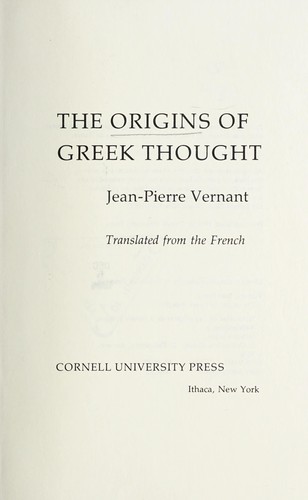
- Vernant, J.-P. (1982). The Origins of Greek Thought. Cornell University Press.
- Heidegger, M. (1927/1962). Being and Time. Trans. Macquarrie and Robinson. Blackwell.