 Seba.Health
Key Takeaways
- The Iliad is not a war poem but a poem about what happens when the mortal subject is forced into the closed crucible of permanent loss, radical uncertainty, and utter powerlessness—the conditions under which the thūmos either anneals into character or shatters.
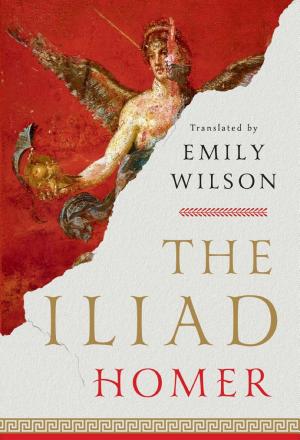
- Emily Wilson's 2023 translation, by restoring rhythmic fidelity and stripping away centuries of Latinate heroic inflation, inadvertently makes audible the Middle Voice operations—the self-deliberating, self-constituting negotiations with the thūmos—that earlier English translations buried under the syntax of imperial agency.
- The Iliad's theological architecture reveals that the gods never undergo the dielexato crisis (the interior rupture of self-debate) because they are not fractured by death; divinity in Homer is not a higher form of consciousness but a structurally impoverished one, incapable of the annealing that produces sebas.
The Iliad Is the Original Manual for the Forging of the Soul Under Conditions That Cannot Be Mastered
Homer’s Iliad has been read as military epic, as aristocratic propaganda, as the foundation stone of Western literature. None of these readings reach the poem’s actual engine. What drives the Iliad is a single psychological question: what happens to the human subject when every exit is sealed—when loss is permanent, uncertainty is radical, and power is stripped away? This is the situation Achilles enters in Book 1 and never leaves. His choice between a short glorious life and a long obscure one is not a dramatic device; it is the structural precondition for everything the poem does to the soul. As Cody Peterson has argued in his analysis of the Homeric thūmos, when mortality’s three constraints converge simultaneously, they create a closed system—a crucible—in which “discharge becomes impossible” and the psyche is left with no evasion. The Iliad is the poem of that crucible. Every hero in it—Patroclus, Hector, Ajax, Sarpedon—enters the same furnace. What differentiates them is not courage in the vulgar sense but the structural integrity of their internal vessel, their capacity to hold what cannot be resolved. Emily Wilson’s 2023 translation, the first complete English Iliad by a woman, strips away the barnacled Latinate grandeur that Pope and Lattimore layered onto the poem and restores something closer to the swift, paratactic percussion of the Greek. In doing so, she makes the poem’s interior negotiations newly visible. When Odysseus, isolated on the battlefield in Book 11, addresses his “mighty thūmos” (megalētora thūmon), the formula is not decorative. It is diagnostic: the hero has entered the rupture between the knowing mind and the feeling chest, and the verb dielexato—the aorist middle of dialegomai—marks a specific crisis of counsel that exists only in the Middle Voice. Wilson’s leaner English, unburdened by the Victorian convention of making every Homeric hero sound like a parliamentary orator, lets these moments register as the somatic events they are.
The Gods Do Not Deliberate Because They Cannot Die: Divinity as Structural Poverty
Karl Kerényi observed that the Iliad’s world is stamped by “the finality of the fate that befalls its short-lived hero,” and that this finality is what excludes Hermes—the god of alternative pathways, of dissolution of fatal opposites—from the poem’s central action. Kerényi’s insight can be extended further. The gods in the Iliad are not merely distant from death; they are structurally incapable of the psychological operation death makes possible. Peterson’s lexical analysis demonstrates that when a god speaks to his thūmos, Homer uses the active verb mythēsato—a closed-loop monologue, an imperial recitation of will. The gods never use dielexato. They never enter the rupture, because the rupture is produced by mortality’s pressure. This is not a limitation Homer places on the gods for dramatic convenience; it is the poem’s deepest theological claim. Divinity in the Iliad is a form of psychological incompleteness. Ares whines when wounded. Aphrodite flees the battlefield in tears. Zeus himself, watching his son Sarpedon die in Book 16, is restrained by Hera from intervening—and his grief, while genuine, produces no transformation. The god who cannot die cannot be annealed. He cannot undergo the tlaō process—the compression of polla algea (many sufferings) into the hardened vessel that alone can sustain sebas, the somatic event of the sacred entering the chest. When Iris tells Achilles in Book 18, sebas de se thūmon hikesthō—“let awe reach your thūmos”—she is invoking a physics of reception that presupposes a vessel tempered by loss. The gods possess no such vessel because they have never been forged.
Achilles’ Rage Is Not a Character Flaw but the Sound of a Thūmos Under Impossible Pressure
James Hillman argued that “the pathology and the cure are there together” in myth, and that myth “unfolds, moves, and at its different joints leads off into various possibilities.” The Iliad enacts this principle through its central figure. Achilles’ mēnis—the divine rage that opens the poem—is not a defect to be corrected but the acoustic signature of a thūmos bearing a load it was not designed to carry alone. Agamemnon’s seizure of Briseis does not merely insult Achilles’ honor; it collapses the social structure that distributed the weight of mortality across the community. The hero is left holding the full mass of his fate without the counterbalance of recognition. His withdrawal is not petulance; it is the behavior of a vessel that has reached its limit of compression without the corresponding sebas from the community that would make the pressure bearable. When Patroclus dies wearing Achilles’ armor—a doubling so deliberate it functions as a mirror—the crucible seals shut entirely. Now permanent loss (Patroclus is gone), radical uncertainty (the war’s outcome is unknown), and utter powerlessness (death cannot be reversed) converge simultaneously. Achilles’ return to battle in Book 19 is not a recovery of heroic will; it is the emergence of a subject who has been reconstituted by the furnace. The new armor Hephaestus forges is the poem’s image for the annealed thūmos—a vessel beaten into shape by divine craft precisely because the old one shattered. Hillman’s observation that Odysseus “resolves a morbid division fundamental to the Western psyche” between senex and puer applies inversely to Achilles: he is the figure in whom that division is most violently exposed, the puer who cannot reach the senex because death intervenes before the integration is complete.
Wilson’s Translation Recovers the Poem’s Middle Voice for a Culture Trapped in the Active-Passive Binary
What Wilson’s Iliad offers the contemporary reader—particularly one formed by depth psychology—is not merely a fresh English text but an inadvertent recovery of the poem’s original psychological grammar. The depth tradition from Jung through Hillman has been attempting to reconstruct what Peterson calls the “abolished middle”: a stance interior to the process, neither commanding from above nor collapsed beneath, but situated within the soul’s own operations. Jung’s Active Imagination is, as Peterson argues, “nothing less than a resurrection of the dielexato formula”—a technique for engaging the unconscious as a partner in deliberation rather than an object of analysis. Hillman’s insistence on esse in anima, “being in soul,” is the precise ontological stance the Iliad dramatizes in every scene where a hero turns inward to consult his thūmos before acting. Wilson’s translation, by refusing to inflate the heroes into Victorian monuments of will, preserves the tremor of that consultation. Her Achilles sounds like a man in genuine crisis, not a marble bust delivering speeches. This matters because the modern reader, as Peterson and Hillman both diagnose, is trapped in a grammatical and psychological binary—Active mastery or Passive collapse—that makes the Iliad’s central operation unintelligible. Wilson does not solve this problem, but she removes one layer of obstruction. For anyone working within the depth tradition, this Iliad is the indispensable text: not because it is the oldest poem in the Western canon, but because it is the only poem that shows, with full dramatic and somatic specificity, the forging of a human soul under conditions that admit no escape—the precise conditions depth psychology exists to address.
Sources Cited
- Homer. (2023). The Iliad (E. Wilson, Trans.). W. W. Norton. ISBN 978-1-324-00180-5.
- Caswell, C. P. (1990). A Study of Thumos in Early Greek Epic. Brill.
- Snell, B. (1953). The Discovery of the Mind: The Greek Origins of European Thought. Harvard University Press.