 Seba.Health
Key Takeaways
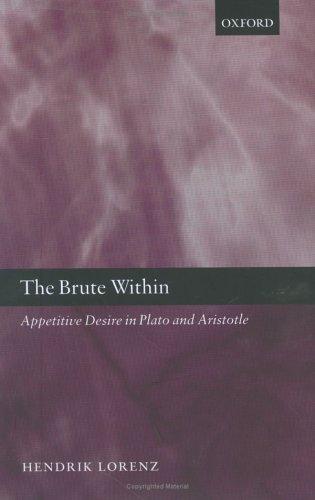
- Lorenz demonstrates that Plato's tripartite psychology is not a metaphysical speculation about soul-parts but a rigorous theory of desire's cognitive structure—appetite in the *Republic* possesses its own form of representation, irreducible to belief or rational judgment, which makes the "brute within" not a chaos to be suppressed but a psychic agent with its own logic.
- The book recovers Aristotle's radical departure from Plato on appetitive desire by showing that Aristotle dissolves the tripartite soul into a hylomorphic framework where appetite is not a separate psychic subject but a capacity of the unified embodied organism—a move that simultaneously gains explanatory parsimony and loses the dramatic moral psychology of internal conflict that Plato's partition made visible.
- Lorenz's reconstruction reveals that the ancient philosophical debate about whether appetite can be "persuaded" or only "compelled" is the historical origin of the modern clinical question at the heart of addiction and compulsion: whether irrational desire is cognitively penetrable or operates below the threshold of reason's reach.
Appetite Is Not Irrationality but a Distinct Mode of Psychic Cognition
Hendrik Lorenz’s The Brute Within accomplishes something that neither classicists nor psychologists typically attempt: it treats the ancient Greek discourse on appetitive desire (epithymia) as a sophisticated cognitive theory rather than a moral allegory about the beast in us. The standard reading of Plato’s Republic treats the tripartite soul as a convenient metaphor—reason governs, spirit enforces, appetite obeys or rebels. Lorenz dismantles this domesticated picture. He demonstrates that Plato assigns to the appetitive part of the soul its own mode of representation—what Lorenz calls “appearings” or quasi-perceptual states that present their objects as good without passing through the architecture of belief or rational evaluation. This is not a minor scholarly refinement. It means that for Plato, the “brute within” is not formless chaos but a structured psychic agent that perceives its world, evaluates it, and moves toward it according to its own internal logic. The appetitive soul has what amounts to its own epistemology, one that operates through images and appearances rather than propositions and arguments.
This reading resonates powerfully with James Hillman’s insistence, drawn from Jung, that images and instincts are not opposed but are “two faces of the one thing.” In Hillman’s spectrum model from Senex and Puer and related works, the infrared end of instinctual desire and the ultraviolet end of fantasy image are inseparable: “Your images are instincts in fantasy form; your instincts are the patterned behavior of imaginings.” Lorenz’s Plato arrives at a structurally parallel insight through entirely different means—appetite does not blindly grope but operates through its own representational medium, one that presents the desirable as an image of the good. What Hillman theorizes through archetypal psychology, Lorenz excavates from the dialogues as a philosophical position Plato actually held. The brute is not blind; it sees, but it sees through appearances that bypass rational adjudication.
Aristotle’s Unification of the Soul Dissolves the Drama of Inner Conflict
The second half of Lorenz’s argument tracks how Aristotle receives and transforms this Platonic inheritance. Where Plato’s tripartition generates a vivid moral psychology—the soul as a political community in which appetite can stage a kind of civil war against reason—Aristotle’s hylomorphic account of soul as the form of a living body resists this pluralization. For Aristotle, desire (orexis) is a genus of which appetite, spirit, and rational wish are species, but these are capacities of a single unified soul, not autonomous agents within it. Lorenz shows that Aristotle’s account of akrasia (weakness of will) consequently takes a different shape: the incontinent person is not someone whose appetitive soul-part overpowers the rational part, but someone whose practical syllogism is disrupted by the particular premise being “dragged” by appetite away from the universal premise that reason supplies. The drama is relocated from civil war between soul-parts to a failure within a single deliberative process.
This has consequences that extend well beyond ancient philosophy. Gregory of Nyssa, drawing explicitly on both Plato and Aristotle, wrestles with precisely this question when he asks whether the “passions” inherited from our “kinship with the brutes” are instrumental—capable of being turned toward virtue or vice—or whether they are alien accretions to be shed in the soul’s purification. Gregory’s position, articulated in On the Soul and the Resurrection, that “according to the use which our free will puts them to, these emotions of the soul become the instruments of virtue or of vice,” is closer to Aristotle’s integrated model than to Plato’s partitioned one. Yet Gregory also preserves the Platonic dramatic tension: when “reason drops the reins and is dragged behind like a charioteer,” the human being “sinks by the force of these passions to the level of the brute.” Lorenz’s careful delineation of the Platonic and Aristotelian alternatives reveals that Gregory—and, arguably, the entire Christian ascetic tradition—is working with an unstable synthesis of two genuinely incompatible psychologies of desire.
The Clinical Stakes: Is Appetitive Desire Cognitively Penetrable?
What makes Lorenz’s book indispensable rather than merely learned is that it identifies the philosophical nerve of a question that depth psychology and addiction research have never resolved: can irrational desire be reached by reason, or must it be overridden by something other than rational persuasion? If Lorenz’s Plato is right that appetite operates through its own representational medium—appearances that mimic but are not identical to rational belief—then the therapeutic implication is that you cannot simply argue someone out of a craving. You must intervene at the level of the image, the appearance, the way the desired object shows up for the appetitive soul. This is precisely Marie-Louise von Franz’s clinical observation about confronting “brute forces in the unconscious”: understanding is not enough, and the moment comes when one must say an “absolutely firm no”—but that no cannot be merely rational. It must meet the primitive force on its own ground, with “absolute brute firmness.” Von Franz’s language of trolls that “possess and dominate” echoes Plato’s appetitive soul-part, which has its own quasi-autonomous agency and cannot simply be talked down.
Murray Stein’s reading of Jung through Plato in Transformation identifies the same structural problem: Plato’s three drives—sensuality, power, wisdom—can each “take over and become the prime motivation,” and what harnesses them is not argument but the transformative image of Beauty, an image that “gathers energy to itself like a magnet” and redirects the warring factions. This is Lorenz’s point refracted through Jungian optics: if appetite has its own mode of representation, then only an image powerful enough to restructure that representation can redirect desire. Lorenz’s meticulous philological work thus provides the ancient philosophical scaffolding for what depth psychology has been groping toward clinically—a theory of desire in which the “brute within” is not mere animal impulse but a structured form of psychic life that requires its own specific mode of therapeutic engagement, one that works through images and appearances rather than propositional correction. No other single volume makes this lineage so precise or its stakes so clear.
Sources Cited
- Lorenz, H. (2006). The Brute Within: Appetitive Desire in Plato and Aristotle. Oxford University Press.
- Aristotle (c. 350 BCE). De Anima. Trans. J.A. Smith.
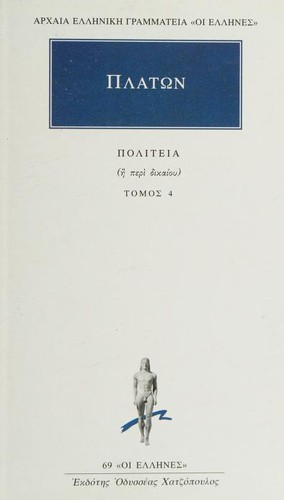
- Plato. Republic. Trans. G.M.A. Grube, rev. C.D.C. Reeve.