 Seba.Health
Key Takeaways
- Peterson does not analogize Homer to Jung but treats Homeric epic as the missing empirical physics of value-creation that Jung's *Answer to Job* postulated but left mechanically unspecified, locating the forge of psychic substance in the morphology of Greek verbs rather than in theological abstraction.
- The systematic exclusion of divine subjects from the present-tense conjugations of *paschō* and the perfect-tense forms of *tlaō* constitutes not a literary convention but an ontological boundary marker: the grammar itself legislates the gods out of value-creation, making mortality the necessary precondition for soul-substance.
- The structural inversion between the Homeric *thūmos* (which retains and compresses grief inward) and the Hebraic *nephesh* (which empties outward under infinite pressure) reframes the Incarnation not as a theological mystery but as an engineering problem — how to build a divine vessel capable of undergoing convergence and yielding the Paraclete as extracted residue.
Value Is Not Discovered but Forged: Peterson’s Completion of Jung’s Unfinished Equation
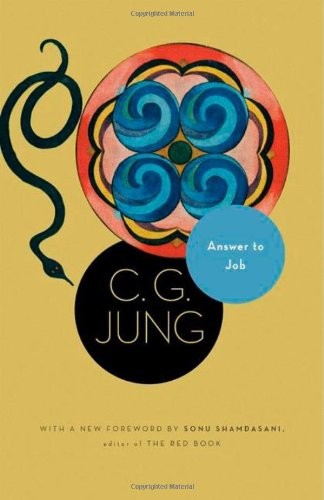
Jung’s Answer to Job delivered the most incendiary claim in twentieth-century psychology: that Yahweh is “too unconscious to be moral,” that Job’s suffering exposed a divine deficit, and that the Incarnation was God’s compelled descent into finitude to acquire what only a mortal could produce. But Jung left the mechanism implicit. He told us that value required mortality; he did not tell us how mortality produces value. Peterson’s intervention is to supply the physics. Drawing on the Homeric formulaic system as “empirical data” rather than literary ornament, he identifies “Mortality’s Three Constraints” — permanent loss, radical uncertainty, and utter powerlessness — as the convergent conditions under which psychic substance is forged. When all three operate simultaneously, the soul becomes a closed system: discharge is impossible, and the thūmos, the thoracic organ of seething breath and accumulated grief, begins its annealing process. This framework reframes what Giegerich called the “absolute negativity” the soul requires: not a philosophical abstraction but a material event governed by laws as precise as thermodynamics. Peterson’s formula — Paschō → Polla Algea → Tlaō → Tetlēoti — is the equation Jung needed but never wrote. It renders value-creation as ontological engineering, not moral instruction.
The Grammar of Exclusion: Why the Gods Cannot Undergo
The article’s most rigorous move is philological. Peterson surveys the Homeric concordance and discovers that the present indicative of paschō appears exclusively with mortal subjects — not once does a god occupy the grammatical position of “one who is actively undergoing.” The few divine instances of adjacent suffering vocabulary (algea, tlaō) appear only in counterfactual constructions or contexts where at least one Constraint is structurally absent: hierarchy softens powerlessness, immortality negates permanent loss, juridical forms dissolve uncertainty. This is not literary preference; it is what Peterson calls an “ontological boundary in the grammar of value-creation.” The gods feel — they rage, grieve, desire — but emotion passes through them without friction, “leaving no sediment.” They are rheia zōontes, “easy-living,” and that ease is precisely their exclusion from the forge. This argument carries implications far beyond Homer. Edinger’s Ego and Archetype proposed that the ego-Self axis develops through repeated cycles of inflation and alienation; Peterson’s framework specifies why those cycles must be suffered rather than merely understood. The divine unconscious, like Yahweh before the Incarnation, cannot generate the axis because it never faces convergence. The mortal ego, crushed under the Three Constraints, is the only site where the Self’s value can be precipitated into substance.
The Iron Thūmos versus the Empty Vessel: Two Architectures of the Same Physics
Peterson’s most architecturally daring claim is the structural inversion between the Homeric thūmos and the Hebraic nephesh. The thūmos is an enclosed, pressurized chamber — grief accumulates kata phrena kai kata thūmon, settling downward by gravity, compressing into the “iron” or “stone” that Homeric formulae describe. The nephesh, by contrast, is philologically a “throat” or “gullet,” an organ of need designed for evacuation. Where the thūmos retains and hardens, the nephesh empties and yields. Christ’s cry in Gethsemane — “My psychē is deeply grieved, to the point of death” — is the sound of a vessel being crushed not to forge internal substance but to extract it. The Incarnation, Peterson argues, reverses the direction of the applied force: accumulation forges the hero’s individual identity; extraction releases the divine essence as the Paraclete. The parallel to Jung’s observation that Christ “stands more on the divine than on the human level” is precise — Christ’s nephesh grazes mortality the way Thetis’s divine nature grazes human grief in the Iliad, but unlike the Olympians, Christ cannot escape. The pressure must be infinite because the contents are divine. Gethsemane — etymologically “oil press” — becomes the literal site where the physics of extraction operates. This inversion illuminates what Jung left cryptic about the Paraclete’s function: it is the residue of divine value-creation, the substance yielded when an immortal consciousness finally undergoes convergence in a vessel built to break.
The Abolished Middle and the Modern Crisis of Receptivity
Peterson’s companion essay, The Abolished Middle, extends the framework into a diagnosis of the modern psyche. The Greek Middle Voice — neither agent nor patient but a subject constituted by its own undergoing — was the grammatical architecture housing the thūmos’s operations. When Latin collapsed the Middle into the Passive, and when the Fourth Council of Constantinople (869 AD) defined the soul as “one rational and intellectual soul,” the organ of feeling was legislated out of existence. Hillman identified this as the source of Western psychology’s oscillation between “peaks of spiritual abstraction and vales of somatic depression.” Peterson adds the mechanical specificity Hillman lacked: without the Middle Voice, the operations of paschō and tlaō become unspeakable, then unfelt, then unthinkable. The First Step of Alcoholics Anonymous — “We admitted we were powerless” — is, Peterson argues, a precise Middle Voice operation misheard by a culture that possesses only Active and Passive categories. The alcoholic who surrenders is not collapsing into victimhood but entering convergence, allowing reality to “persuade” (peisomai) the soul into a new shape. This connection between Homeric soul-physics and addiction recovery is not incidental; Peterson is also the author of The Shadow of a Figure of Light: The Archetype of the Alcoholic, and the two works form a single argument about what happens when the modern soul encounters a closed system it cannot flee.
Why This Book Matters Now
For readers formed by Jung, Hillman, Edinger, and Giegerich, Peterson’s contribution is the missing bridge between theological psychology and embodied phenomenology. No other work in the depth psychology canon specifies the material mechanics by which mortal suffering generates psychic substance — not as metaphor, not as amplification, but as a verifiable pattern encoded in the oldest literary record of the Western soul. The formulaic system of Homer, read through Peterson’s lens, becomes a diagnostic instrument: it tells us not only what value is, but why we cannot create it when we flee convergence, medicate the Constraints, or rush toward premature resolution. In a therapeutic culture that increasingly confuses emotional discharge with soul-making, Peterson’s insistence that “the grammar is lost, but the physics remains” offers the most rigorous counter-argument available — one that locates the forge of character not in insight, not in narrative, but in the capacity to stay.
Sources Cited
- Peterson, C. (2025). The Iron Thūmos and the Empty Vessel: The Homeric Response to 'Answer to Job.' Chiron Publications.
- Jung, C.G. (1952). Answer to Job. In Collected Works, Vol. 11. Princeton University Press.
- Snell, B. (1953). The Discovery of the Mind. Harvard University Press.