 Seba.Health
Key Takeaways
- The *Phaedrus* is not primarily a dialogue about rhetoric or love but a phenomenology of psychic multiplicity — the chariot myth discloses the soul as an internally conflicted structure whose unity is never given but perpetually achieved through the governance of eros.
- Plato's fourfold taxonomy of divine madness (*mania*) in the *Phaedrus* provides the earliest Western framework for understanding psychopathology as theophany — a move that archetypal psychology, from Hillman through Corbin, would take two millennia to recover.
- The dialogue's notorious critique of writing is not Luddite anxiety but a depth-psychological argument: the soul's knowledge is anamnetic and relational, and any technology that externalizes memory threatens to replace the living encounter with the archetype with a dead simulacrum.
The Chariot Myth Is Not an Allegory of Self-Mastery but a Map of Psychic Plurality
Plato’s Phaedrus pivots on one of the most misread images in Western philosophy: the soul as a charioteer driving two winged horses, one dark and unruly, the other white and noble. Conventional readings reduce this to moral allegory — reason must control desire. But the myth’s actual structure is far more radical. The charioteer is not a monarch over subjects; she is a navigator among competing autonomous forces that possess their own natures, their own trajectories, their own wings. The dark horse is not evil; it is the appetitive soul (epithymetikon), the force that binds psyche to embodiment. The white horse is the spirited soul (thumoeides), the heroic capacity for self-transcendence that, left untempered, produces ascetic grandiosity. The charioteer — reason (logistikon) — does not suppress either horse but must artfully coordinate their divergent energies to achieve ascent. Robert Place rightly identifies this tripartite structure as the source for the Tarot’s Chariot card with its light and dark sphinxes, and as the organizing principle behind the Marseilles trumps’ threefold division. But the deeper point, the one Murray Stein grasps when he calls Jung’s depth psychology “a psychologically based version of Plato’s philosophical vision,” is that the Phaedrus chariot is the original image of what Jung would name the tension of opposites held within a superordinate function. The soul’s unity is not a metaphysical given; it is an achievement — and one that can fail across many lifetimes. This is individuation avant la lettre, a process demanding the integration of forces that the ego does not author and cannot fully control.
Divine Madness Is Not a Concession to Irrationalism but a Taxonomy of Archetypal Possession
The Phaedrus contains Socrates’ famous defense of mania — madness — which he divides into four kinds: prophetic (Apollo), telestic or ritual (Dionysus), poetic (the Muses), and erotic (Aphrodite and Eros). This is not a rhetorical flourish appended to a speech about love. It is the dialogue’s conceptual engine. Each form of madness corresponds to a specific god, and each god opens a distinct mode of consciousness inaccessible to sober rationality. Hillman, in The Myth of Analysis, seizes on exactly this passage — Phaedrus 244d-e — to argue that secular psychiatry’s reduction of madness to pathology destroys the theophanic content of psychic disturbance. The “right maenadism,” the “white” kind of Dionysian ritual madness that Plato endorses, depends on recognizing the god in the syndrome. Without that recognition, hysteria becomes mere diagnosis, and the soul’s communication through its disorders is silenced. Hillman’s distinction between “black” and “white” maenadism — drawn from Dodds’ reading of Euripides’ Bacchae but rooted in this Platonic taxonomy — amounts to a clinical principle: the difference between destructive possession and transformative initiation lies not in the intensity of the experience but in whether consciousness can discern which god is present. The Phaedrus thus provides the first Western diagnostic framework in which pathology is simultaneously revelation, a framework that Jungian and post-Jungian psychology spent the twentieth century rebuilding from scratch.
Eros as the Engine of Anamnesis Recasts Desire as Epistemological Force
The Phaedrus stakes its most audacious claim in linking eros to knowledge. When the lover beholds the beloved, Socrates says, the soul’s wings begin to regrow — not through rational effort but through the shock of beauty recollected from the soul’s pre-incarnate vision of the Forms. This is anamnesis enacted through desire. Edinger’s treatment of Platonic recollection in his commentary on the Phaedo illuminates the therapeutic parallel: psychoanalytic anamnesis — the recovery of repressed childhood experience — recapitulates Plato’s doctrine that learning is remembering what the soul already knows. But the Phaedrus goes further than the Phaedo or the Meno because it locates the trigger of recollection not in dialectical questioning but in erotic encounter. The beloved’s face is the mnemonic device. Beauty is the epistemological catalyst. Stein recognizes this when he traces the line from Diotima’s teaching in the Symposium to the Phaedrus: Eros draws the soul from concrete object to abstract Form, and this movement — not rational analysis — is what transforms the psyche’s warring factions into harmonious unity. The “transformative image” that Stein identifies as central to Jung’s psychology of individuation finds its prototype here: a numinous encounter that reorganizes psychic energy around a new center. Plato is describing, in mythological register, what Jung would call the constellation of the Self through an encounter with the anima.
Writing as a Pharmakon: The Dialogue’s Self-Undermining Form
The Phaedrus famously ends with Socrates’ critique of writing — the myth of Theuth and Thamus, in which the invention of letters is exposed as a drug (pharmakon) that produces the appearance of wisdom rather than wisdom itself. This is routinely taken as paradox, since Plato writes this critique down. But read through a depth-psychological lens, the critique is perfectly coherent. What the soul needs is not information but relationship — the living dialectical encounter in which anamnesis occurs. Written words cannot respond to questions; they repeat themselves identically to every reader. They are, in Hillman’s language, literalizations: fixed meanings that arrest the soul’s imaginal movement. The Phaedrus itself, as a written dialogue that dramatizes living speech, embodies the tension it describes. It is a pharmakon that knows it is a pharmakon — a text that teaches its reader to distrust texts in favor of the psyche’s own interior discourse. This self-reflexive structure anticipates the alchemical paradox that Edinger identifies in the axiom of Maria Prophetissa: the third that generates the fourth, the text that points beyond itself to the living experience it cannot contain.
For anyone navigating depth psychology today, the Phaedrus is irreplaceable not as historical source material but as a living diagnostic instrument. It names what modern psychology has largely forgotten: that eros is cognitive, that madness can be initiatory, that the soul is plural, and that no externalized system of knowledge — written, digital, algorithmic — substitutes for the embodied encounter between souls in which genuine transformation occurs. Every subsequent articulation of the archetype, the complex, and the transformative image is, as Emerson said of all Western philosophy, a footnote to what Plato accomplished here.
Sources Cited
- Plato. Phaedrus. Trans. Alexander Nehamas and Paul Woodruff (1995). Hackett.
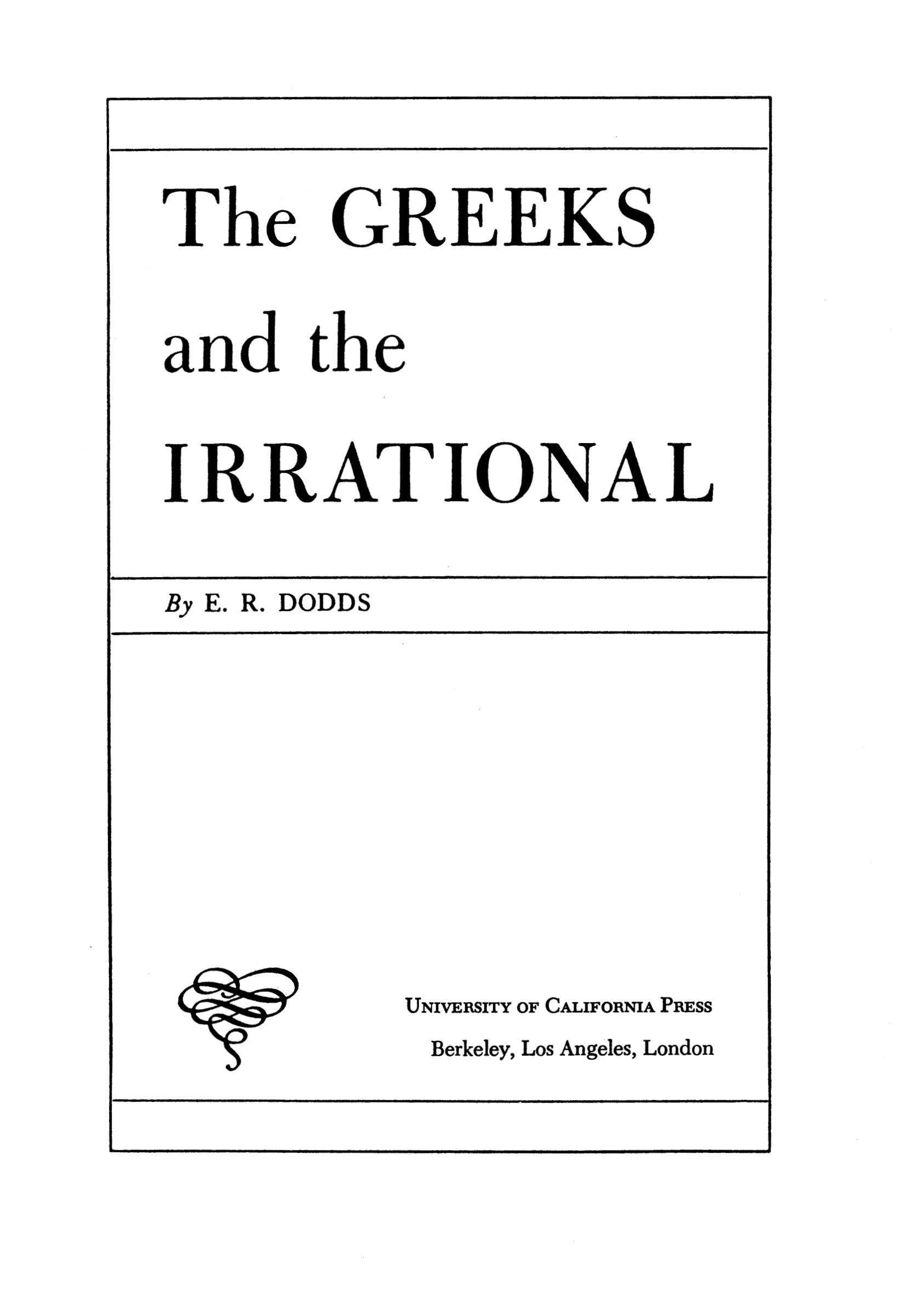
- Dodds, E. R. (1951). The Greeks and the Irrational. University of California Press.
- Pieper, J. (1964). Enthusiasm and Divine Madness. St. Augustine's Press.