 Seba.Health
Key Takeaways
- Harvey and Baring do not merely catalog goddess traditions but construct a meta-mythology in which the Divine Feminine functions as the psyche's own lost umbilical cord to being — making the book less a survey and more a diagnostic of Western civilization's dissociative split between spirit and nature.
- The text's insistence on the Mother as simultaneously transcendent and immanent directly challenges both patriarchal theology (which exiles the feminine to pure spirit) and contemporary goddess feminism (which confines her to pure body), positioning the Hindu Shakti tradition as the corrective lens for both distortions.
- By tracing the Shekinah, the Black Madonna, Kali, Tara, and Kuan Yin as continuous eruptions of the same suppressed archetype, the book implicitly extends Campbell's thesis in *The Masks of God* — that the goddess was never destroyed but driven underground — into a clinical argument about what happens to civilizations that sever themselves from the maternal ground of being.
The Divine Feminine Is Not a Symbol to Be Recovered but a Dissociation to Be Diagnosed
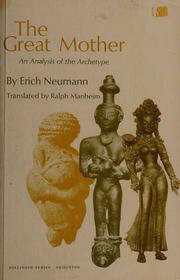
Andrew Harvey and Anne Baring’s The Divine Feminine (1996), frequently shelved alongside Joseph Campbell’s posthumous Goddesses: Mysteries of the Feminine Divine (2013), operates on a fundamentally different register than a devotional anthology. Its surface is a curated gallery of sacred texts — Sumerian hymns, Kabbalistic poetry, Hindu doxologies, Buddhist miracle tales — spanning every major civilization’s encounter with the goddess. Its actual argument is psychiatric. The introduction frames Western civilization’s three-thousand-year suppression of the feminine face of God not as a theological error but as a developmental catastrophe: “Without the consistent and loving care of the mother in early childhood, the child has no trust in itself, no power to survive negative life experiences.” Harvey and Baring are speaking about cultures the way Donald Winnicott spoke about infants. The “good enough mother” has been excised from the godhead, and the collective psyche compensates with what they call “an insatiable need for power and control over life.” This is not goddess nostalgia. It is a depth-psychological diagnosis dressed in comparative mythology. The resonance with Erich Neumann’s The Great Mother is unmistakable: both works understand the maternal archetype as the original container of consciousness, not its enemy. But where Neumann traces the archetypal stages through which ego differentiates from the maternal uroboros, Harvey and Baring insist the differentiation has gone pathological — the ego has not merely separated from the mother but amputated her.
The Hindu Synthesis Exposes the Fatal Either/Or of Western Goddess Discourse
The book’s most penetrating intellectual move occurs in its chapter on Hinduism, where the authors identify the two “temptations” that have dogged all engagement with the Divine Feminine: making her purely transcendent or purely immanent. The first temptation is patriarchal asceticism — spirit purified of flesh. The second, they argue with startling directness, is “the sad position of many contemporary feminists” who confine the goddess to body, sexuality, and earthly pleasure while abandoning her “transcendental dimension with its enormous powers of vision, illumination, and strength.” Against both, the authors elevate the Devi Mahatmya’s vision of Durga-Kali as the figure who holds destruction and creation, formlessness and form, in nondual embrace. This is not eclecticism. It is a precise argument about psychic wholeness that parallels Jung’s insistence in Answer to Job that the godhead must integrate its own shadow. Ramakrishna and Ramprasad, who worship Kali in her terrible aspect, become the book’s exemplary mystics because they refuse the sentimentality that depth psychology also rejects: the fantasy of a “good mother” without teeth. Campbell himself, in The Masks of God: Oriental Mythology, had already identified the Kena Upanishad passage where the Goddess teaches the male gods the nature of brahman as the pivotal moment when the suppressed feminine reasserts metaphysical authority. Harvey and Baring extend this insight into a full program: the Mother must be known as death, hurricane, and annihilation, or she is not known at all.
The Shekinah and the Black Madonna Reveal the Goddess Hiding Inside Monotheism
One of the book’s most original contributions is its sustained reading of the Kabbalistic Shekinah and the Christian Black Madonna as the goddess encrypted within the very traditions that officially abolished her. The Shekinah — “the feminine image of the godhead as Mother, Daughter, Sister, and Holy Spirit” — restores to Judaism a sacred marriage between masculine and feminine principles that the patriarchal surface theology systematically conceals. The Song of Songs becomes not erotic poetry safely allegorized but the liturgical trace of a Bronze Age hierogamy. Similarly, the Black Virgins of the Auvergne inherit Isis directly: they follow “the ancient Egyptian statues of Isis as the ‘Throne’ holding her son Horus-Pharaoh on her lap.” Mary’s name derives from mare, the sea — one of the oldest feminine symbols. This is Campbell’s method from The Hero with a Thousand Faces applied in reverse: instead of tracking the monomyth’s universal hero, the authors track the monomyth’s universal mother through her successive disguises. Christine Downing’s analysis of Campbell’s own goddess scholarship confirms this pattern — Campbell showed that biblical mythology “inverts the meaning of images drawn from the neolithic organic nonheroic vegetal-lunar goddess complex,” addressing “a pictorial message to the heart that exactly reverses the verbal message addressed to the brain.” Harvey and Baring make this inversion visible and reversible.
Why the Anthology Form Is Itself the Argument
The decision to let Enheduanna, Apuleius, the Devi Mahatmya, the Lotus Sutra, and the Zohar speak in their own voices — rather than subordinating them to a single authorial narrative — enacts what the book argues. The Divine Feminine is not a concept to be explained but a presence to be encountered. Each text is a fragment of the shattered goddess-body, recalling the myth of Sati whose dismembered limbs sanctified fifty-two pilgrimage sites across India. The reader who moves from Inanna’s hymns through Demeter’s grief to Kuan Yin’s compassion undergoes something closer to ritual circumambulation than academic survey. This is the book’s kinship with James Hillman’s archetypal psychology: meaning is not extracted from image but deepened by staying with image. The authors trust the texts to do what argument alone cannot.
For the reader entering depth psychology today, The Divine Feminine accomplishes something no single-tradition study can: it makes the absence of the goddess in Western monotheism viscerally strange. After encountering the Shekinah’s exiled radiance, the Devi Mahatmya’s cosmic battle, and Isis’s self-declaration as “Nature, the Universal Mother,” the reader returns to the standard Western godhead and finds it amputated — not merely incomplete but wounded. That recognition, Harvey and Baring would insist, is itself the beginning of the goddess’s return: consciousness recognizing its own dissociation is the first act of repair.
Sources Cited
- Campbell, J. (ed. S. Rossi, 2013). Goddesses: Mysteries of the Feminine Divine. New World Library.