 Seba.Health
Key Takeaways
- Neumann's schema of the Great Mother is not a catalogue of goddess images but a cartography of ego-fragmentation — it maps how consciousness survives the encounter with an archetype that, by definition, exceeds all representation.
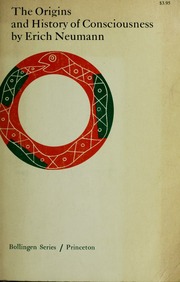
- The book's central theoretical move — the distinction between the "primordial archetype" and its fragmented derivatives — provides the missing structural link between Jung's concept of the collective unconscious and the developmental ego psychology Neumann elaborated in *Origins and History of Consciousness*.
- Read correctly, *The Great Mother* is a study of patriarchal consciousness told from underneath: it reveals that the Western ego's stability depends on the successful repression of the Terrible Mother, making the book an inadvertent diagnosis of the psychic cost of that repression.
The Archetype Is Not the Goddess: Neumann’s Radical Separation of Psychology from Archaeology
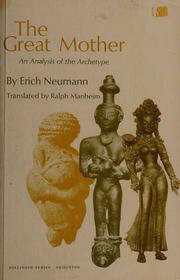
The single most consequential decision Neumann makes is one most readers absorb without noticing: he severs the Great Mother from any historical cult. The book opens with Bachofen’s injunction to aim beyond one’s reach, and the foreword by Martin Liebscher makes explicit what was already latent in the 1955 text — that the archaeological thesis of an ancient Great Mother cult has collapsed. Gimbutas revived it briefly; the consensus buried it again. Neumann himself never needed it. His object is not a goddess worshiped in Çatalhöyük but “an inward image at work in the human psyche,” whose symbolic expressions are tracked across Stone Age Venuses, Egyptian Isis, the Gorgon, and Sophia not as evidence of diffusion or shared ritual but as instances of what he calls “amplification” — Jung’s comparative method scaled to civilizational scope. This is the book’s enduring strength and the reason it survives the demise of the matriarchy hypothesis. Where Joseph Campbell in The Hero with a Thousand Faces still leans on a monomyth that implies historical universality, Neumann brackets history altogether in favor of what he calls “psychohistory”: a developmental sequence of consciousness mapped onto, but not identical with, archaeological time. The Stone Age figurines from Willendorf and Lespugne are “psychologically much ‘earlier’” than certain Egyptian monuments that preceded them by millennia. This move — dating by psychic structure rather than carbon — is either Neumann’s greatest insight or his most brazen circularity. It is probably both.
Fragmentation as Heroic Act: The Structural Engine of the Entire Work
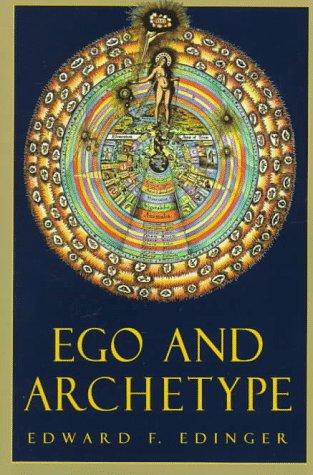
The theoretical core of the book is not the goddess imagery but the process Neumann calls fragmentation. The primordial archetype is “uroboric: terrible and devouring, beneficent and creative; a helper, but also alluring and destructive.” It cannot be visualized because it combines every contradiction simultaneously. Consciousness — which is to say the developing ego — cannot metabolize this totality. It must shatter the archetype into manageable polarities: Good Mother and Terrible Mother, Sophia and Gorgon, Mary and Lilith. Neumann insists this fragmentation is “represented in myths as the deed of the hero”; the separation of the World Parents in Origins and History of Consciousness is the same act viewed from the hero’s side. In The Great Mother, we see it from the archetype’s side — we watch the “unbearable white radiance of primordial light” break into a “multicolored rainbow of images and symbols.” This is not merely descriptive phenomenology. It is a diagnostic framework. When fragmentation fails, the ego is overwhelmed: psychosis, possession, manic seizure. When fragmentation succeeds too completely, the Terrible Mother is repressed entirely, and patriarchal consciousness enthrones “the Good Mother, consort of the Father-Gods,” while the chthonic dimension goes underground. Neumann names this latter outcome the specific pathology of Western culture. Edward Edinger’s Ego and Archetype later formalized a similar dynamic as inflation and alienation along the ego-Self axis, but Neumann identifies the gendered specificity that Edinger’s more symmetrical model obscures: it is the feminine pole of the numinous that patriarchal ego development systematically exiles.
The Vessel Is the Argument: Body-Symbolism as Epistemology
Neumann’s most original phenomenological contribution is the equation Woman = body = vessel = world, which he calls “the basic formula of the matriarchal stage.” This is not metaphor. It is an account of how early consciousness — and, by extension, the pre-egoic layers of any modern psyche — organizes experience. The body-vessel is simultaneously the containing womb, the nourishing breast, and the cosmic egg whose two halves form heaven and earth. Neumann traces how this symbol ramifies into pottery, ovens, caves, cauldrons, tombs, and temples, building a case that the elementary character of the Feminine — its function of containing, holding, nourishing — precedes and grounds the transformative character through which consciousness eventually differentiates. Marion Woodman’s later work on the body-psyche relationship in Addiction to Perfection and The Pregnant Virgin is unthinkable without this equation; Woodman translates Neumann’s archetypal phenomenology into clinical language about embodiment, eating disorders, and the feminine wound under patriarchy. James Hillman, by contrast, would resist the developmental teleology — the insistence that consciousness moves “from containment in the unconscious to the development of consciousness” — as itself a heroic-ego narrative smuggled into archetypal psychology. That tension between Neumann’s developmental arc and Hillman’s insistence on staying with the image marks a fault line still active in the field.
Why the Book Told Only Half the Story — And Why That Half Still Matters
Neumann knew The Great Mother was incomplete. Liebscher’s foreword reveals that Neumann planned a companion volume on “the female psychology of the Great Mother,” recognizing that his magnum opus described the archetype as experienced by male consciousness — through anima projection, castration anxiety, and the hero’s dragon fight. His final lecture, “The Fear of the Masculine,” gestured toward the view from the other side, but his death in 1960 foreclosed it. This incompleteness is not a flaw to apologize for; it is the book’s most honest feature. The Great Mother is a phenomenology of what the masculine ego does when confronted with the numinous Feminine — how it fragments, projects, worships, dreads, represses. For anyone working clinically with the mother complex, with addictions rooted in the devouring-nourishing polarity, or with the cultural consequences of feminine repression, no other single volume provides such a detailed map of the archetypal terrain. The 185 plates are not illustrations; they are the argument itself, the prism through which the “nonvisual reality” of the archetype becomes — momentarily, partially — visible.
Sources Cited
- Neumann, E. (1955). The Great Mother: An Analysis of the Archetype. Princeton University Press. ISBN 978-0-691-01780-8.
- Neumann, E. (1954). The Origins and History of Consciousness. Princeton University Press.
- Jung, C.G. (1954). The Archetypes and the Collective Unconscious. Collected Works, Vol. 9i. Princeton University Press.