 Seba.Health
Key Takeaways
- Edinger's ego-Self axis is not a metaphor for spiritual aspiration but a structural diagnostic concept: damage to it in childhood produces the specific clinical phenomena of alienation, self-rejection, and inability to accept acceptance—making the book a bridge between developmental psychology and Jungian metapsychology that neither field built on its own.
- The cyclical model of ego-Self union and separation replaces the conventional "first half / second half of life" formula with a spiral pattern that operates continuously from infancy onward, dissolving the false periodization that had calcified around Jung's own developmental schema.
- Edinger's insistence that symptoms are archetypal images lived out compulsively—and that perceiving the mythological image behind the symptom transforms it into a symbol—constitutes a clinical hermeneutics with no real precedent in Jung's own writings, where amplification remains a method rather than a theory of cure.
The Ego-Self Axis Is a Structural Diagnosis, Not a Spiritual Metaphor
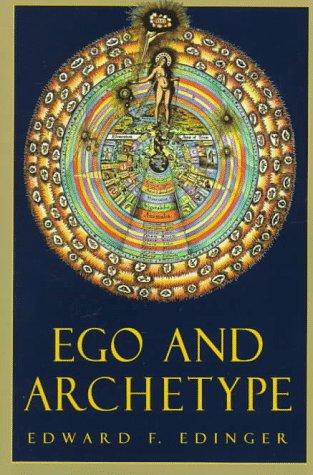
Edinger’s central contribution to analytical psychology is the formalization of the ego-Self axis as a structural concept with clinical teeth. The term itself originates with Neumann, who used it descriptively. Edinger transforms it into something diagnostic. The ego-Self axis is “the gateway or path of communication between the conscious personality and the archetypal psyche,” and its damage “impairs or destroys the connection between conscious and unconscious, leading to alienation of the ego from its origin and foundation.” This is not a poetic way of saying the patient feels lost. It identifies a specific structural injury: the child, experiencing parental rejection rooted in the parent’s own shadow projection, registers the break as cosmic in scale because the Self is initially projected onto the parent. The parent acting from unconscious inflation—identified with the archetypal psyche—delivers rejection that feels “inhuman, total, and irrevocable.” What Edinger describes here has striking parallels to what Donald Kalsched later elaborated in The Inner World of Trauma as the self-care system’s defensive splitting, but Edinger reaches the insight two decades earlier and grounds it in the phenomenology of the Self rather than in object-relations terminology. The damaged axis manifests clinically as inability to accept acceptance—a formulation that explains why so many patients resist the very help they seek. Psychotherapy, in this frame, is not insight delivery but axis repair: the restoration of a living connection between the ego and its transpersonal ground.
The Spiral Replaces the Line: Individuation as Continuous Oscillation
One of the book’s quietly revolutionary moves is the replacement of Jung’s implied two-phase developmental model—ego-Self separation in the first half of life, ego-Self reunion in the second—with a circular or spiral diagram in which alternation between union and separation “occurs repeatedly throughout the life of the individual both in childhood and in maturity.” This is not a minor amendment. The two-phase model had become doctrine in post-Jungian circles, producing a distorted clinical expectation that midlife crisis inaugurates a categorically different psychological process. Edinger shows that the cycle of inflation (ego-Self identification) followed by alienation (ego-Self separation) and then restitution operates from the earliest months of life. The infant’s original wholeness, symbolized by the uroboros that Neumann describes in The Origins and History of Consciousness, is not a state left behind but a pattern that recurs at every developmental threshold. Each cycle, if navigated consciously, deepens the ego’s relationship to its archetypal ground without collapsing back into identification. This spiral model anticipates the clinical observations of Michael Fordham regarding deintegration and reintegration in infancy, and it provides the theoretical scaffolding that Jung himself never systematized. Where Jung offered case observations and mythological amplification, Edinger offers a developmental topology.
Symptoms Are Unlived Myths: The Clinical Hermeneutics of Amplification
Edinger’s treatment of the transvestism case exemplifies a method that goes beyond what Jung codified. The patient’s compulsion to wear women’s clothing is neither reduced to infantile sexuality (Freud) nor interpreted as a behavioral anomaly. Instead, Edinger identifies the archetypal image embedded in the symptom: Ino’s veil in Book V of the Odyssey, the sacerdotal transvestism of priests of Magna Mater, the skirts of Catholic clergy. The symptom is a myth being lived compulsively because it has not been perceived symbolically. “Every symptom derives from the image of some archetypal situation,” Edinger writes, and recognizing that image “immediately transforms the experience.” This is not amplification as decorative erudition. It is a clinical act: “A paralyzing, guilt-laden symptom can be replaced by a meaningful, life-enriching symbol which is experienced consciously rather than lived out in an unconscious, compulsive, symptomatic way.” The distinction between the concretistic fallacy (treating the symbol as literal) and the reductive fallacy (explaining the symbol away) forms the epistemological backbone of the book’s middle section. Edinger’s critique of Freudian psychology is surgical: the Id is “a caricature of the human soul,” produced by seeing the archetypal psyche only through the lens of ego-identification with it. The symbolic image “per se is granted no substantive reality” in the Freudian framework, and this anti-symbolic stance, Edinger argues, is shared by “practically all the schools of modern psychotherapy”—a judgment that remains accurate fifty years later.
Christ as Paradigm, Not Object of Devotion
The book’s treatment of Christ as “paradigm of the individuating ego” accomplishes something Jung attempted in Aion and Answer to Job but never stated with Edinger’s pedagogical clarity. Christ is the model of an ego oriented toward the Self rather than toward collective approval. The crucifixion is the ultimate image of consciousness as agony—what Edinger elsewhere pairs with the meditating Buddha as consciousness as tranquil bliss. Together, these two figures reveal “the two sides of the carrier of consciousness.” The theological implications are radical: if the ego does God’s creative work in its effort to realize itself through individuation, then psychological development is not a secular substitute for religion but the continuation of the religious function by other means. Edinger quotes Origen’s trinitarian formulation—God-Christ-Man—and translates it psychologically: “the real ego relates to the Self only via an ideal ego as paradigmatic model (Christ) which bridges the two worlds of consciousness and the archetypal psyche.”
For anyone entering depth psychology today, Ego and Archetype does what no other single volume accomplishes: it translates Jung’s scattered discoveries into a coherent developmental model with clinical applicability, mythological depth, and philosophical consequence. It is the book that makes Jung’s metapsychology usable—not by simplifying it, but by revealing the structural logic that Jung’s own exploratory style left implicit. Where Neumann provides the mythological archaeology and Hillman the imaginal critique, Edinger provides the architecture.
Sources Cited
- Edinger, E.F. (1972). Ego and Archetype: Individuation and the Religious Function of the Psyche. Shambhala. ISBN 978-0-87773-576-2.
- Jung, C.G. (1951). Aion: Researches into the Phenomenology of the Self. Collected Works, Vol. 9ii. Princeton University Press.