 Seba.Health
Key Takeaways
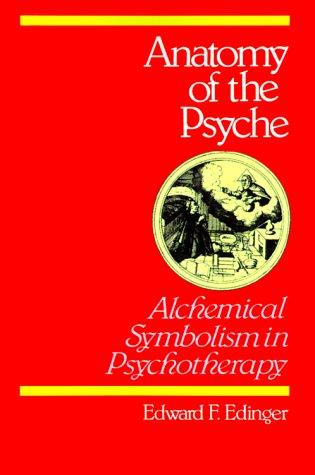
- Edinger's book does not interpret alchemy as metaphor for psychotherapy but constructs a periodic table of psychic transformation, where each alchemical operation (calcinatio, solutio, coagulatio, sublimatio, mortificatio, separatio, coniunctio) names a distinct experiential mode with its own phenomenology, clinical indicators, and archetypal grammar.
- The organizational conceit—anatomy as simultaneous embryology—resolves a tension that runs through all of Jung's alchemical writings: the psyche has a fixed structure (anatomy) that is nonetheless always in the process of becoming (embryology), and Edinger makes this paradox clinically operational for the first time.
- By routing each alchemical operation through dream material, scripture, mythology, and art, Edinger demonstrates that the "objectivity" he claims for psychic anatomy depends not on abstraction from images but on saturation in them—a direct rebuttal to the rationalist assumption that images are derivatives of thought rather than its ground.
Alchemical Operations Are Not Stages but Concurrent Modes of Psychic Metabolism
The most consequential move in Anatomy of the Psyche is structural: Edinger refuses to arrange the seven alchemical operations in a linear developmental sequence. Calcinatio, solutio, coagulatio, sublimatio, mortificatio, separatio, and coniunctio are presented as distinct but interpenetrating modes of transformation, each with its own phenomenological signature. This is not a ladder but a chemistry. The calcinatio chapter demonstrates fire as frustrated desire burning away inflation; solutio shows the dissolution of rigid ego structures through tears, flooding, immersion. Coagulatio materializes what was previously abstract—Edinger links it explicitly to the Eucharist, calling it a “coagulatio rite” and noting that baptism pertains to solutio, extreme unction to mortificatio, matrimony to coniunctio. The Christian sacraments, in this reading, are not allegories of alchemical operations; they are independent instantiations of the same psychic facts. This framework gives the clinician something Jung’s own alchemical writings—sprawling, associative, network-structured—do not: a diagnostic vocabulary. When a patient dreams of drowning, one recognizes solutio. When a dream presents food that must be eaten despite revulsion—“cow-dung cookies” that “may not have crystallized out of their prior form”—one is witnessing coagulatio in process, the ego incorporating a relation to the Self. Marie-Louise von Franz amplified individual symbols with extraordinary precision in works like Alchemy and Shadow and Evil in Fairy Tales, but she did not organize the operations themselves into a functional taxonomy the way Edinger does here.
The Psyche Has an Anatomy That Is Simultaneously an Embryology
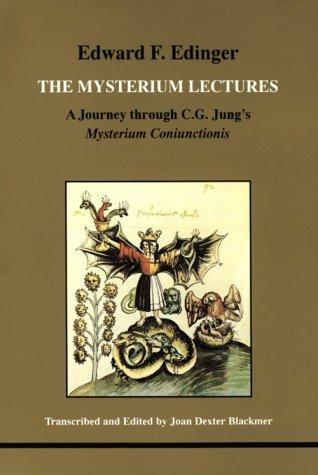
Edinger states in the preface that “these facts go to make up an anatomy of the psyche, which is at the same time an embryology, since we are dealing with a process of development and transformation.” This sentence encodes the book’s deepest claim: the psyche possesses a discernible structure—comparable in objectivity to bodily anatomy—but that structure is never static. It is always developing, always in opus. In his later lectures on Jung’s Mysterium Coniunctionis, Edinger compared this project to the first semester of medical school: “I was suddenly confronted with this sea of facts, each of which had a strange, unfamiliar name.” The analogy is precise and deliberate. Just as medical anatomy requires the dissecting room to make textbook structures vivid, psychic anatomy requires analysis—“our own self-dissection”—to render archetypal images experientially real. Without the clinical encounter, the alchemical images remain merely antiquarian. With it, they become what Edinger calls “an objective basis from which to approach dreams and other unconscious material.” This is the book’s polemical edge: against the tendency in Jungian circles to treat alchemy as esoteric ornamentation, Edinger insists it is empirical morphology. His claim that “with the psyche more than with any other subject it is very difficult to distinguish between objective fact and personal bias” is not a concession but a challenge—a call for the same rigor in psychic observation that Vesalius (whom Edinger invokes via epigraph) brought to the body.
Images Are Substances, Not Illustrations
Edinger’s method in each chapter follows a consistent architecture: an alchemical operation is defined, amplified through mythological and scriptural parallels, then demonstrated through clinical dream material. The movement is always from collective image to individual psychic fact and back again. This method rests on a conviction Edinger articulates most forcefully in his Mysterium lectures: “The psyche consists essentially of images. It is a series of images in the truest sense… a structure that is throughout full of meaning and purpose.” Images are not illustrations of concepts; they are the primary substances of psychic life, with the same ontological weight as biological specimens. When Edinger presents the Last Supper illumination showing “the Tiny Black Devil Entering Judas’ Mouth” alongside a patient’s dream of eating green gelled fruit while a man in a black suit fills eight jars, he is not drawing analogies. He is identifying the same archetypal pattern manifesting across centuries. The eight jars—a double quaternity—mark the dream as an individuation event. The black-suited figure associated to the Devil parallels the serpent in Eden. Edinger reads these convergences as evidence of psychic uniformities, the archetypes themselves showing through particular images. This places him in direct methodological continuity with Jung’s comparative symbol research but in significant tension with James Hillman’s archetypal psychology, which resists systematization of images into categories and insists on staying with each image’s irreducible specificity. Where Hillman would linger with the image, Edinger classifies it—and this classificatory impulse is precisely what makes the book clinically useful.
Why This Book Remains Singular in the Depth Psychology Library
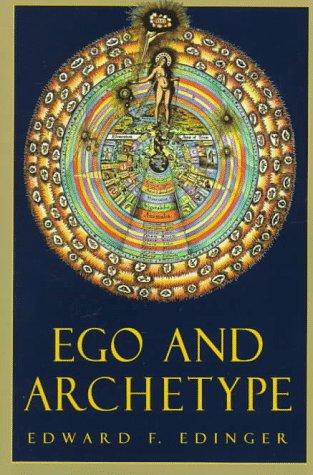
No other work in the Jungian corpus performs the specific function Anatomy of the Psyche performs. Jung’s own alchemical volumes—Psychology and Alchemy, Alchemical Studies, Mysterium Coniunctionis—are primary research: dense, encyclopedic, addressed to the scholarly record. Edinger’s earlier Ego and Archetype mapped the ego-Self axis developmentally but did not provide operational categories for recognizing transformation as it occurs in session. Anatomy of the Psyche bridges these two registers. It gives the working analyst a set of perceptual lenses—seven operations, each with characteristic images, affects, and clinical presentations—that make the bewildering particularity of unconscious material legible without reducing it to formula. For anyone encountering depth psychology today, especially those attempting to read Jung’s alchemical writings for the first time, this book functions as an indispensable decoder ring: not a simplification but a genuine anatomy, where each operation is a region of the psyche laid bare for inspection, and the whole is a living body still in the process of its own formation.
Sources Cited
- Edinger, E.F. (1985). Anatomy of the Psyche: Alchemical Symbolism in Psychotherapy. Open Court. ISBN 978-0-8126-9009-5.
- Jung, C.G. (1944). Psychology and Alchemy. Collected Works, Vol. 12. Princeton University Press.