 Seba.Health
Key Takeaways
- Neumann does not merely illustrate Jung's archetypes with myth; he establishes that myth *is* the phenomenology of consciousness emerging from the unconscious, making mythology readable as a developmental diagnostic rather than a cultural artifact.
- The concept of "centroversion" — Neumann's original theoretical contribution — reframes the ego not as a Freudian battleground between id and superego but as a psychophysical organ of wholeness, whose function is to synthesize inner and outer worlds through image-formation.
- The "law of secondary personalization" is Neumann's most clinically urgent insight: the modern compulsion to reduce transpersonal forces to personal biography produces not psychological sophistication but collective psychic congestion — the very condition that generates mass phenomena and cultural pathology.
Myth Is Not Illustration but the Self-Portrait of Psychic Development
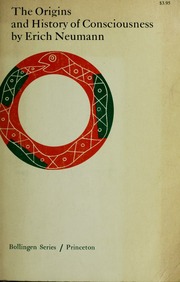
Neumann’s central operation in The Origins and History of Consciousness is not the application of Jungian theory to mythology. It is the demonstration that mythology constitutes the autonomous self-delineation of consciousness as it separates from the unconscious. Jung himself, in his 1949 foreword, concedes that Neumann accomplished what the pioneer could not: weaving the “disjecta membra” of analytical psychology into a coherent evolutionary account. The book opens with the uroboros — the tail-eating serpent — not as a decorative symbol but as the psychic image of the pre-egoic state, the “dawn state of perfect containment” in which consciousness has not yet differentiated from the unconscious matrix. From there, Neumann traces a stadial sequence: the Great Mother, the separation of the World Parents, the hero’s birth, the slaying of the Mother, the slaying of the Father, and finally transformation. Each stage is not a chapter in cultural history but an archetypal organ whose “stadial succession determines the growth of consciousness.” This is what separates Neumann from Joseph Campbell’s The Hero with a Thousand Faces, published the same year. Where Campbell maps the monomyth as a narrative grammar, Neumann reads it as a developmental imperative: the individual ego must pass through these archetypal stages or suffer pathological arrest. The myth is not a story about heroes; it is the psyche’s record of its own structuring.
Centroversion Replaces the Freudian Topography with an Organ of Wholeness
Neumann’s most original theoretical contribution — and the one least absorbed by subsequent Jungian discourse — is the concept of centroversion. He defines it as “an irreducible, unitive function innate in the psychophysical structure,” a force that simultaneously produces the ego as the center of consciousness and orients that ego toward the totality of the psyche. This is not introversion, not extraversion, but their synthesis: the ego as a registration system positioned between the external world and the body’s field of inner excitations. The nervous system, Neumann argues, is “an organic product of the unconscious, designed to hold the balance between the outer world and the inner.” Consciousness emerges not as a Cartesian observer but as a biological organ whose function is image-formation — the rendering of instincts and external stimuli into psychic representations. When instincts appear centrally as images, Jung calls them archetypes; Neumann extends this by insisting that the capacity for imaging is itself the decisive evolutionary achievement. This places Neumann in direct conversation with Edward Edinger’s later Ego and Archetype, where the ego-Self axis becomes the central diagnostic concept. But where Edinger charts the individual’s oscillation between inflation and alienation along that axis, Neumann provides the phylogenetic substrate: the ego-Self axis is not merely a clinical phenomenon but the latest expression of a centroversive process operative since the first differentiation of organic excitability into sense organs. The implication is stark — consciousness is not a given but a biological experiment, and its failure is not metaphorical but organic.
The Law of Secondary Personalization Diagnoses Modernity’s Core Pathology
The second half of the book pivots from mythology to developmental psychology, and here Neumann introduces what may be his most clinically potent concept: the law of secondary personalization. This law holds that contents originally experienced as transpersonal — gods, demons, numinous forces — are progressively claimed by the developing ego as personal psychic contents. This is an evolutionary necessity; the child must eventually recognize that the devouring dragon is not a literal creature but a representation of the overwhelming unconscious. The danger arises when this reduction goes too far, when transpersonal forces are flattened into the categories of personalistic psychology. Neumann takes direct aim at Freud here: “Any reduction of the castration threat, parricide, the ‘primal scene’ of parental intercourse… to historical and personalistic data, which presumes to paint the early history of humanity in the likeness of a patriarchal bourgeois family of the nineteenth century, is scientifically impossible.” The result of this over-personalization is not merely intellectual error but “a congestion of the collective unconscious which has disastrous consequences for humanity at large.” This analysis anticipates — and in significant ways surpasses — James Hillman’s later critique of ego-centered psychology in Re-Visioning Psychology. Hillman attacks the heroic ego from below, arguing for a return to the imaginal. Neumann attacks the same target from within its own developmental logic: the heroic ego is necessary, but its refusal to recognize its transpersonal ground produces the very mass phenomena it was meant to transcend.
Uroboric Incest and the Gravitational Pull Toward Unconsciousness
Neumann’s description of “uroboric incest” deserves particular attention because it reframes addiction, nostalgia, and mystical dissolution as variants of a single developmental regression. The infant ego, still undifferentiated from the maternal unconscious, experiences dissolution not as death but as pleasure — “passively one lets oneself be taken, sinks into the pleroma, melts away in the ocean of pleasure — a Liebestod.” Neumann insists that this is not pathological in the infant; it becomes pathological when the adult ego, exhausted by the demands of differentiation, “creeps back to the mother after having found fulfillment.” The range of phenomena he gathers under this heading — “from the unio mystica of the saint to the drunkard’s craving for unconsciousness” — makes this passage one of the most psychologically honest accounts of the pull toward self-annihilation in the depth psychology canon. It resonates powerfully with Gabor Maté’s later clinical work on addiction as a flight from the pain of individuation, and it provides the archetypal grammar that Maté’s phenomenology lacks.
Why This Book Remains Structurally Irreplaceable
No other single volume in the Jungian corpus accomplishes what Neumann achieves here: the integration of mythological phenomenology with a developmental psychology of consciousness, grounded in a biologically informed theory of psychic structure. Jung scattered the pieces across decades of writing; Campbell organized the narrative surface; Edinger refined the clinical axis. Neumann alone built the architecture — the stadial sequence from uroboros through hero to transformation — that makes those other contributions legible as parts of a single process. For anyone working in depth psychology today, particularly those confronting the collective pathologies of recollectivization and mass regression that Neumann warned about in his appendices, this book provides not just a map of individual development but a diagnostic framework for civilization itself.
Sources Cited
- Neumann, E. (1954). The Origins and History of Consciousness. Princeton University Press. ISBN 978-0-691-01761-7.
- Jung, C.G. (1956). Symbols of Transformation. Collected Works, Vol. 5. Princeton University Press.
- Edinger, E.F. (1972). Ego and Archetype: Individuation and the Religious Function of the Psyche. Shambhala.