 Seba.Health
Key Takeaways
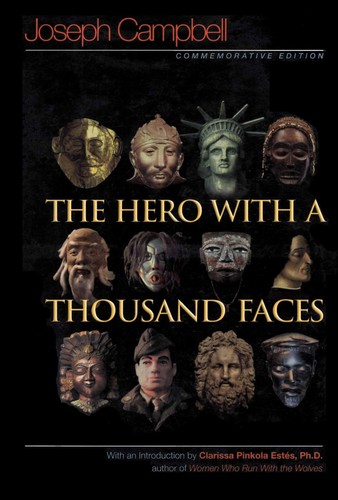
- Campbell's monomyth is not a narrative template but a phenomenology of psychic transformation, mapping the same ego-death and reconstitution that Jung described clinically and that initiatory rites enacted ritually — the "thousand faces" are not costumes but refractions of a single underlying process of consciousness encountering its own ground.
- The book's most radical claim is not that myths are similar but that mythology operates beyond moral categories — that the World Navel yields good and evil equally, making the "tragic attitude seem somewhat hysterical" and positioning mythological consciousness as a cognitive achievement superior to both ethical dualism and aesthetic sentimentality.
- Campbell's reliance on psychoanalysis as a "grammar of the symbols" positions the monomyth as a bridge text between Freud's reductive hermeneutics and Jung's amplificatory method, using the former as scaffolding while systematically exceeding its conclusions — a diplomatic move that obscured for decades just how thoroughly Jungian the book's actual architecture is.
The Monomyth Is a Map of Ego-Dissolution, Not a Storytelling Formula
Campbell’s most consequential — and most misappropriated — contribution is the monomyth cycle: departure, initiation, return. The entertainment industry has flattened this into a screenwriting template, but the text itself describes something far more dangerous. The hero’s journey is a phenomenology of the death of the ego-personality and its reconstitution around a transpersonal center. Campbell draws explicitly on Jung’s concept of the archetype (“Dr. Jung points out that he has borrowed his term archetype from classic sources: Cicero, Pliny, the Corpus Hermeticum, Augustine”) and on Adolf Bastian’s “Elementary Ideas” to argue that mythological motifs are not cultural borrowings but spontaneous productions of the psyche’s deep structure. The “Road of Trials,” the “Atonement with the Father,” the “Apotheosis” — these are not plot beats but stations of a psychic process identical in structure to what Edward Edinger would later formalize as the ego-Self axis in Ego and Archetype. Where Edinger charts the alternation of inflation and alienation in the individual’s relationship to the Self, Campbell locates the same dialectic across the entire archive of human myth. The hero who refuses the return is Edinger’s inflated ego, drunk on numinous contact; the hero who cannot cross the return threshold is the alienated ego, unable to integrate transpersonal experience into waking life. Campbell saw this clinical structure everywhere — in the Buddha under the Bo Tree, in Odysseus navigating Proteus, in the Navaho Twin Heroes tested against the four directions — and his genius was to demonstrate that it was not analogy but identity.
Mythology Breaks the Moral Frame — That Is Its Diagnostic Function
The passage on the Yoruba trickster Edshu, who wears a hat of four colors to provoke a quarrel between friends, crystallizes what is perhaps the book’s most philosophically radical claim: mythology operates beyond the categories of good and evil. “Mythology does not hold as its greatest hero the merely virtuous man. Virtue is but the pedagogical prelude to the culminating insight, which goes beyond all pairs of opposites.” This is not moral relativism; it is a precise description of what happens when consciousness reaches the level Jung called the Self and what the Upanishads call the Fourth (turīya). Campbell quotes Heraclitus — “To God all things are fair and good and right; but men hold some things wrong and some right” — and uses this to position mythology as a cognitive achievement that transcends both tragedy and comedy. The “Olympian laugh” of myth is “hard, with the hardness of life itself.” This places Campbell in direct tension with James Hillman’s later archetypal psychology, which would insist on staying within the pathologized image rather than transcending it. Hillman’s critique of the “heroic ego” in Re-Visioning Psychology is, in effect, a critique of the very movement Campbell celebrates — the ascent through pairs of opposites to a “transcendent anonymity.” Yet Campbell’s text is more nuanced than Hillman’s caricature of it. The World Navel “yields the world’s plenitude of both good and evil”; the point is not to escape the world but to see it from the center, where Edshu stands. The difference between Campbell and Hillman is not heroism versus soul-making but whether the mythic center is a place of transcendence or of deepening.
Psychoanalysis as Grammar, Not as Gospel
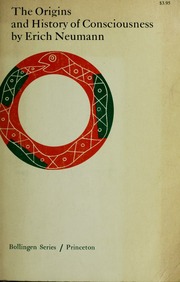
Campbell’s preface announces psychoanalysis as a “key” and a “modern tool” for reading symbolic language, but immediately hedges: “Without regarding this as the last word on the subject, one can nevertheless permit it to serve as an approach.” This diplomatic framing conceals a decisive methodological choice. The book begins with Freud — the Psychopathology of Everyday Life, the castration complex, Stekel’s dream symbolism — but by the time it reaches “Atonement with the Father” and “Apotheosis,” it has left Freud’s reductive framework entirely. The note on Otto Rank is telling: Rank distinguished the neurotic, who cannot detach the creative process from his own person, from the productive artist, who can “shift the creative will-power from his own person to ideological representations.” Campbell extends this distinction to the hero, who is neither neurotic nor merely productive but one who completes the full circuit — death, transformation, return — and brings the boon back to the community. This is closer to Jung’s individuation than to anything in Freud, and closer still to what Erich Neumann would elaborate in The Origins and History of Consciousness, where the hero myth is read as the ego’s emergence from the uroboric unconscious. Campbell and Neumann were working the same seam simultaneously, but Campbell’s comparative range — Navaho, Sumerian, Hindu, Celtic, Aboriginal Australian — gave his version a universality that Neumann’s more systematic treatment lacked. The cost was precision; the gain was scope.
The Cosmogonic Cycle Extends the Hero Journey into Ontology
Part II of The Hero with a Thousand Faces is routinely ignored, but it is where the book’s deepest ambition reveals itself. Campbell moves from psychology to metaphysics, from the individual hero’s transformation to the cosmogonic round of emanation and dissolution. The Virgin Birth chapter is not about biology or theology but about the psyche’s capacity to generate new forms of consciousness from within itself — “the Womb of Redemption.” The chapter on Dissolutions — “End of the Microcosm,” “End of the Macrocosm” — mirrors the eschatological concerns that Mircea Eliade would take up in The Myth of the Eternal Return, but Campbell grounds them in the Mandukya Upanishad’s four states of consciousness (waking, dreaming, deep sleep, turīya) and in the Kabbalistic traditions of the Zohar. This is not eclecticism but a deliberate argument: the cosmogonic cycle is the hero journey writ large, the universe itself understood as undergoing departure, initiation, and return. The recognition that “the personality of whatever deity is worshiped” is secondary — that beyond every named god lies a transcendency not defined by “either of the pair of opposites called ‘void’ and ‘being’” — places Campbell squarely in the tradition of apophatic theology, though he would never have used that term.
Why This Book Persists as a Necessary Irritant
For anyone entering depth psychology today, The Hero with a Thousand Faces remains indispensable not as a system but as a provocation. It demonstrates, with overwhelming comparative evidence, that the psyche’s transformative process has a structure — and then refuses to reduce that structure to any single tradition’s terminology. It is the book that forced the question Hillman, Neumann, Eliade, and every subsequent mythologist had to answer: if the pattern is universal, what accounts for the suffering of the individual who cannot complete it? Campbell’s answer — that the modern world has dismantled the initiatory containers that once guided this process — remains the most urgent diagnosis in the depth-psychological library. The monomyth is not a formula for storytelling. It is a map of what happens when a human being encounters the transpersonal, survives the encounter, and must find a way to speak about it to a community that has forgotten how to listen.
Sources Cited
- Campbell, J. (1949). The Hero with a Thousand Faces. Pantheon Books. ISBN 978-1-57731-593-3.
- Neumann, E. (1954). The Origins and History of Consciousness (R. F. C. Hull, Trans.). Princeton University Press.
- Jung, C. G. (1968). The Archetypes and the Collective Unconscious (CW 9i). Princeton University Press.