 Seba.Health

Key Takeaways
- Cunningham's 1982 text functions as a covert bridge between Rudhyar's humanistic reformulation of astrology and the clinical depth-psychological model Greene and Sasportas would later systematize, translating archetypal awareness into a therapeutic vocabulary accessible to people outside both astrology and analysis.
- The book's insistence on self-awareness as the telos of astrological knowledge—rather than prediction, character typing, or spiritual inflation—aligns it with Jung's individuation project and anticipates Tarnas's later argument that astrology is "archetypally predictive" rather than concretely predictive, a distinction Cunningham intuited before it was philosophically articulated.
- By foregrounding the reader's active psychological work with their own chart—treating the natal horoscope as a mirror of unconscious dynamics rather than a decree of fate—Cunningham quietly dismantles the deterministic tradition and positions astrological literacy as a form of shadow integration in the Jungian sense.
Cunningham Reframes the Birth Chart as a Diagnostic Instrument for Unconscious Pattern Recognition
Donna Cunningham’s An Astrological Guide to Self-Awareness occupies a peculiar and underappreciated position in the genealogy of psychological astrology. Written in 1978 and revised in 1982, the book arrived after Dane Rudhyar’s monumental The Astrology of Personality (1936) had already reformulated astrology in terms of Jungian depth psychology and holistic philosophy, but before Liz Greene’s The Astrology of Fate (1984) and the Greene-Sasportas seminar transcripts would bring full clinical sophistication to the enterprise. Cunningham’s contribution is neither the philosophical architecture of Rudhyar nor the mythological depth of Greene. It is something more pragmatic and, in its own way, more radical: she takes the natal chart and treats it as a working diagnostic instrument for self-confrontation. Where Rudhyar wrote for seekers of cosmic meaning and Greene wrote for analysands and clinicians, Cunningham wrote for people who suspected their lives were being run by patterns they could not name. Her reader is not studying astrology to become an astrologer; they are studying their chart to become conscious. This seemingly modest reframing carries enormous weight. It places the locus of authority inside the individual’s willingness to look at themselves honestly, not in the astrologer’s interpretive prowess. Cunningham’s planets are not fated decrees or cosmic forces acting upon the passive subject; they are symbolic mirrors of psychological habits, defenses, and unlived potentials. This is precisely the orientation Tarnas would later describe in Cosmos and Psyche when he argued that planetary positions are “indicative of the cosmic state of archetypal dynamics at that time”—not causal agents but synchronistic indicators. Cunningham arrived at this understanding not through philosophical argumentation but through clinical intuition honed by years of social work and counseling practice.
The Therapeutic Ethic Embedded in Cunningham’s Astrology Distinguishes It from Both Fortune-Telling and Spiritual Inflation
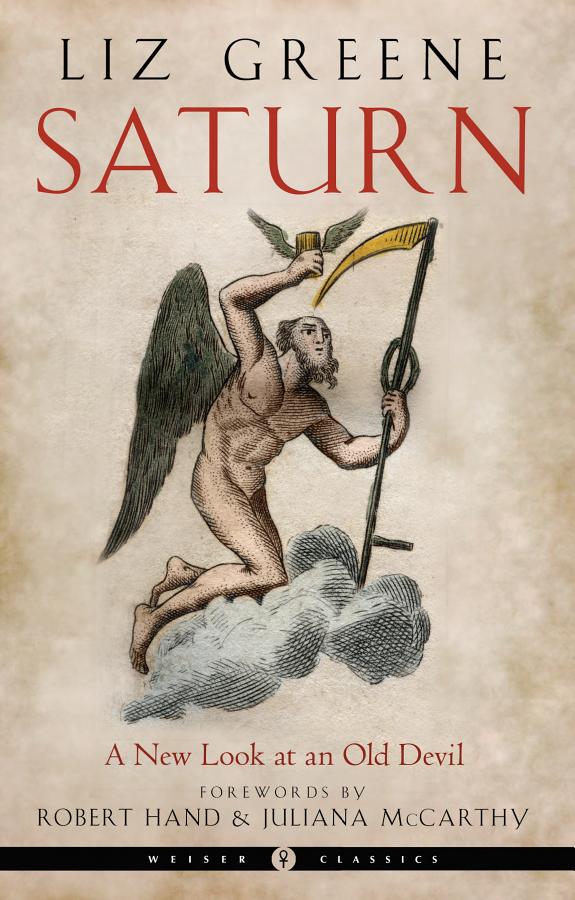
What separates Cunningham from the vast majority of astrological self-help literature is her refusal to flatter the reader. The book does not promise that understanding your Venus placement will improve your love life or that knowing your Saturn return will make suffering meaningful in some decorative sense. Instead, Cunningham consistently frames astrological self-knowledge as a confrontation with the shadow—with the parts of oneself that are habitually projected, denied, or acted out compulsively. Her discussion of outer planet placements, particularly Pluto and Neptune, carries an implicit warning: these are not badges of spiritual distinction but indicators of where one is most likely to be unconscious, addicted, or controlled by forces one refuses to acknowledge. This therapeutic sobriety connects directly to Liz Greene’s observation in Saturn: A New Look at an Old Devil that Saturn “is also a symbol of the psychic process, natural to all human beings, by which an individual may utilize the experience of pain, restriction, and discipline as a means for greater consciousness and fulfillment.” Cunningham extends this principle across the entire chart. Every planetary placement, in her framework, is simultaneously a wound and a capacity—but only if the individual does the interior work of recognizing it. Without that work, the chart becomes what Greene elsewhere calls mere “heimarmene,” planetary compulsion without soul engagement. Cunningham’s insistence that the reader actively journal, reflect, and question their own defenses while reading the book transforms what could be a passive information transfer into something closer to a guided self-analysis. The book’s structure—moving through planets, signs, houses, and aspects with constant invitations to apply each concept to one’s own chart—mirrors the iterative, spiral nature of therapeutic process itself.
Cunningham Anticipates the Archetypal-Participatory Model Without Naming It
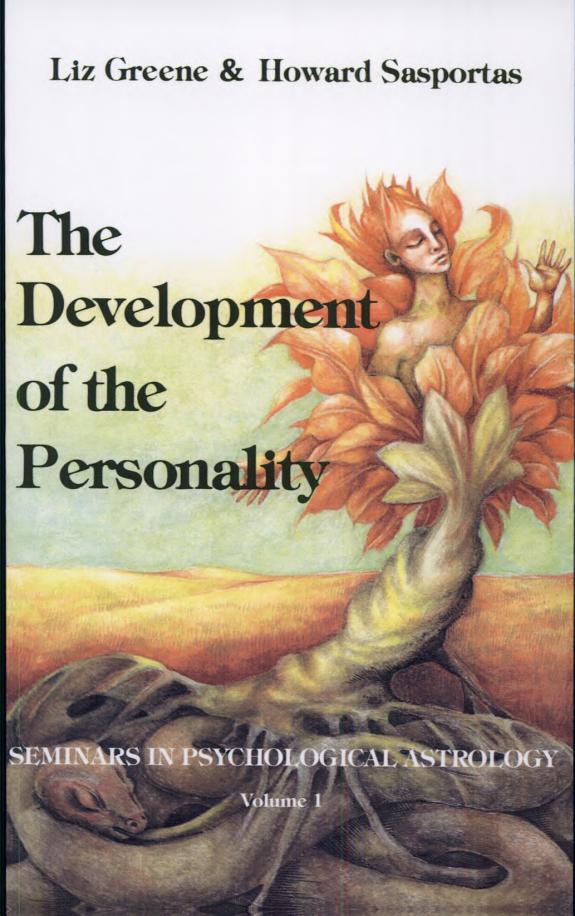
The most theoretically significant aspect of Cunningham’s work is her implicit resolution of the free will–determinism problem in astrology. She does not engage this debate philosophically, as Tarnas does in his extended meditation on “archetypal causality” and co-creative participation. Nor does she invoke the Plotinian framework of cosmic sympathy. Instead, she resolves it pragmatically: the chart shows your patterns, and you can either remain unconscious of them (in which case they operate as fate) or become aware of them (in which case they become material for growth). This is, in compressed and accessible form, exactly the position Tarnas articulates when he writes that “to the extent that one is unconscious of these potent and sometimes highly problematic forces, one is more or less a pawn of the archetypes.” Cunningham grasped this decades earlier, not from Platonic metaphysics but from watching clients in social work settings repeat the same destructive cycles until something—often the shock of seeing those cycles named in their charts—broke the spell. Her method also resonates with Greene and Sasportas’s later insistence that the child is not born a blank slate but arrives with “inborn images”—natal predispositions that shape the experience of family, trauma, and development. Cunningham does not use the term “archetypal” with the philosophical precision of Tarnas or the mythological density of Greene, but her operational understanding of how planetary symbolism works is functionally identical: the chart describes archetypal dynamics, not events; awareness of those dynamics is the precondition for any meaningful freedom.
For readers encountering depth psychology today through the portal of astrology—and there are many, given astrology’s massive cultural resurgence—Cunningham’s book offers something no other text in this tradition provides at this level of accessibility: a method for using the birth chart as a tool for honest self-confrontation rather than self-congratulation. It does not require the reader to master Jungian terminology, Greek mythology, or transpersonal theory. It asks only that they be willing to look at what the chart actually shows about their habitual patterns of avoidance and projection. In a field prone to spiritual bypass and narcissistic inflation, this is a rare and necessary discipline.
Sources Cited
- Cunningham, D. (1982). An Astrological Guide to Self-Awareness. CRCS Publications.
- Jung, C.G. (1960). The Structure and Dynamics of the Psyche. Collected Works, Vol. 8. Princeton University Press.
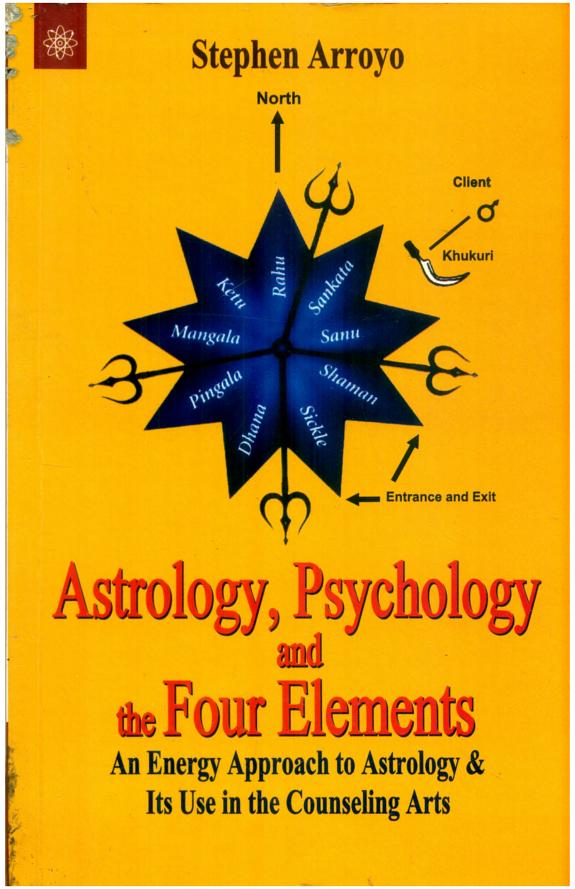
- Arroyo, S. (1975). Astrology, Psychology, and the Four Elements. CRCS Publications.
- Rudhyar, D. (1936). The Astrology of Personality. Aurora Press.