 Seba.Health
Key Takeaways
- Greene's central achievement is not synthesizing astrology with Jungian psychology but demonstrating that the horoscope is itself the empirical evidence for the Self — the astrological chart functioning not as metaphor for psychic life but as its literal synchronistic inscription.
- By recovering Moira as a feminine principle older than the Olympian gods, Greene reframes fate not as deterministic predestination but as the transgression-and-rebalancing function that depth psychology calls the compensatory unconscious, thereby positioning Greek tragedy and Jungian individuation as the same narrative told in different registers.
- The book's tripartite structure — Moira, Daimon, Pronoia — enacts the very movement it describes: from impersonal collective fate through the mythic patterning of individual destiny to the paradox of synchronicity and the Self, making the book's architecture itself a map of individuation.
Fate Is Not the Opposite of Freedom but the Substrate of Individuation
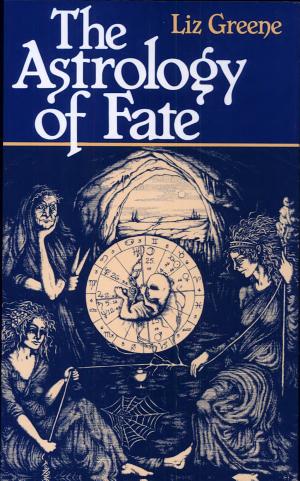
Liz Greene opens The Astrology of Fate with a Sufi folktale about a servant who flees Death in Isfahan only to meet it that night in Samara — a story whose point is not that escape is impossible but that the servant’s flight is the mechanism of fate’s fulfillment. This paradox governs the entire book. Greene refuses the binary that has paralyzed Western thought since the Reformation: either we are determined, or we are free. Drawing on Chrysippos, she argues that fate embodies a duality — “doom” and “grace” are aspects of the same force — and she identifies this duality with Jung’s concept of the Self, the psychic totality that is both the architect and the antagonist of ego-consciousness. “Free will is the ability to do gladly that which I must do,” Greene quotes Jung, and this formulation is not resignation but the precise psychological description of what happens when the ego recognizes its subordinate position within a larger pattern. What Greene accomplishes that no purely Jungian text does is to supply an empirical correlate: the birth chart, where planetary configurations synchronistically inscribe the Self’s intentions from the organism’s first breath. The line between Moira and the unus mundus, she writes, “is a very thin one indeed, for it would seem that fate is both causal and acausal at once, already written yet being written in each moment.” This is not mysticism. It is the logical consequence of taking synchronicity seriously as an ontological principle rather than a curiosity.
Moira Is the Compensatory Unconscious Wearing Its Oldest Face
Greene’s recovery of the Greek Moira is the book’s most radical interpretive move. She demonstrates that the pre-Olympian fate goddesses — Clotho, Lachesis, Atropos — embody a law that is not arbitrary predestination but the enforcement of natural limits. Hubris, the overstepping of boundaries, activates the Erinyes, “the minions of Justice.” This is psychologically identical to what Jung described as the compensatory function of the unconscious: when the ego inflates beyond its proper boundaries, the unconscious retaliates with symptoms, projections, and fate-like catastrophes. Greene draws this parallel explicitly through Pluto, which she reads as the astrological carrier of Moira in the individual chart. Sun-Pluto and moon-Pluto contacts turn up “with great regularity in the charts of those into whose lives fate has noticeably intruded” — psychotic breakdowns, inherited illness, encounters with violence. But Greene insists this is purposeful: “Something is taken away, so that another thing might grow in its place.” The resonance with Edward Edinger’s account of the ego-Self axis in Ego and Archetype is unmistakable. Where Edinger describes the cycle of inflation and alienation as the ego’s necessary rhythm of development, Greene provides the astrological timing mechanism — transits and progressions that “release” fate by activating the birth chart at its deepest level. She also anticipates James Hillman’s later argument in The Soul’s Code that the daimon chooses the life pattern before birth, though Greene arrives at this insight not through Platonic philosophy alone but through the empirical observation that “a transit or progression triggers, or, more accurately, coincides with the emergence of this archetypal potential.”
The Zodiac as Mythic Narrative Dissolves the Boundary Between Chart Interpretation and Soul-Making
The book’s second section reframes the zodiac not as a taxonomy of personality traits but as a collection of heroic narratives. Each sign contains “a hero, and also implies the nature of the hero’s call to adventure… the battle with brother, dragon, sorcerer; the dismemberment, crucifixion, abduction, night-sea journey.” Greene draws on Joseph Campbell’s monomyth but surpasses Campbell’s structural universalism by insisting on the radical individuality of each chart: the signs emphasized in a particular horoscope are “the soul of the person, the gods ‘to whose choir he belonged.’” This is where Greene parts company with both reductive astrology and abstract Jungian theory. She argues that mythic images appear spontaneously in dreams “which are characteristic of the horoscope and of the signs which are strongly tenanted,” making the chart a verifiable predictor of unconscious imagery. The practical implication for analytic work is profound: the astrologer or analyst who knows the chart can anticipate which mythic patterns will constellate in the analysand’s psyche, not as fortune-telling but as preparation for the encounter with the Self’s demands. This aligns with Marie-Louise von Franz’s approach to fairy tales as maps of individuation in The Interpretation of Fairy Tales, but Greene adds the dimension of temporal specificity — the chart tells you not only what mythic drama is at work but when it will intensify.
Synchronicity Is Not a Phenomenon but the Ontological Ground of Astrology
Greene’s treatment of synchronicity in the book’s third section moves well beyond Jung’s cautious formulations. She observes that the “importance of the experience for the individual is not necessarily in proportion to the ‘power’ of the transit or progression according to conventional astrological rules,” which means something other than mechanical correspondence is operating. That “something” is the Self’s intention, manifesting through whatever planetary channel is available at the “right moment.” This is a direct challenge to both statistical astrology and naïve fatalism. Greene’s position is that the birth chart does not cause events any more than a clock causes noon; rather, chart and life unfold from the same archetypal root, which is the Self as Jung defined it — “the whole range of psychic phenomena in man,” expressing “the unity of the personality as a whole.” The convergence with Jung’s late essay on synchronicity is clear, but Greene pushes further by demonstrating the principle across dozens of case histories where outer catastrophe and inner transformation prove to be two faces of one event.
For anyone entering depth psychology today, The Astrology of Fate does something no other work in the tradition does: it makes the abstract Jungian concept of the Self empirically tangible by tying it to a visible, calculable structure — the natal chart — without reducing either psychology or astrology to mechanism. It is the only book that holds Moira, daimon, and synchronicity in a single frame and refuses to resolve their tension. That refusal is its deepest teaching.
Sources Cited
- Greene, L. (1984). The Astrology of Fate. Weiser Books.
- Jung, C.G. (1951). Aion: Researches into the Phenomenology of the Self. Collected Works, Vol. 9ii. Princeton University Press.
- Kerenyi, K. (1976). Hermes: Guide of Souls. Spring Publications.
- Dodds, E.R. (1951). The Greeks and the Irrational. University of California Press.