 Seba.Health
Key Takeaways
- Dayton's central innovation is translating the psychoanalytic concept of dissociation from early trauma into the language of addiction recovery, demonstrating that "emotional sobriety" names not the absence of substances but the restoration of affective states that were split off long before the first drink.
- The book reframes relational dysfunction not as poor communication or incompatible attachment styles but as the body's encoded repetition of unprocessed grief — positioning somatic re-experiencing, not cognitive insight alone, as the mechanism through which trauma's grip on intimacy loosens.
- By bridging twelve-step culture with psychodrama and neuroscience, Dayton constructs a model in which the group itself becomes the transitional space Winnicott theorized — making the relational field, rather than the individual therapist, the primary container for recovering dissociated affect.
Emotional Sobriety Is the Name Depth Psychology Has Been Missing for the Trauma-Addiction Nexus
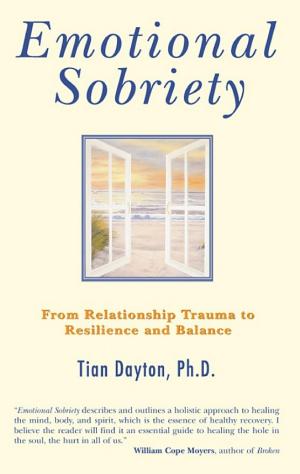
Tian Dayton’s Emotional Sobriety accomplishes something that neither the addiction recovery community nor mainstream psychotherapy had fully articulated by 2007: it names the precise psychic condition that persists after substances are removed yet before genuine relational capacity is restored. Bill Wilson coined the phrase “emotional sobriety” in a 1958 letter, but Dayton fills it with clinical and theoretical content drawn from neuroscience, psychodrama, and relational trauma theory. The book’s essential argument is that addiction is a disorder of affect regulation rooted in early relational trauma, and that physical sobriety without the recovery of dissociated emotional states leaves the person stranded in what Donald Kalsched describes as the domain of the “self-care system” — a defensive architecture that protects the inner child by freezing it in psychic amber. Kalsched’s account of Patricia, whose personal spirit “just left” around age four or five and whose childhood thereafter existed “literally in black and white,” maps directly onto Dayton’s clinical population: people who stopped drinking but remained emotionally anesthetized, their relational lives still governed by the daimonic protector that Kalsched identifies as both guardian and jailer. Dayton’s contribution is to democratize this insight, extracting it from the analytic consulting room and embedding it in a recoverable framework for people who will never lie on an analyst’s couch.
The Body Remembers What the Mind Refuses: Dayton’s Somatic Turn Reclaims Affect as the Bridge Between Trauma and Relationship
Dayton draws heavily on the neuroscience of limbic encoding to argue that relational trauma is stored not as narrative memory but as body states — frozen fight-flight-freeze responses that hijack adult intimacy. This positions her work alongside Bessel van der Kolk’s somatic trauma research while differentiating it through the lens of addiction. The person raised in an alcoholic home does not merely learn “dysfunctional patterns”; their nervous system is calibrated to chaos, hypervigilance, and emotional constriction. Sobriety removes the chemical anesthesia and exposes raw, unmetabolized affect that the person has no vocabulary for and no relational container to hold. Here Dayton converges with James Hollis’s insistence that “the person who cannot bear the emotions attached to the primal wounds cannot escape being a victim.” Hollis frames this as the swampland of loneliness that must be traversed; Dayton specifies the mechanism by which addicted and relationally traumatized individuals avoid that traversal — through substance use, compulsive relating, emotional numbing, or the frantic pursuit of intensity that mimics feeling without delivering integration. Her psychodramatic methodology — role reversal, doubling, the empty chair — functions as a structured technology for what Kalsched describes as the moment when the patient’s “personal spirit re-enters the body,” when numbness dissolves and spontaneous affect signals the return of embodied selfhood.
The Group as Temenos: How Dayton Redistributes the Therapeutic Container Beyond the Dyad
One of the book’s most consequential moves is its insistence that emotional sobriety cannot be achieved in isolation — not even in the therapist-patient dyad alone. Dayton’s psychodramatic groups serve as what Winnicott would recognize as a transitional space, but distributed across multiple relational nodes rather than concentrated in a single attachment figure. This addresses a limitation Kalsched himself acknowledges: that “there are certain people who are so badly damaged in infancy that they cannot benefit from psychotherapy precisely because of its paradoxical combination of intimacy and separation.” The group diffuses transference across multiple figures, reducing the terrifying intensity of dyadic dependency while still providing sufficient relational warmth for frozen affect to thaw. Participants witness each other’s grief work and, in witnessing, metabolize their own. This is not group therapy as pallid substitute for individual analysis; it is a deliberate structural intervention that uses the relational field itself as the healing agent. Hollis’s observation that “a healthy relationship is only possible if one is able to come to the table as an individuating isolate” finds its recovery-culture counterpart in Dayton’s insistence that each group member must own their own emotional process while being held by the collective. The group becomes a laboratory for precisely the relational risk-taking that trauma made impossible in the family of origin.
Dayton Bridges the Two Cultures That Most Need Each Other: Depth Psychology and Recovery
The deeper significance of Emotional Sobriety lies in its cultural positioning. Hillman’s critique that “we have been robbed of our true biography” by reductive trauma narratives finds an unexpected ally in Dayton, who refuses to reduce the addict’s story to pathology. She insists that emotional sobriety is not a deficit to be corrected but a developmental achievement — a form of maturation that parallels what Hollis calls the movement from the fusion model to the basin-shaped container of mature relationship. Thomas Moore’s observation that love is “an event of the soul” rather than merely “an aspect of relationship” resonates with Dayton’s framing: emotional sobriety transforms not just how one relates to others but how one inhabits one’s own interior life. The recovering person who achieves emotional sobriety has not simply stopped self-medicating; they have recovered the capacity for what Moore calls the “soul’s fertility” — the ability to be moved, to grieve, to risk, and to remain present through the full catastrophe of intimacy. Richard Tarnas notes that the psychological therapies of the 1990s shifted toward “care of the soul” and “the cultivation of a relational self with more permeable boundaries.” Dayton’s work is a concrete clinical expression of that cultural shift, grounding transpersonal aspiration in the daily practice of feeling one’s feelings without fleeing.
For readers approaching depth psychology through the doorway of addiction or relational trauma — which is to say, a vast portion of the contemporary population — this book provides something no purely Jungian, object-relational, or twelve-step text offers alone: a unified field theory of why sobriety without emotional recovery reproduces the same relational devastation that drove the addiction, and a practical method for breaking that cycle through embodied, witnessed grief.
Sources Cited
- Dayton, T. (2007). Emotional Sobriety: From Relationship Trauma to Resilience and Balance. Health Communications.
- van der Kolk, B. (2014). The Body Keeps the Score: Brain, Mind, and Body in the Healing of Trauma. Viking.
- Wilson, B. (1958). The Next Frontier: Emotional Sobriety. AA Grapevine.