 Seba.Health

Key Takeaways
- Flores does not merely apply attachment theory to addiction—he reconceives addiction itself as a failed attachment strategy, making the substance or behavior a substitute transitional object that forecloses the very relational capacity it mimics.
- The book's deepest contribution is its argument that group therapy, modeled on Twelve-Step fellowship, functions as a corrective attachment environment, effectively replacing the interpersonal neurobiology that was never installed rather than merely treating symptoms.
- Flores bridges the clinical split between psychodynamic depth work and the pragmatic communalism of AA by demonstrating that surrender to a "higher power" is neurobiologically identical to the infant's surrender to a reliable caretaker—a claim that collapses the spiritual/scientific dichotomy that has paralyzed addiction treatment for decades.
Addiction Is Not a Disease of Substance but a Disease of Failed Surrender to the Human Other
Philip Flores opens a corridor between two traditions that have long regarded each other with suspicion: the object-relations lineage of Bowlby, Winnicott, and Kohut, and the Twelve-Step tradition descended from Jung’s famous letter to Bill Wilson about spiritus contra spiritum. His central thesis is deceptively simple and radically consequential: addiction is not primarily a pharmacological hijacking of the brain’s reward circuitry, nor is it a moral failing, nor even a disease in the conventional medical sense. It is an attachment disorder—a catastrophic breakdown in the capacity to use human relationships for affect regulation, mirroring, and self-soothing. The addict does not reach for a substance because the substance feels good; the addict reaches for a substance because the human other was never internalized as a reliable source of comfort. The bottle, the needle, the binge become what Winnicott called “transitional objects” that were never transcended—concrete substitutes for a relational capacity that never formed. This reframing has enormous diagnostic consequences. It means that detoxification without relational repair is not treatment at all; it is merely the removal of a prosthetic limb from someone who was never taught to walk.
Marion Woodman circles the same wound from the mythic side when she identifies the addict’s core terror: “Who I am is not lovable. I must do something special in order to deserve love.” Woodman locates this wound in the maternal matrix—the mother who, unable to love her own body, cannot mirror the child’s beingness, leaving it “cut off from its own inner life.” Flores formalizes this observation neurobiologically. Drawing on Allan Schore’s work on right-hemisphere affect regulation, he argues that early attachment failures produce measurable deficits in the orbitofrontal cortex’s capacity to modulate emotional states. The addict’s nervous system is not merely psychologically injured; it is structurally incomplete. The substance fills a gap in neural architecture. This is why willpower fails: you cannot will into existence a neural pathway that was never built. You can only build it through sustained, reliable, affect-laden relationship—precisely what the addict has learned to flee.
The Group Is Not Adjunctive to Treatment; the Group Is the Treatment
Flores’s most provocative clinical argument is that individual psychotherapy, while necessary, is insufficient for the addicted patient. The reason is structural, not philosophical. The addict’s core deficit is an inability to internalize the soothing, regulating presence of another human being. In individual therapy, the patient can intellectually grasp this deficit while the transference itself reactivates the original attachment wound—the longing for an idealized caretaker who will inevitably disappoint. Flores argues that the group setting, particularly as embodied in Twelve-Step fellowship, provides something individual therapy cannot: multiple, simultaneous attachment relationships that dilute the intensity of any single transferential bond while creating a web of mutual regulation. This is not group therapy as traditionally conceived—interpretation of interpersonal dynamics—but group-as-attachment-environment, a surrogate family that provides the developmental scaffolding the addict never received.
Donald Kalsched’s concept of the “daimonic self-care system” illuminates the resistance Flores encounters. Kalsched describes how the traumatized psyche develops an internal protector/persecutor dyad that simultaneously shields the vulnerable self and imprisons it in isolation. The addict’s refusal of human connection is not defiance; it is the daimonic caretaker doing its job, keeping the fragile core away from the relational field that once proved catastrophic. Kalsched notes that people caught in this system are “paradoxically both incredibly needy and proudly self-sufficient at the same time.” Flores would recognize this as the insecure-avoidant attachment style dressed in clinical language. His intervention—sustained group immersion—aims to gradually disarm this internal sentinel not through interpretation but through the sheer repetition of safe relational experience. The archaic self-care system cannot be argued out of existence; it must be rendered unnecessary by a new relational reality.
Surrender as Neurobiological Event: Collapsing the Spiritual-Scientific Split
Where Flores becomes genuinely original is in his treatment of the Twelve-Step concept of surrender. James Hollis observes that “all addictions are anxiety management techniques whether one is conscious of being anxious or not,” and that the addictive connection “momentarily heals the primal wound we all bear.” Flores extends this insight: surrender to a higher power, as practiced in AA, is not a metaphysical act but a neurobiological one. It recapitulates the infant’s original surrender to the attuned caretaker—the moment when the overwhelmed nervous system releases its hypervigilant self-regulation and allows another to hold and modulate its distress. For the securely attached infant, this surrender is the foundation of all future self-regulation. For the addict, it never occurred. The genius of AA, Flores argues, is that it provides a structure within which this developmental step can happen for the first time in adulthood—not through cognitive understanding but through the embodied, ritualized, repeated act of admitting powerlessness in the presence of others who receive that admission without judgment.
Woodman’s description of the addict’s binge ritual—the careful preparation, the crossing into “sacred space,” the loss of consciousness, the longing to “move out of the unbearable two-dimensional world and into the presence of divine sweetness and nourishment”—reveals the spiritual hunger that Flores addresses clinically. Hillman would insist that pathologizing itself has psychological necessity, that the symptom speaks for the soul. Flores does not disagree, but he adds a crucial pragmatic dimension: the soul’s speech through addiction is a cry for attachment, and that cry can only be answered by other human beings in sustained, structured relationship. No amount of imaginal work substitutes for the lived experience of being held by a community. This is the book’s ultimate contribution: it demonstrates that the spiritual problem Jung identified in alcoholism and the attachment deficit Bowlby identified in maternal deprivation are the same problem viewed from different altitudes. For anyone working at the intersection of depth psychology and clinical addiction treatment, Flores provides the theoretical architecture that makes this integration not merely intuitive but rigorous.
Sources Cited
- Flores, P.J. (2004). Addiction as an Attachment Disorder. Jason Aronson. ISBN 978-0-7657-0289-0.
- Bowlby, J. (1969). Attachment and Loss, Vol. 1: Attachment. Basic Books. ISBN 978-0-465-00543-7.
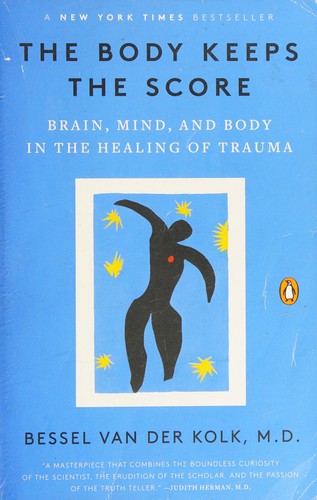
- van der Kolk, B. (2014). The Body Keeps the Score: Brain, Mind, and Body in the Healing of Trauma. Viking. ISBN 978-0-670-78593-3.