 Seba.Health
Key Takeaways
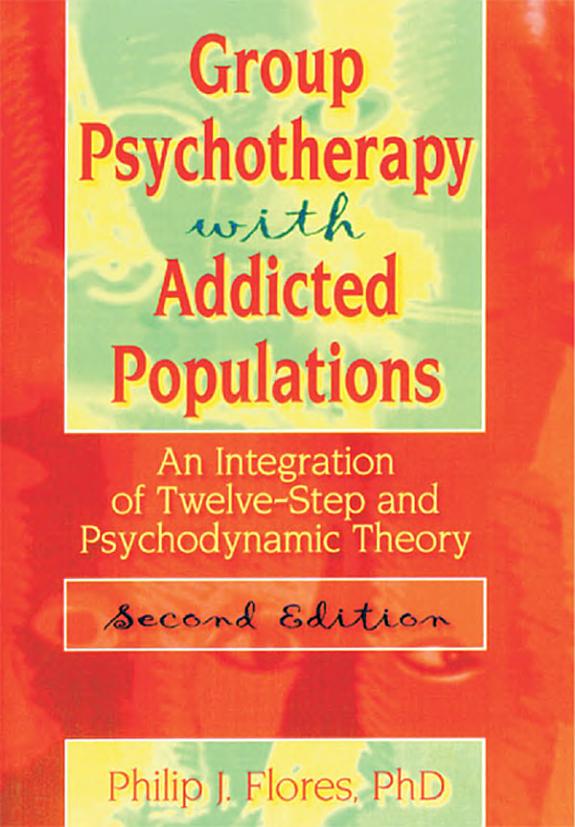
- Flores's book is not a manual for running addiction groups but a sustained argument that the group itself functions as a transitional object—a psychodynamic container that performs the same compensatory function the substance once held, thereby making Twelve-Step fellowship and object-relations theory complementary rather than competing frameworks.
- The integration Flores proposes dissolves the false war between psychodynamic insight and Twelve-Step practice by demonstrating that the Twelve Steps are already performing ego-structural repair—building self-regulation, affect tolerance, and relational capacity—through mechanisms psychoanalytic theory can name but did not invent.
- By grounding addiction in attachment failure rather than moral deficiency or mere neurochemistry, Flores repositions the group therapist not as an authority dispensing interpretation but as a reliable selfobject whose consistency catalyzes the internalization processes that addiction itself arrested.
The Group as Selfobject: Flores Recasts Twelve-Step Fellowship Through the Lens of Kohut and Winnicott
Philip Flores constructs his entire edifice on a single, deceptively radical premise: the addicted individual is not primarily suffering from hedonic excess or moral collapse but from a deficit in self-structure—an inability to regulate affect, maintain self-cohesion, and form stable internal representations of others. Drawing heavily on Heinz Kohut’s self psychology and Donald Winnicott’s concept of the transitional object, Flores argues that the substance itself functioned as a prosthetic selfobject, compensating for developmental failures in mirroring, idealization, and twinship. When the substance is removed, the individual faces the original wound unmediated. The group, in Flores’s schema, is not merely a support network; it is the replacement selfobject—a living, responsive environment that provides what the substance simulated and what early caregivers failed to supply. This reframes the entire purpose of group therapy with addicted populations: the therapist’s task is not to interpret unconscious content in the classical Freudian sense but to facilitate a relational field sturdy enough to allow arrested developmental processes to resume. Cody Peterson’s recent work on the archetype of the Alcoholic arrives at a strikingly parallel insight from the Jungian side—that the alcoholic’s “dedication to spirits” is a misguided attempt to restore contact with numinous energies that the culture’s mythlessness has severed. Where Peterson reads the deficit as spiritual, Flores reads it as structural; both agree the substance fills a void the person cannot otherwise name.
Twelve-Step Practice Already Contains the Psychodynamic Mechanisms Clinicians Claim to Provide
Flores’s most provocative contribution is his demonstration that Twelve-Step programs, far from being anti-psychological or naively spiritual, already enact the core processes of psychodynamic change: externalization of the self-critical introject (Steps Four and Five), repair of damaged object relations through amends (Steps Eight and Nine), and the building of a capacity for ongoing self-observation (Step Ten). What the psychodynamic therapist adds is not a superior framework but a metalanguage that makes these processes conscious—and a clinical container that handles the transference eruptions Twelve-Step groups are not designed to metabolize. Flores is precise about this boundary: the group therapist must understand projective identification, splitting, and narcissistic rage not because these replace Twelve-Step work but because they emerge when that work stalls. This parallels Edward Edinger’s claim, cited in Peterson’s work, that individuation as an analytic process is too laborious to serve the masses—that some “collective phenomenon” must emerge to carry the same function. Flores effectively argues that AA and its sister fellowships are that phenomenon, but that they require the psychodynamic clinician as a kind of structural guarantor when characterological pathology threatens to derail the process.
Attachment Failure, Not Pleasure-Seeking, Is the Engine of Addiction
Flores breaks decisively with the classical behavioral and even some psychoanalytic models by centering attachment theory as the explanatory core of addictive pathology. Drawing on John Bowlby and expanding into contemporary neuroscience, he argues that addicted individuals characteristically show disorganized or avoidant attachment patterns—they learned early that relational dependence is dangerous, and they discovered in substances a reliable, non-retaliatory source of soothing. The group setting thus becomes a corrective attachment experience. This is not sentimentality; Flores lays out the specific group dynamics—confrontation of denial, tolerance of ambivalence, gradual capacity for authentic vulnerability—through which insecure attachment is reworked in real time. Jung’s insight, transmitted through the historical chain Peterson traces from Jaime de Angulo to Rowland Hazard to Bill Wilson, that the alcoholic must have “a vital spiritual experience,” finds its psychodynamic translation here: the vital experience is the internalization of a secure relational bond, first with the group, then generalized outward. The “spiritual thirst for wholeness” Jung described in his 1961 letter to Wilson is, in Flores’s clinical language, the hunger for a coherent self that was never consolidated in early development.
Integration as Coniunctio: The Marriage of Clinical Structure and Archetypal Process
What makes Flores indispensable rather than merely competent is his refusal to subordinate either framework to the other. He does not pathologize Twelve-Step spirituality as primitive defense, nor does he dismiss psychodynamic insight as intellectual evasion of surrender. The integration he proposes is genuinely dialectical: the Twelve Steps provide the mythological and communal container that activates what Peterson calls “the affective power” of religious symbols—the numinosum that generates the impetus to change—while psychodynamic group therapy provides the clinical scaffolding to process the characterological turbulence that such activation inevitably produces. Flores’s model implicitly answers the question Edinger raised about whether Jungian individuation could ever become a mass phenomenon: it already has, but it requires clinically trained facilitators who understand both the archetypal depths and the ego-structural mechanics in play.
For anyone working at the intersection of addiction treatment and depth psychology today, Flores provides what no other single text does: a clinically rigorous, theoretically coherent framework for understanding why the group works when it works, why it fails when it fails, and what the therapist must understand about both psychodynamic process and Twelve-Step phenomenology to hold the space where genuine transformation—structural, relational, and spiritual—can occur.
Sources Cited
- Flores, P. J. (2007). Group Psychotherapy with Addicted Populations (2nd ed.). Haworth Press.
- Yalom, I. D. (1995). The Theory and Practice of Group Psychotherapy (4th ed.). Basic Books.
- Flores, P. J. (2004). Addiction as an Attachment Disorder. Jason Aronson.