 Seba.Health
Key Takeaways
- Hari's investigation inadvertently exposes the same insight depth psychology arrived at decades earlier: that addiction is not a chemical hijacking but a response to severed connection—a political reformulation of what Marion Woodman called the soul's starvation in an uninhabited body.
- By reframing the War on Drugs as a war on disconnection's symptoms, Hari provides the sociopolitical chassis that Hillman's archetypal psychology demands but never builds: a critique of how literalized pathology becomes state policy.
- The book's most radical move is not its policy argument but its implicit anthropology—the claim that the opposite of addiction is not sobriety but belonging, which maps precisely onto Jung's insistence that neurosis is the suffering of a soul that has not discovered its meaning.
Addiction as Disconnection Is a Political Discovery of a Depth-Psychological Truth
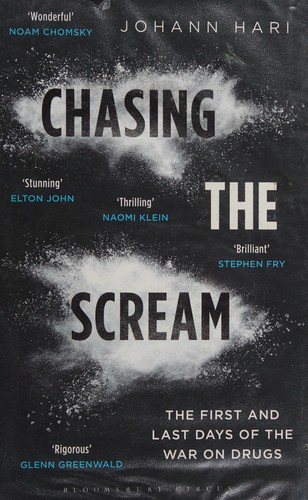
Johann Hari’s Chasing the Scream opens with Harry Anslinger, Billie Holiday, and a doctor named Henry Smith Williams—three figures whose entangled fates across the twentieth century dramatize a single thesis: the dominant model of addiction as chemical hijacking is wrong, and the punitive regime built upon it has manufactured more suffering than any drug. Hari traces the origins of the War on Drugs to Anslinger’s Federal Bureau of Narcotics in the 1930s, revealing how racialized moral panic and bureaucratic self-preservation displaced medical and psychological understanding. This is investigative journalism, not depth psychology. Yet the book’s central discovery—that addiction correlates not with exposure to substances but with the collapse of meaningful social bonds—arrives at a conclusion Marion Woodman articulated from within the consulting room: “The soul is starving; it’s true, because it’s not being recognized, and it’s being continually starved. They then try to feed it with food,” or alcohol, or heroin, or any concrete substitute for what is actually absent. Hari’s Bruce Alexander rat-park experiments, his interviews in Portugal and Switzerland, his account of Vietnam veterans who quit heroin upon returning to connected lives, all demonstrate empirically what Woodman diagnosed symbolically: addiction is not the disease but the attempted cure for an uninhabited life. James Hollis frames the same dynamic as Ixion’s wheel—“All addictions are in fact anxiety management techniques”—where the repetitive behavior temporarily bridges a gap the person cannot name. Hari names the gap: it is isolation, dislocation, the loss of what he calls “bonding.” The vocabulary differs; the structural insight is identical.
The War on Drugs as Literalized Pathology: Hillman’s Critique Made Legislative
What distinguishes Hari’s contribution from standard addiction memoirs or reform treatises is his demonstration that an entire apparatus of state violence was erected upon a literalized understanding of pathology. Anslinger needed addiction to be a property of substances—lodged in molecules, transmitted through needles—because only that model justified police power. James Hillman’s Re-Visioning Psychology dissects exactly this move: the medical model reduces psychic suffering to material substrates, and “thinking in terms of causes and material substrates as well as prescriptions of any sort about what to do is generally contraindicated in depth psychology.” Hari performs the political equivalent of Hillman’s archetypal critique. When a government literalizes addiction as pharmacological possession, it inevitably wages war on the possessed—criminalizing the symptom rather than attending to what the symptom is saying about the soul. Hillman insists that pathologizing is “the psyche’s autonomous ability to create illness, morbidity, disorder, abnormality, and suffering” and that this ability carries meaning. Hari shows what happens when an entire civilization refuses that meaning: it builds prisons. The parallel is not incidental. Hari documents how Portugal’s decriminalization and reintegration model—which treats addicts as disconnected people rather than as criminals or disease vectors—produced outcomes that neither punishment nor pure medicalization could achieve. This is Hillman’s demand to “see through” the medical and moral models made into public policy.
The Opposite of Addiction Is Not Sobriety but Belonging—A Reformulation of Jung’s Dictum on Meaning
Hari’s most quoted formulation—“the opposite of addiction is not sobriety but connection”—reads as a soundbite, but it carries extraordinary weight when placed alongside Jung’s letter to Bill Wilson, in which he wrote that the craving for alcohol is “the equivalent, on a low level, of the spiritual thirst of our being for wholeness.” Cody Peterson’s The Shadow of a Figure of Light elaborates this lineage, showing how Wilson’s Twelve Steps encode an individuation process: the alcoholic’s descent is a “quest to discover meaning in the midst of a culture whose connection to its mythological images has all but vanished.” Hari arrives at the same crossroads from the opposite direction—not through mythology but through epidemiology. His evidence from the Portuguese experiment, from the Swiss heroin-assisted treatment clinics, from the lives of drug dealers and addicts in the American carceral system, converges on a single finding: when people are given structure, purpose, and human bonds, the substance loses its gravitational pull. Woodman saw this decades earlier: “It used to be there in the church, for example, where people would enter into the sacred world, surrender to it, leave the sacred world, and take that energy back to the profane world. But they had something to take with them; they had a meaning.” What Hari documents is the political demolition of those containers. The War on Drugs did not merely fail to stop addiction; it actively destroyed the social fabric—through incarceration, stigma, the fracturing of families and communities—that constitutes the only real antidote.
Hari’s Blind Spot Is Depth Psychology’s Opening
The book’s limitation is also its value as a diagnostic marker. Hari operates entirely at the social and political level; he has no framework for the interior dimension of disconnection. He can tell you that Billie Holiday was hounded to death by Anslinger’s agents and that her addiction was inseparable from racial trauma, but he cannot tell you what Hollis means when he writes that “our task, and terrifying it is, is to burrow into the obsession, deconstruct the addiction, to find the primal, unassimilated idea buried so deeply.” Hari’s model explains why rat parks work but not why some people in functional communities still spiral into compulsion—because the disconnection can be intrapsychic, archetypal, rooted in what Woodman calls the “inner civil war” between the performing self and the hidden soul. This is not a flaw so much as a boundary. Chasing the Scream is indispensable precisely because it provides the macroscopic context that depth psychology’s consulting-room perspective cannot generate on its own. Together, they form a complete picture: the outer war on drugs mirrors and reinforces the inner war on psyche.
For readers approaching depth psychology today, Hari’s book functions as an essential primer on how collective systems pathologize what they cannot understand, and how that pathologization ricochets into individual souls. It makes visible the political architecture that Woodman, Hillman, and Hollis describe from within. No other book in the addiction literature so clearly demonstrates that the crisis is not pharmacological but relational—and that what a civilization does with its addicts reveals what it has done with its soul.
Sources Cited
- Hari, J. (2015). Chasing the Scream: The Search for the Truth About Addiction. Bloomsbury. ISBN 978-1-62040-553-7.
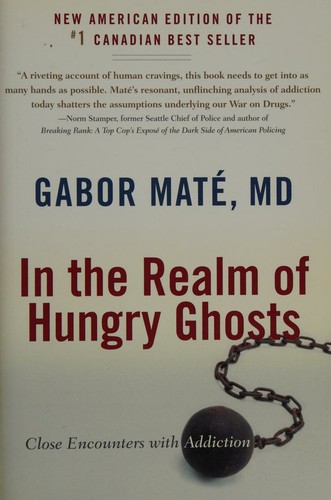
- Mate, G. (2008). In the Realm of Hungry Ghosts: Close Encounters with Addiction. North Atlantic Books.
- Alexander, B. K. (2008). The Globalisation of Addiction: A Study in Poverty of the Spirit. Oxford University Press.