 Seba.Health
Key Takeaways
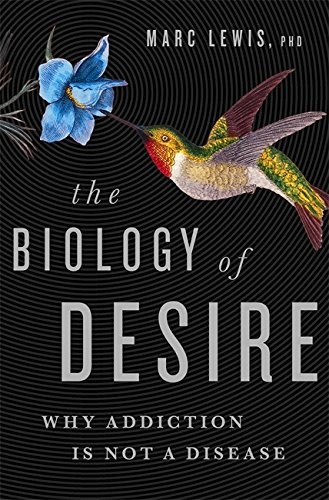
- Lewis's argument that addiction is not a disease but a developmental pattern of neural self-organization places him in direct opposition not only to the biomedical establishment but, perhaps unwittingly, in alliance with depth psychology's century-long insistence that pathologizing is the psyche's autonomous creative activity rather than a biological malfunction to be corrected.
- By demonstrating that the same neuroplastic mechanisms producing addiction also produce love, religious devotion, and political fanaticism, Lewis dissolves the categorical boundary between "addicted" and "normal" brains—an insight that converges with Marion Woodman's claim that the entire culture is in an addictive state and that the addict is merely an intensified exemplar of a universal condition.
- The book's central mechanism—desire narrowing the synaptic landscape through repeated feedback loops until alternatives become neurologically invisible—provides a materialist account of what James Hollis calls Ixion's wheel: the compulsive repetition of unassimilated primal ideas that constrict adult life to the dimensions of childhood.
Neuroplasticity Is Not Healing—It Is the Mechanism of Entrapment and the Mechanism of Liberation Simultaneously
Marc Lewis’s The Biology of Desire mounts its challenge against the disease model of addiction not by denying biology but by taking neuroscience more seriously than the disease model itself does. The standard medical framing treats addiction as a pathological deviation from a healthy baseline—a brain hijacked by substances. Lewis, a developmental neuroscientist and former addict, argues that this gets the neuroscience exactly backward. The brain changes observed in addiction—deepened synaptic pathways, sensitized dopamine circuits, weakened prefrontal regulation—are not symptoms of disease. They are the ordinary products of neuroplasticity, the same process by which we learn language, fall in love, or acquire expertise. Addiction is not what happens when the brain breaks. It is what happens when the brain does precisely what it evolved to do: reorganize itself around recurring patterns of desire and reward, narrowing its repertoire until a single motivational channel dominates. This is a critical distinction. If addiction is a disease, then the addict is a patient requiring medical intervention from outside. If addiction is a developmental pattern—a groove worn into neural architecture by repeated experience—then the addict is a person whose learning has become catastrophically self-reinforcing, and the path out must involve new learning, not mere treatment. Lewis builds this case through five detailed biographical narratives, each tracing the neurological mechanics of how desire recruits attention, how attention consolidates habit, and how habit eventually forecloses the capacity to want anything else.
Desire Narrowing the World Is the Neuroscience of What Depth Psychology Calls Possession by a Complex
What makes Lewis’s framework consequential beyond neuroscience is its structural homology with depth psychological accounts of compulsion. When Lewis describes the prefrontal cortex losing its capacity to override subcortical impulse—when the addicted brain literally cannot generate alternative futures because the synaptic landscape has been sculpted into a single valley—he is providing the material substrate for what James Hollis, drawing on Marion Woodman, calls the tyranny of “an idea always derivative in character, anchored in the past, primal and unassimilated.” Hollis’s account of addiction as Ixion’s wheel—the compulsive repetition driven by unmetabolized anxiety, where “will power can only last so long” before the personality collapses into its palliative circuit—maps almost perfectly onto Lewis’s description of ego depletion and narrowed synaptic options. The difference is that Lewis locates the mechanism in dopaminergic feedback loops rather than in archetypal dynamics. Yet the convergence is not accidental. Both frameworks describe a system in which the conscious self loses sovereignty to a pattern that operates autonomously, ceaselessly reinforcing itself. Donald Kalsched’s account of the daimon-lover—that interior figure who “tempts us into one more drink or one more candy-bar” while offering “inflated substitutes for what is really wanted”—is the mythological image of exactly the neural process Lewis traces: desire recruiting the brain’s reward architecture to serve a substitute that can never satisfy the original need, thereby deepening the very deprivation it promises to relieve.
The Disease Model Functions as a Defense Against the Meaning of Addiction
Lewis’s most subversive argument is not neurological but epistemological. The disease model, he contends, serves a social and psychological function: it removes agency, meaning, and narrative from the addict’s experience, replacing them with a mechanical etiology that absolves everyone—addict, family, culture—of the obligation to interrogate what the addiction is actually about. This is precisely Hillman’s critique of the medical model applied to psychopathology in Re-Visioning Psychology: that treating the psyche’s disturbances as literal illness “impedes us from recognizing the other figures within” the symptom, the voices “telling us neither of sin nor of suffering” but something far more demanding. Hillman insists that pathologizing is the psyche’s autonomous creative activity, its way of forcing consciousness into depth. Woodman extends this directly to addiction: “I look at neurosis creatively, as Jung did. A neurosis or an addiction will not allow a person to go on living an empty non-life.” The addict, in Woodman’s view, is “profoundly religious”—driven by a ferocious energy that “wants something bigger than the bread-and-butter world.” To call this a disease is to seal the meaning inside a diagnostic container and refuse to open it. Lewis, operating from an entirely secular neuroscience framework, arrives at a structurally identical conclusion: the disease label functions as a conceptual anesthetic, numbing inquiry into the developmental, relational, and existential conditions that shaped the addictive groove in the first place.
Recovery as Developmental Reorganization, Not Cure
Lewis’s alternative model—addiction as a learned developmental pattern that can be reorganized through new relational experience, changed context, and the maturation of self-narrative—resonates with what Cody Peterson calls the “psychospiritual disease of addiction” in his work on Jung and the Twelve Steps. Peterson frames the alcoholic’s journey as a quest for meaning in a culture severed from its mythological containers; Lewis frames recovery as the brain’s capacity to carve new synaptic channels when motivation, context, and self-concept shift simultaneously. These are not competing accounts. They describe the same transformation at different levels of analysis. What Lewis adds that depth psychology cannot is the precise mechanism: the prefrontal cortex gradually reasserting regulatory function over subcortical impulse as new experiences provide alternative reward pathways. What depth psychology adds that Lewis cannot is the why—the recognition that the narrowing of desire is not random but directed, that the substance or behavior chosen carries symbolic weight (Woodman: “alcohol initially takes you into light”), and that recovery requires not merely behavioral redirection but the discovery of what the soul was actually starving for.
This book matters because it provides the hardest possible materialist evidence for a conclusion that depth psychology reached by other means: that addiction is not a malfunction but a meaningful—if devastating—expression of the psyche’s attempt to organize itself around desire in a world that has failed to provide adequate containers for that desire. Lewis gives neuroscientific teeth to the depth psychological intuition that the addict’s suffering is not noise but signal. For anyone navigating between clinical neuroscience and the symbolic imagination, The Biology of Desire is the indispensable bridge text—the one that demonstrates that the brain’s architecture and the soul’s architecture are not metaphors for each other but descriptions of the same event at different scales.
Sources Cited
- Lewis, M. (2015). The Biology of Desire: Why Addiction Is Not a Disease. PublicAffairs.
- Volkow, N. D., & Koob, G. F. (2015). Brain Disease Model of Addiction. New England Journal of Medicine, 374(4), 363-371.
- Dodes, L. (2014). The Sober Truth: Debunking the Bad Science Behind 12-Step Programs. Beacon Press.