 Seba.Health
Key Takeaways
- Pargament treats religion not as a variable to be correlated with outcomes but as a process — a coping system with its own internal logic — thereby offering empirical psychology the functional grammar it has always lacked for engaging the sacred without reducing it.
- The book's central construct, "the sacred," operates as a psychological axis comparable to Jung's Self or Hillman's Gods: it is what orients the entire coping system, and its conservation or transformation determines whether religious struggle produces growth or collapse.
- By insisting that religion can be both helpful and harmful — that the same coping mechanism can serve preservation or transformation of significance — Pargament demolishes the ideological binary between Freud's dismissal and Jung's embrace, replacing polemic with empirical precision.
Religion Is Not a Trait but a Process, and This Reframing Changes Everything Psychology Can Say About It
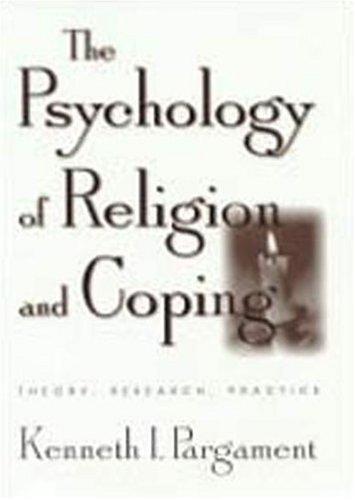
Kenneth Pargament’s 1997 work arrives at precisely the fault line where empirical psychology and depth psychology have long talked past each other. Where Freud declared religion an illusion and Jung declared it indispensable, Pargament does something neither managed: he builds a theoretical framework that treats religion as a dynamic coping process, measurable yet irreducible. His key move is definitional. Religion, for Pargament, is “a search for significance in ways related to the sacred.” This is not a platitude. The word “search” transforms religion from a static belief system — something you have or lack — into a verb, a continuously unfolding activity of orienting, reorienting, and sometimes losing orientation toward what a person holds sacred. The implications ripple outward. If religion is a process, it cannot be evaluated as simply good or bad for mental health. It must be evaluated in terms of how it operates, for whom, and under what conditions of stress. This functional turn rescues religion from the two dominant modes of psychological engagement: the reductive (religion as defense mechanism) and the romantic (religion as path to wholeness). Edward Edinger’s claim that “the great religions are great psychotherapeutic systems” captures the Jungian position well, but it remains a structural assertion. Pargament operationalizes it, showing precisely which coping activities — prayer, religious reappraisal, seeking support from clergy, surrender to God — function as the living machinery of that psychotherapeutic system.
The Conservation and Transformation of the Sacred Is the Psychological Drama That Depth Psychology Describes but Cannot Measure
Pargament introduces a distinction that depth psychologists should find arresting: the difference between coping that conserves significance and coping that transforms it. In ordinary life crises, religious coping works to preserve the person’s existing framework of meaning — their relationship to the sacred remains intact, and coping strategies function to maintain equilibrium. But in extreme crises — what Pargament calls “critical life events” that shatter the orienting system — the task shifts from conservation to transformation. The person must fundamentally reconstruct their relationship to the sacred. This maps with startling precision onto Donald Kalsched’s account of the archetypal defense system in trauma. Kalsched’s Protector/Persecutor operates to conserve what remains of the personal spirit after catastrophe, but it does so at the cost of foreclosing growth; it “is not educable.” Pargament’s framework provides the empirical complement: religious coping can become similarly rigid, what he terms “negative religious coping” — feeling punished by God, experiencing spiritual discontent, questioning God’s power. This is not religion failing; it is the conservation function operating past its usefulness, becoming what Kalsched would recognize as an anti-life force. The clinical value is immense. Pargament gives therapists a vocabulary for distinguishing between a patient whose suffering is deepened by religious engagement and one whose suffering is being metabolized through it — a distinction that neither the secularist dismissal nor the Jungian amplification of religious imagery, taken alone, can reliably make.
Pargament’s “Sacred” Functions as the Empirical Correlate of What Hillman Calls the Gods
James Hillman argued in Re-Visioning Psychology that “there is always a God in what we are doing” and that psychology, because it is the study of soul, “is driven by the ‘will to believe,’ of which its belief in sexuality, or humanism, or self are each idols.” Hillman’s insight is phenomenological: he identifies the numinous charge that adheres to whatever a person holds ultimate. Pargament, working from an entirely different epistemological tradition, arrives at a structurally identical claim: the sacred is whatever a person treats as set apart, worthy of reverence, and foundational to their system of meaning. This can be God, but it can also be a sense of purpose, a community, a vocation, or a relationship that has been imbued with sacred qualities. Pargament calls this “sanctification” — the process by which ordinary objects, goals, or relationships become invested with sacred significance. Hillman would call it the recognition that a God is present. The convergence matters because it reveals that the empirical psychology of religion and archetypal psychology are not rival disciplines but complementary lenses on the same phenomenon: the human psyche’s compulsion to orient itself around something it experiences as ultimate. Where Hillman asks “which God is at work?” Pargament asks “what has been sanctified, and how is the person coping with threats to it?” The questions are formally identical. The difference is methodological, not ontological.
Why the Book Refuses to Be Neutral — and Why That Refusal Is Its Greatest Strength
Richard Tarnas observed that depth psychology “subverted the naïve orthodoxies of traditional religion while extending the range of spiritual inquiry.” Pargament’s work belongs to this tradition, but with a crucial difference: he refuses the comfortable agnosticism that allows most empirical psychologists to study religion without engaging it as a living force. He is explicit that his model demands the clinician take religion seriously — not as a quaint cultural artifact to be tolerated but as a potent coping system that can generate both profound healing and devastating harm. His review of the research literature demonstrates that religious coping is one of the most powerful predictors of adjustment to major life stressors, often outperforming secular coping strategies. But he is equally unflinching about the data showing that certain forms of religious coping — spiritual struggle, punitive God-images, interpersonal religious conflict — predict worse outcomes. This double-edged empiricism is the book’s signature contribution. It refuses the false choice between celebrating religion and pathologizing it.
For the reader coming to this work from depth psychology, the book’s value is specific and irreplaceable. It provides the empirical scaffolding for claims that the depth tradition has made intuitively for a century. Hillman’s insistence that psychology cannot be agnostic, Jung’s assertion that a living relationship to the numinous is essential to psychological health, Edinger’s claim that depth psychology exists precisely because the containment of traditional religion has failed — all of these find in Pargament’s framework not confirmation but operationalization. This is the book that translates the depth psychological intuition about religion’s psychological centrality into a language that can be tested, refined, and clinically applied. No other work in the psychology of religion accomplishes this synthesis with comparable rigor or theoretical ambition.
Sources Cited
- Pargament, K. I. (1997). The Psychology of Religion and Coping: Theory, Research, Practice. Guilford Press.
- James, W. (1902). The Varieties of Religious Experience. Longmans, Green.
- Allport, G. W. (1950). The Individual and His Religion. Macmillan.