 Seba.Health
Key Takeaways
- Welwood's concept of "spiritual bypassing" is not a critique of spiritual practice but a diagnostic framework exposing how meditation and transcendence can function as sophisticated defenses against unmetabolized developmental wounds—making it the depth-psychological complement to Jung's warning that Eastern methods cannot be directly transplanted to Western psyches.
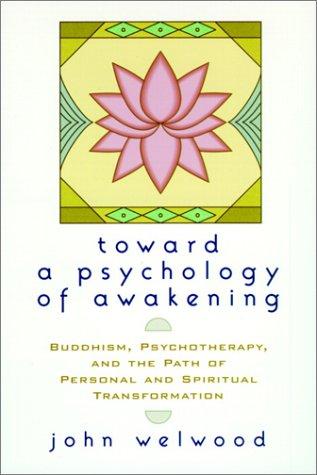
- The book's central innovation is its insistence that neither psychotherapy nor Buddhist practice alone completes the work of transformation: psychotherapy without spiritual ground remains trapped in ego-consolidation, while spiritual practice without psychological integration produces what Welwood calls a "premature transcendence" that mirrors the dissociative structures it claims to dissolve.
- Welwood constructs a developmental phenomenology of the "person" that occupies the precise space Hillman's archetypal psychology refuses to enter and that transpersonal psychology leaps over—the felt, embodied, relational self that is neither ego nor archetype but the living ground where awakening actually occurs.
Spiritual Bypassing Is the Shadow Side of the Uranus-Neptune Conjunction’s Psychological Turn
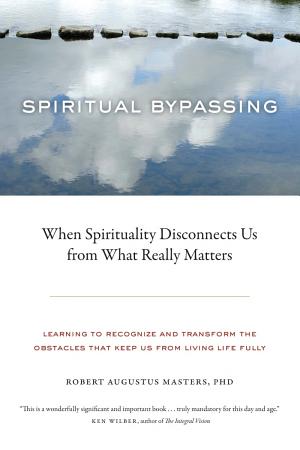
Richard Tarnas identifies the late 1980s and 1990s as the period when psychology shifted decisively toward “the awakening to the significance of the spiritual dimension of life, the integration of psychotherapy with meditation and spiritual practice.” Welwood’s Toward a Psychology of Awakening is both a product of and a corrective to that very cultural moment. The book names what the zeitgeist could not see about itself: that the mass movement toward spiritual practice as psychological healing carried its own pathology. Welwood’s term “spiritual bypassing”—the use of spiritual ideas and practices to sidestep unresolved emotional issues, psychological wounds, and unfinished developmental tasks—stands as the single most precise diagnostic concept generated by the Buddhism-meets-psychotherapy encounter. It does for the spiritual seeker what Hillman’s critique of ego-psychology did for the therapeutic establishment: it exposes the mechanism by which the very framework promising liberation becomes a container for avoidance. Jung had warned in his commentary on Zen that “a direct transplantation of Zen to our Western conditions is neither commendable nor even possible,” and that the Western venturer into wholeness faces “mute, abysmal loneliness” rather than the clean arcs promised by imported practice. Welwood translates that warning from a cultural generalization into a clinical reality. The meditator who achieves states of equanimity while remaining unable to sustain intimate relationship, tolerate anger, or grieve childhood loss is not awakening—that person is performing a psychic maneuver structurally identical to dissociation.
The “Uncooked” Self Cannot Be Transcended—Only the Fully Embodied Person Can Genuinely Surrender
Welwood’s most consequential theoretical move is his distinction between “personal” and “transpersonal” development as genuinely separate but mutually necessary trajectories. This places him in direct opposition to Ken Wilber’s hierarchical model, in which personal psychology is a stage to be outgrown on the way to transpersonal realization. For Welwood, the relational wound—the place where the developing child’s being met non-recognition, emotional absence, or active harm—creates what he calls a “wound of the heart” that no amount of meditation can reach because it exists at a pre-egoic, somatic, affective level that spiritual practice, oriented as it is toward the dissolution of ego-structure, simply does not address. This is the precise register that Marion Woodman identifies when she describes the work of “rebuilding rotten foundations” before the spiritual journey can authentically begin: “once the depths are reconstructed, you can’t go on wallowing in negativity… there’s a point where grace enters.” Welwood and Woodman converge on the recognition that embodied, felt experience is the prerequisite for genuine surrender. Where Woodman locates this in the conscious feminine and the body’s resonance with truth, Welwood locates it in what he calls “unconditional presence”—a quality of awareness that neither grasps after insight nor recoils from pain but holds the wound in full contact. This is not mindfulness as technique. It is the therapeutic relationship internalized as a capacity of being.
Welwood Occupies the Ground That Hillman Cleared but Would Not Cultivate
Hillman’s archetypal psychology insists that “the ego is a paltry thing” and that soul-making proceeds through image, fantasy, and the decentering of the personal subject. Welwood does not disagree, but he identifies a clinical problem that Hillman’s approach cannot resolve: the person who has never been adequately seen, held, or mirrored at the developmental level cannot make use of archetypal imagination because they lack the psychic ground from which to engage it. The fantasy-image, in Hillman’s sense, requires a subject capable of reflective participation—and that subject is precisely what early relational trauma damages. Welwood’s psychology of awakening therefore inserts a missing middle term between Hillman’s downward movement into soul and the Buddhist upward movement toward emptiness. That middle term is the “person”—not the ego in the Freudian sense, not the self in the Jungian sense, but the felt experience of being a particular someone in relationship. Welwood draws on the phenomenological tradition (Gendlin’s focusing, Buber’s I-Thou) to describe this experiential ground, and he insists that it is neither an illusion to be dissolved nor an ego to be transcended but the very medium through which both psychological healing and spiritual realization take place. This is a radical claim within the Buddhist-psychotherapy dialogue, because it reintroduces a robust concept of personhood into a framework that typically deconstructs it.
Why Neither Meditation Manuals Nor Therapy Textbooks Can Substitute for This Book
Jung observed that “the attainment of wholeness requires one to stake one’s whole being” and that anyone who reduces the individuation process to technique or formula misses its essential character as destiny. Welwood extends this insight into the specific problem of the contemporary Westerner who has access to sophisticated contemplative traditions but lives in a culture that produces relational trauma as a matter of course. His psychology of awakening is not an eclecticism—it does not blend Buddhist concepts with Western therapy into a smooth paste. It holds the tension between two fundamentally different orientations toward human suffering: the Buddhist recognition that the self is empty of inherent existence, and the psychotherapeutic recognition that the self must first exist as a felt, embodied, relationally coherent reality before it can be genuinely released. No other book in the depth-psychological or transpersonal canon holds this tension with comparable precision. Tarnas noted that the 1990s saw psychology increasingly regarded as a “path of spiritual discovery,” but most of the literature produced under that banner lacked Welwood’s clinical rigor and philosophical clarity about what can go wrong when the spiritual and psychological are collapsed rather than integrated. For anyone navigating the intersection of contemplative practice and psychological work—which is to say, for anyone doing serious inner work in the contemporary West—this book provides not inspiration but diagnostic precision about the specific ways that work fails.
Sources Cited
- Welwood, J. (2000). Toward a Psychology of Awakening: Buddhism, Psychotherapy, and the Path of Personal and Spiritual Transformation. Shambhala.
- Welwood, J. (1984). Principles of Inner Work. Journal of Transpersonal Psychology, 16(1).
- Trungpa, C. (1973). Cutting Through Spiritual Materialism. Shambhala.