 Seba.Health
Key Takeaways
- Moore's central intervention is not therapeutic but epistemological: he replaces the diagnostic gaze that reads symptoms as problems to solve with an observational stance that reads symptoms as communications from a depth the ego cannot author, thereby relocating psychological authority from clinician to soul itself.
- The book's repeated invocation of Renaissance medicine and Ficino's *Book of Life* is not decorative eclecticism but a deliberate genealogical claim that modern psychotherapy is a degraded fragment of a once-unified tradition in which cosmology, aesthetics, and healing were inseparable — making Moore's project a restoration, not an innovation.
- By insisting that "soul is its own purpose and end," Moore breaks decisively with both behavioral adaptation models and Jungian individuation teleology, proposing instead a non-progressive, aesthetic psychology in which depth is measured not by developmental achievement but by the richness of one's relationship to one's own opacity.
Care Is Not Gentler Cure but a Different Epistemology Altogether
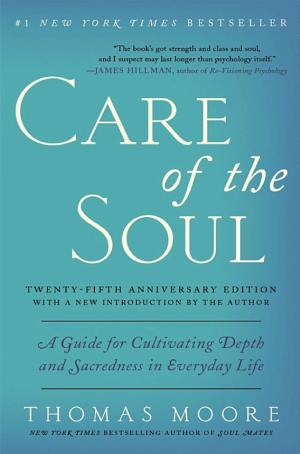
Thomas Moore opens Care of the Soul with a distinction that sounds simple and proves radical: “A major difference between care and cure is that cure implies the end of trouble.” This is not a plea for patience or gradualism. It is a paradigm rejection. The entire apparatus of modern psychotherapy — diagnostic categories, treatment plans, measurable outcomes — rests on the cure model. Moore dismantles it not by attacking its methods but by questioning its metaphysics. If the soul “ferments” rather than progresses, if “change takes place, but not according to plan or as the result of intentional intervention,” then the therapeutic relationship is not a technical procedure but something closer to what the Greeks meant by therapeia: tending, the way one tends sheep. Moore recovers this etymology explicitly, noting that the -serv- in “observance” referred to shepherding. The therapist is not an engineer but a shepherd of images. This places Moore in direct lineage with James Hillman’s Re-Visioning Psychology, which argued that psychology’s original sin was its flight from image to concept. But where Hillman’s prose is combative and philosophically dense, Moore translates the same insight into a livable vernacular. He is Hillman’s pastoral arm — not simplifying the ideas but re-embedding them in the dailiness from which Hillman sometimes abstracted them.
The Minotaur Named Asterion: Pathology as Theophany
The book’s most arresting image is the Greek Minotaur — the flesh-eating beast at the labyrinth’s center whose name, Asterion, means “Star.” Moore returns to this figure when sitting with a person “with tears in her eyes, searching for some way to deal with a death, a divorce, or a depression.” The beast and the star are the same being. This is not metaphor deployed for comfort; it is an ontological claim about the nature of symptoms. Depression, jealousy, dependency — these are not malfunctions but theophanies, visitations from what Moore, borrowing alchemical vocabulary, calls the soul’s “darker beauty.” He devotes sustained attention to Saturn’s qualities — “coldness, isolation, darkness, emptiness” — and insists these be woven into the “fabric of life” rather than extirpated. Here Moore converges with Jung’s late insight in Memories, Dreams, Reflections: “The whole man is challenged and enters the fray with his total reality. Only then can he become whole and only then can God be born.” But Moore pushes further than Jung’s individuative framework by refusing to make wholeness a destination. The peacock’s tail, the philosophers’ stone — these alchemical endpoints in Moore’s hands become descriptions of texture, not trophies of development. A life that has integrated its Saturnine dimensions is not “more individuated”; it is simply denser, more opaque, more lovable. This is a crucial departure from Edward Edinger’s reading of the mysterium coniunctionis as ego-Self reconciliation. For Moore, the goal is not reconciliation but ongoing, reverent attention.
Anima Mundi Reclaims Psychology from the Interior
Moore’s most ambitious move is his insistence that soul is not interior. Drawing on Hillman and Robert Sardello, he argues that the modern habit of locating psyche inside the skull — “a cousin to the brain” — is itself the pathology. The Renaissance magus understood that “our soul, the mystery we glimpse when we look deeply into ourselves, is part of a larger soul, the soul of the world, anima mundi.” A house has soul. A ring worn for sixty-four years has soul. A river has soul. This is not animism sentimentalized; it is the recovery of what Ficino meant when he taught that the universe is “an animal, graced with body, soul, and spirit,” and what Paracelsus meant when he required physicians to know “heaven and earth as well as human behavior.” Moore quotes Paracelsus directly: a physician must be “a cosmographer and geographer.” The implication for psychotherapy is staggering. If soul pervades the world, then therapy cannot be confined to the consulting room. Choosing colors, oils, places to walk — Ficino’s prescriptions in The Book of Life — becomes as therapeutically significant as dream interpretation. Moore is not being whimsical here; he is recovering a tradition that predates the Cartesian split by centuries and that modern depth psychology, for all its sophistication, has only partially reclaimed. Even Jung, who understood the unus mundus, remained structurally committed to an interior psyche that Moore’s anima mundi dissolves.
Art as Soul’s Native Language, Not Its Illustration
Moore insists that “care of the soul requires a different language from that of therapy and academic psychology. Like alchemy, it is an art and therefore can only be expressed in poetic images.” This is not anti-intellectualism. It is a claim about the soul’s own grammar. Leonardo’s question — “Why does the eye see a thing more clearly in dreams than the imagination when awake?” — anchors Moore’s argument that ordinary perception is impoverished not by lack of data but by lack of imagination. The kitchen table already contains a Cézanne still life; the summer breeze already enacts an Annunciation. Art does not represent soul; art is the mode in which soul becomes perceptible. This connects Moore to Gaston Bachelard’s phenomenology of the image and, more immediately, to Hillman’s insistence in The Soul’s Code that each life is shaped by an inherent image. But Moore’s emphasis is less on the daimon that calls than on the everyday practices — journaling, cooking, letter-writing, dressing in Saturn’s black — that honor whatever image has arrived. The “craft of life” (techne tou biou) that Plato attributed to Socrates becomes, in Moore’s hands, neither ascetic discipline nor self-help productivity but an ongoing aesthetic practice whose criterion is depth rather than improvement.
For anyone entering depth psychology today, Care of the Soul provides something no other single volume does: a bridge between Hillman’s archetypal theory and the texture of an actual Tuesday afternoon. It translates the Renaissance therapeutic imagination into a contemporary idiom without flattening it into self-help platitude. Where Hillman dazzles and sometimes intimidates, Moore accompanies. Where Jung systematizes, Moore lingers. The book’s enduring power lies not in its ideas alone but in its demonstration that tending the soul is an art practiced in small, concrete, daily acts — and that this tending, paradoxically, generates the only transformation that lasts.
Sources Cited
- Moore, T. (1992). Care of the Soul: A Guide for Cultivating Depth and Sacredness in Everyday Life. HarperCollins. ISBN 978-0-06-092224-5.
- Hillman, J. (1975). Re-Visioning Psychology. Harper & Row.
- Ficino, M. (1489). Three Books on Life. Trans. C.V. Kaske & J.R. Clark. MRTS, 1989.