 Seba.Health
Key Takeaways
- Hillman does not critique analysis from outside it but demonstrates that analysis is itself a mythical enactment — and that recognizing this enactment, rather than abandoning it for group therapy or pharmacology, is the only way analysis can genuinely end.
- The book's three-part structure — dismantling transference, the unconscious, and neurosis — is not a sequence of arguments but a progressive dissolution of the conceptual pillars that keep the Apollonic ego in place, revealing each as a mythic fantasy rather than a clinical fact.
- Hillman's turn to Dionysus is not a romanticization of irrationality but a precise structural claim: that the Western concept of consciousness is constitutively misogynist, and that only a bisexual, Dionysian mode of awareness can dissolve the neurosis that Apollonic consciousness itself generates.
Analysis Does Not Need Reform — It Needs to Recognize Itself as Ritual
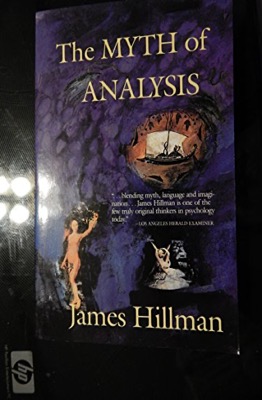
Hillman opens The Myth of Analysis with a move that distinguishes it from every other critique of psychotherapy written in the twentieth century. He is not interested in improving analysis, expanding it, or replacing it with something warmer and more embodied. Group therapy, sensitivity training, drug experiences — these “merely transplant the analytical mind” elsewhere, leaving its mythic structure untouched. The real operation is epistemological: analysis will end “when we discover what myth it is enacting.” This is not metaphor for Hillman. He means that the emotions stirred in the analytic relationship — the desperate love, the rage, the idealization — are not transferred from childhood scenes but are “appropriate to the actual ongoing mythical experience of soul-making.” The transference is not a clinical artifact to be resolved; it is a ritual event to be recognized. This is why Part One could be subtitled “The End of Transference” — not because transference ceases, but because the reductive framework that calls it transference collapses once one sees it as mythic participation. The implications are severe. If the emotions in analysis belong to the ritual rather than to the patient’s developmental history, then the entire hermeneutic machinery of psychoanalysis — tracing symptoms to childhood, interpreting dreams as wish-fulfillments, reading the therapeutic relationship as repetition — is exposed as one particular mythological enactment among others, not as science. Jung saw this when he placed analysis within an archetypal frame in 1912, but even Jung, Hillman argues, did not fully escape the Apollonic method: “becoming conscious through insight, a journey to self-knowledge, consciousness as self-awareness, dream as oracle.” The Oedipal method persists even when the Oedipal content is abandoned.
The Unconscious Is Not a Discovery but a Diagnostic Fantasy of the Enlightenment Ego
Part Two executes the most philosophically ambitious move in the book. Hillman traces the concept of the unconscious back through Enlightenment epistemology, showing that it is not a neutral empirical finding but the inevitable shadow cast by a particular structure of consciousness — the “enlightened egoization of the psyche which learned to cope with its darkness by means of diagnosis.” The unconscious, in this reading, is what happens when the imaginal power of the psyche is expelled from legitimate knowing and then rediscovered as something alien, dark, and requiring professional interpretation. This argument resonates directly with Jung’s own ambivalence about the term, but Hillman pushes it further than Jung ever did. Where Jung retained the unconscious as a structural concept — the container of archetypes — Hillman insists that the concept itself “replaced the imaginal power of the psyche.” The remedy is not more analysis of the unconscious but a recovery of memoria, the imaginal faculty that the art-of-memory tradition cultivated before modernity split knowing from imagining. Drawing on Frances Yates’s scholarship, Hillman connects Jung’s active imagination to Augustine’s thesaurus inscrutabilis and the Renaissance memory palaces, arguing that “notitia, voluntas, and amor are applied to memoria.” This is not antiquarian decoration. It repositions depth psychology’s central practice — attending to images — as a continuation of a pre-modern epistemic tradition rather than a post-Enlightenment clinical technique. Edward Casey’s later phenomenological work on imagination and memory follows paths Hillman cleared here, and Marion Woodman’s insistence on the body as imaginal ground also finds its theoretical warrant in this section’s dissolution of the mind-body split enforced by diagnostic language.
Misogyny Is Not a Content of Consciousness but Its Very Structure
Part Three delivers the book’s most radical thesis: that the Western concept of consciousness is structurally misogynist. “What we have come to mean by the word ‘conscious’ is ‘light’; this light is inconceivable for this consciousness without a distaff side of something else opposed to it that is inferior and which has been called — in Greek, Jewish, and Christian contexts — female.” This is not a political complaint but an archetypal diagnosis. The Apollonic ego, which underwrites both neurosis and its treatment, cannot integrate the feminine because it constituted itself by expelling the feminine. Every attempt to “integrate the anima” within this structure merely reinforces the structure, because integration presupposes a sovereign masculine consciousness doing the integrating. Hillman’s alternative is Dionysian consciousness — bisexual, moist, childlike, inherently relational. The coniunctio under Dionysus “would now be experienced as a weakening of consciousness, in the former sense of that notion, rather than an increase of consciousness through ‘integrating’ the anima.” This is a direct challenge to the Jungian mainstream, particularly to Erich Neumann’s developmental model in The Origins and History of Consciousness, where the hero’s separation from the maternal unconscious is the telos of psychic growth. Hillman inverts Neumann: the hero myth is the disease, not the cure. The neurosis that forces “femininity and inferiority upon consciousness” is a compensation for the one-sidedness of Apollonic awareness itself. End the one-sidedness, and neurosis — along with the analysis that exists to treat it — becomes unnecessary.
Psychology’s Absent Father and the Mythic Ground of the Profession
Hillman’s opening question — “What fathers psyche?” — is not rhetorical but diagnostic. Depth psychology, born in consulting rooms and psychiatric wards, has mistaken its circumstances for its genealogy, binding itself to medicine and the Asclepian configuration. Without a patron myth consciously chosen, the analyst is “a mercurial prostitute earning my money from dreams and passions,” compensating for illegitimacy by inflating into the hero-savior. This resonates with Guggenbuhl-Craig’s analysis in Power in the Helping Professions of the shadow inflation endemic to therapeutic authority. But Hillman’s solution is not ethical vigilance; it is mythological awareness. Freud’s choice of Oedipus told us “less which myth was the psyche’s essence than that the essence of psyche is myth.” The task is not to find the right myth but to recognize that method itself is mythic — that “the deepest myth of any analysis lies in its method.” The meta-hodos, the road beyond, requires not a better interpretation but a different kind of walking.
For readers encountering depth psychology today, The Myth of Analysis remains the single most penetrating demonstration that psychology’s categories — transference, the unconscious, neurosis, consciousness itself — are not discoveries about the psyche but mythic enactments of a particular historical consciousness. No other book in the tradition performs this reflexive operation with comparable rigor. Where Jung opened the archetypal, Hillman turned the archetypal eye upon Jung’s own enterprise, and upon the entire modern project of therapeutic self-knowledge, exposing its Apollonic bones. The result is not nihilism but liberation: if soul-making is “essentially an imaginative activity… which does not need analyst or an analysis,” then the psyche can carry its imagination into life without professional custody — provided it first sees through the myth that told it otherwise.
Sources Cited
- Hillman, J. (1972). The Myth of Analysis: Three Essays in Archetypal Psychology. Northwestern University Press. ISBN 978-0-8101-0900-3.
- Jung, C.G. (1946). The Psychology of the Transference. In Collected Works, Vol. 16. Princeton University Press.