 Seba.Health
Key Takeaways
- Hillman's central intervention is not to interpret alchemy psychologically but to use alchemical language as a therapeutic instrument — a concrete, sensuous speech that dissolves the one-sidedness Jung identified as neurosis itself.
- The book systematically dismantles the translation habit in Jungian practice (Red King = masculine principle, White Queen = feminine principle) and replaces it with a discipline of staying inside the image, treating alchemical substances as irreducible psychic realities rather than symbols pointing elsewhere.
- By insisting on the yellowing (citrinitas) as a neglected stage between whitened insight and reddened worldly action, Hillman diagnoses the narcissism of analytic consciousness itself — a move that turns alchemical color theory into a critique of psychotherapy's institutional self-enclosure.
Alchemical Language Is Not a Code for Psychological Concepts — It Is the Therapy
The foundational move of Alchemical Psychology occurs in its opening chapter, where Hillman identifies three ways alchemy has been relevant for analytical psychology and then decisively privileges the third. The first way — alchemy as theoretical scaffolding for Jung’s system — he credits to David Holt. The second — alchemy as phenomenological parallel to individuation in casework — he credits to Robert Grinnell. His own contribution is different in kind: alchemical language is itself therapeutic because it operates on the one-sidedness that Jung defined as neurosis. Neurosis, Hillman insists, “resides in the patterns of our conscious personality organization,” in the habitual conceptual frameworks through which we construct experience. Alchemical speech — concrete, sensuous, polyvalent — shatters those frameworks not by interpreting them but by replacing them. When an analyst speaks of sulfur flaring or salt crystallizing rather than “resistance” or “projection,” the very texture of consciousness changes. The image does not point to a concept; it is the psychic event. This is not metaphor in the decorative sense. It is what Hillman calls poiesis — the making-activity of soul that precedes and exceeds conceptual capture. Where Jung in Psychological Types (1921) worried that sensuous perception was as one-sided as rational thought, his later immersion in alchemy showed him otherwise: “No term means only one thing.” Hillman seizes this as permission to build an entire clinical method on image-fidelity rather than conceptual translation.
The Critique of Translation Is a Critique of Ego-Psychology in Disguise
Hillman is explicit about what happens when Jungians go through the alchemical door in only one direction: “White Queen and Red King have become feminine and masculine principles; their incestuous sexual intercourse has become the Jungian conjunction of opposites; the freakish hermaphrodite … these have all become paradoxical representations of the goal, examples of androgyny, symbols of the Self.” The passage is devastating because it names precisely what most Jungian commentary on alchemy does — and what Hillman’s own teacher Edward Edinger systematized in Anatomy of the Psyche. Edinger’s work, which Hillman pointedly notes “does not mention yellow in his major work on alchemical symbolism,” represents the very albedo-fixation Hillman diagnoses: a polished mirror of psychological reflection that sees only the human face. The translation of alchemical image into Jungian concept is, for Hillman, a coagulation of consciousness around the ego’s need for meaning — the very neurosis alchemy is supposed to dissolve. This places Alchemical Psychology in direct tension not only with Edinger but with the entire trajectory of classical Jungian hermeneutics. Wolfgang Giegerich’s critique in The Soul’s Logical Life — that Hillman’s imaginal psychology produces “virtual-reality type gods” by avoiding the question of Truth — misses the clinical wager at stake here. Hillman is not building an ontology of images; he is arguing that the texture of therapeutic speech determines what the psyche can become. The question is not whether images are “true” in Giegerich’s logical sense but whether they do therapeutic work that concepts cannot.
Yellowing as the Diagnosis of Analytic Narcissism
The most original section of the book is Hillman’s recovery of the citrinitas — the yellowing stage that most alchemical commentators, including Jung himself in many passages, compress or skip between the albedo (whitening) and the rubedo (reddening). Hillman reads this omission as symptomatic. The white state is the condition of psychological insight: purified, unified, reflective. But “in this state of ‘whiteness’ one does not live … it must have ‘blood.’” The yellowing is the fermenting corruption that destabilizes insight itself, introducing sulfuric discomfort, betrayal of one’s own achieved positions, and what Hillman calls “the pain of further knowledge derived from piercing insights, critical, cruel.” Without this stage, the analyst moves directly from reflection to action — “red bricks without straw” — converting psychic insights into literal programs, believing “magically that self-transformation trickles down into the world.” This is Hillman’s most pointed critique of the therapeutic profession: that its resistance to yellowing produces a narcissistic loop in which ever more refined theories of transference and countertransference “intensify the mirror’s gleam to the world’s neglect.” The citrinitas is where the analyst’s own consciousness putrefies, where the “artifex is myself, the material worked on.” This resonates with but exceeds Jung’s concept of the wounded healer; it is not that the analyst carries wounds but that the analyst’s very achievement — whitened understanding — must rot for the work to proceed.
Salt, Sulfur, and the Polytheistic Logic of Psychic Substance
Hillman’s treatment of the Paracelsian triad — salt, sulfur, mercury — demonstrates his method at its most precise. Salt is not simply “the body” or “the soul” in stable one-to-one correspondence; it shifts roles depending on the task. “A psychic substance does not and cannot mean one thing.” This soft-edged, contaminated quality of alchemical elements mirrors the psyche’s own refusal to hold still for classification. Salt’s therapeutic function is to stabilize: “A problem reaches its solution only when it is adequately salted, for then it touches us personally.” Sulfur’s function is to ignite, to drive, to compel. Mercury connects and dissolves. But these are not three departments of the psyche mapped onto id, ego, superego or any other tripartite scheme. They are interpenetrating qualities that require what Hillman calls “multiple interpretation” — a polytheistic hermeneutics where no single reading exhausts the image. This is why the book resists systematic summary: it performs the method it describes. Each chapter on a color or substance is itself an alchemical operation on the reader’s conceptual habits, forcing the mind to hold multiplicity without resolving it into unity.
For anyone entering depth psychology today, Alchemical Psychology provides something no other book in the tradition does: a working demonstration that the language a therapist uses is not a vehicle for transmitting insights but is itself the primary psychic intervention. It makes the case — against Edinger’s symbolism, against Giegerich’s logic, against behaviorist and neuroscientific reduction alike — that precision in psychological work means sensuous precision, image-precision, and that the soul’s phenomena are saved not by explaining them but by speaking their own tongue.
Sources Cited
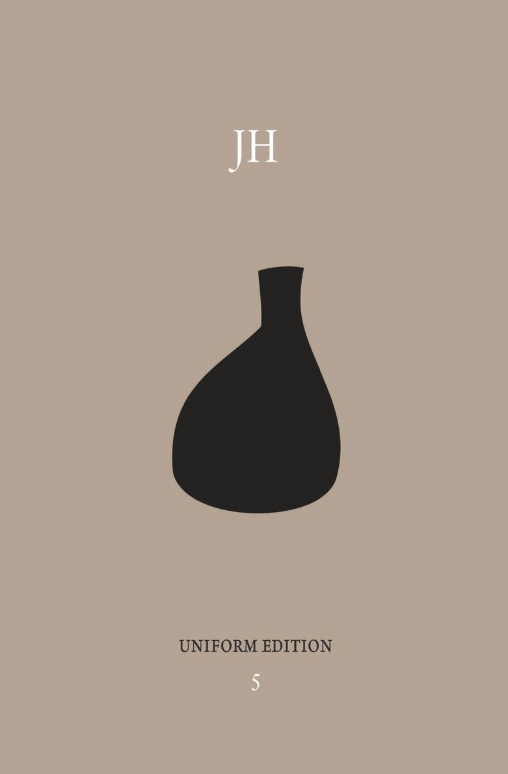
- Hillman, J. (2010). Alchemical Psychology: Uniform Edition of the Writings of James Hillman, Vol. 5. Spring Publications. ISBN 978-0-88214-588-2.
- Jung, C.G. (1944). Psychology and Alchemy. In Collected Works, Vol. 12. Princeton University Press.
- Jung, C.G. (1955–56). Mysterium Coniunctionis. In Collected Works, Vol. 14. Princeton University Press.