 Seba.Health
Key Takeaways
- William White's *Slaying the Dragon* reveals that America's addiction treatment history is itself a story of repetition compulsion—cycles of moral crusade, institutional forgetting, and rediscovery that mirror the relapse patterns of the disease it seeks to cure.
- The book demonstrates that the professionalization of addiction treatment did not emerge from medical enlightenment but from the political co-optation of mutual-aid movements, making the tension between lived experience and clinical credentialing the central unresolved wound of the recovery field.
- White's historical method exposes how each era's dominant metaphor for addiction—sin, disease, moral weakness, brain pathology—functions less as a diagnostic advance than as a cultural projection, revealing more about the society's shadow than about the condition itself.
America’s Addiction Treatment History Is a Repetition Compulsion, Not a Progress Narrative
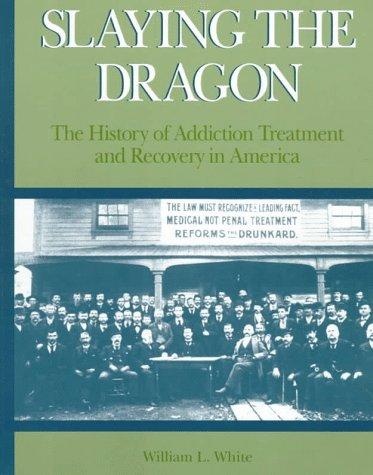
White’s achievement in Slaying the Dragon is not simply archival. It is diagnostic. By assembling over two hundred years of American addiction treatment history—from the inebriate asylums of the 1850s through the birth of Alcoholics Anonymous to the managed-care gutting of residential treatment in the 1990s—White exposes a pattern that no participant inside the system could see: the field does not advance linearly but cycles through eruptions of reformist energy, institutional consolidation, public backlash, collapse, and collective amnesia, only to begin again. This is not metaphor. The parallels between the inebriate home movement of the nineteenth century and the therapeutic community movement of the twentieth are structural, not incidental. Both arose from grassroots conviction, professionalized, expanded, attracted governmental funding, became vulnerable to scandal and fiscal retrenchment, and were largely forgotten within a generation. White documents this with devastating specificity—names, dates, institutions, legislative acts—but the deeper reading is psychological. The field re-enacts the very dynamic it treats. Just as Jung described the compulsion to repeat as the hallmark of unconscious content that has not been integrated (a principle Edinger elaborates in Anatomy of the Psyche when discussing mortificatio as the precondition for transformation), so the addiction treatment enterprise, by failing to know its own history, condemns itself to the same cycles of inflation and collapse. White’s book is itself the intervention: an act of memoria against institutional dissociation.
The Dragon Is Not Addiction but the Culture’s Refusal to See Its Own Shadow
The title invokes the mythological hero’s battle, and the resonance is not accidental. But White’s dragon is not the substance, nor even the person who uses it. The dragon is the culture’s shifting, self-serving metaphorical framework for understanding deviance. Each era projects onto the addicted person precisely what it cannot tolerate in itself. The temperance movement projected moral collapse; the disease-concept era projected biological determinism; the war on drugs projected criminality. White shows that these frameworks function less as explanations than as containment strategies—ways of keeping the problem located in identifiable bodies rather than in the social order. This is, in depth-psychological terms, shadow projection at the collective level. Neumann’s analysis in The Origins and History of Consciousness is instructive here: the dragon that the hero fights is not an external enemy but the uroboric unconscious itself, “masculine and feminine at once,” bearing “all the marks of the uroboros.” When a culture slays addicts rather than confronting its own relationship to intoxication, consumption, and pain avoidance, it enacts what Hillman identified as the pathology of the hero myth—the killing of the dragon as the killing of the imagination, the foreclosure of complexity in favor of single-minded, ego-driven combat. White never uses this language, but his historical evidence demands it. The repeated failure of punitive approaches, the cyclical rediscovery that coercion does not produce recovery, the stubborn reappearance of mutual-aid as the only durable treatment modality—all of this points to a cultural dragon fight that perpetually misidentifies its target.
The Wound Between Lived Experience and Professional Credentialing Has Never Healed
One of White’s most quietly devastating threads traces how the field’s most effective practitioners—recovered people helping other recovered people—were systematically displaced by credentialed professionals who had no personal experience of addiction. This is not a simple narrative of professionalization-as-progress. White documents how the shift from peer-based recovery support to clinical treatment models introduced a fundamental rupture: the knowledge that comes from having been inside the dragon’s belly was devalued in favor of diagnostic taxonomies that could be taught in graduate programs. The tension between the wounded healer and the technical expert runs through every chapter. AA’s Twelfth Step tradition, the Oxford Group lineage, the recovery homes run by former alcoholics—all of these represent what Jung would recognize as the transformation of the sufferer through direct encounter with the numinous, the kind of mortificatio that Edinger describes as the precondition for genuine psychological change: “blackness is the beginning of whiteness, and a sign of putrefaction and alteration.” The professionalization movement, by contrast, sought to bypass this darkness entirely, substituting protocol for initiation. White does not romanticize the peer tradition—he documents its failures, its charlatans, its institutional fragility—but he makes unmistakably clear that something essential was lost when the field decided that expertise about addiction could be acquired without having been devoured by it. This echoes Campbell’s insight in The Hero with a Thousand Faces that the hero’s authority derives not from training but from the ordeal of the threshold crossing itself: “difficulties melt and the unpredictable highway opens as he goes.”
Recovery Movements as Spontaneous Individuation Attempts
White’s most underappreciated contribution may be his implicit demonstration that mutual-aid recovery movements—the Washingtonians, the reform clubs, AA, and their descendants—function as spontaneous attempts at what depth psychology calls individuation. These movements arise without institutional planning, organize around the direct experience of transformation, develop their own symbolic systems (the Twelve Steps, the medallion system, the narrative of surrender), and insist on the primacy of personal encounter with a power greater than the ego. Neumann’s description of the second dragon fight—the “night sea journey” of the second half of life, in which “the ego breaks free from the embrace of the world dragon” and achieves self-experience through “unique and idiosyncratic” engagement with transpersonal realities—maps with startling precision onto the phenomenology of recovery as White describes it. The recovered person, in White’s account, does not simply stop drinking. They undergo a structural reorganization of personality that Neumann would recognize as the shift from ego-centered to self-centered consciousness: “the hermaphrodite standing upon this dragon.”
This book matters now because the addiction field is once again in a cycle of forgetting. The neuroscience paradigm, for all its genuine contributions, threatens to replicate the same error White documents across two centuries: the substitution of a reductive explanatory framework for the irreducible complexity of human transformation. Slaying the Dragon is the only work that makes this pattern visible across the full historical arc, and it does so with an empiricism that renders its depth-psychological implications impossible to dismiss. Anyone working in addiction, psychology, or cultural criticism who has not read it is operating inside a repetition they cannot name.
Sources Cited
- White, W.L. (1998). Slaying the Dragon: The History of Addiction Treatment and Recovery in America. Chestnut Health Systems. ISBN 978-0-938475-07-8.
- Kurtz, E. (1979). Not God: A History of Alcoholics Anonymous. Hazelden. ISBN 978-1-56838-078-0.
- Schaberg, W.H. (2019). Writing the Big Book: The Creation of A.A. Central Recovery Press. ISBN 978-1-949481-28-0.