 Seba.Health
Key Takeaways
- Burnett inadvertently demonstrates the very problem depth psychology diagnosed a century ago: that neuroscience, when it approaches emotion without feeling-tone or mythic context, produces a cortical map of the psyche that has amputated the psyche itself.
- The book's greatest unintentional contribution is as a case study in what Hillman called the "boxed-in psychology" of cognitive-behaviorism and neuroscience—a flatland where emotion is explained but never encountered as a soul event.
- Burnett's popular-science framing of emotion as brain mechanism reveals, by stark contrast, why Jung's insistence on the irreducibility of feeling as a function of consciousness—not a byproduct of neural firing—remains the essential corrective to materialist psychology.
Neuroscience Without Depth Is Cartography Without Terrain
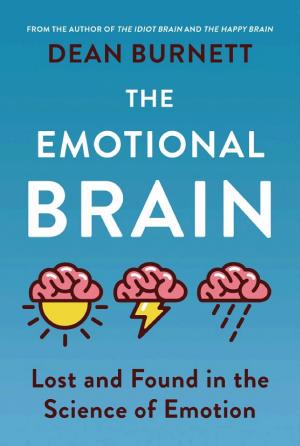
Dean Burnett’s The Emotional Brain (2018) arrives at the intersection of popular neuroscience and self-help, promising to locate emotion within the architecture of the brain. Burnett, a neuroscientist and comedy writer, walks the reader through the amygdala, the hippocampus, the prefrontal cortex, and various hormonal cascades to explain why we feel what we feel. The book is competent, witty, and accessible—and therein lies its limitation. It treats emotion as something the brain does, a product of electrochemical processes that can be mapped, measured, and ultimately managed. This is precisely the stance that Erich Neumann, writing decades earlier in The Origins and History of Consciousness, identified as the telos of cortical man: the “continuous deflation of the unconscious and the exhaustion of emotional components” in the service of rational mastery. Burnett does not merely describe the brain’s emotional machinery; he enacts the very evolutionary trajectory Neumann warned about—the replacement of medullary depth with cortical abstraction. The reader finishes knowing more about neural pathways and knowing less about what emotion means, what it wants, what it serves in the economy of the soul.
Emotion Severed from Archetype Becomes Data Without Meaning
Marie-Louise von Franz, in her lectures on archetypal interpretation, insisted that an archetypal image without its emotional experience is dead scholarship: “You can collect all the Great Mothers in the world… and what you have gathered means absolutely nothing if you leave out the feeling experience of the individual.” Burnett commits the inverse error. He collects the emotional experiences—grief, love, anger, fear—and strips them of their archetypal and symbolic ground. Anger becomes a dopaminergic event. Grief becomes a function of memory consolidation disrupted. Love becomes oxytocin plus reward circuitry. There is no recognition that these experiences carry what Jung called feeling-tone, the qualitative charge that makes a dream of an eagle irreducible to a dream of an angel even when both are “messengers from the beyond.” Hillman, in his landmark lectures on feeling collected alongside von Franz, went further: he distinguished feeling as a function of consciousness from affect as a physiological discharge, and from emotion as a total event of personality involving symbolic transformation. Burnett collapses these distinctions entirely. In his framework, all three are brain states differing only in intensity and location. The result is a psychology that can describe the neural correlates of weeping but cannot say what the weeping is for—what soul-work it accomplishes, what image it serves.
The Therapeutic Injunction to “Understand Your Brain” Replaces the Harder Task of Encountering Your Psyche
Burnett’s therapeutic horizon is essentially cognitive-behavioral: understand the mechanism, and you gain leverage over it. Know that your amygdala is hijacking your prefrontal cortex, and you can begin to intervene. This is the Active Voice solution that Cody Peterson, drawing on Homeric grammar and Jungian ontology, identifies as one pole of a sterile binary: master it or be crushed by it. Peterson’s retrieval of the Middle Voice—the stance of enduring, holding, being constituted by what cannot be changed—is precisely what Burnett’s framework cannot accommodate. There is no room in The Emotional Brain for the emotion that should not be managed, the grief that must be lived through rather than neurologically explained away, the rage that Hillman identified as “outrage” with a social and moral intention that precedes and exceeds its neural substrate. When Hillman wrote that “desire, rage, fear, and shame are echoes of the world’s soul, presentations of qualities in the world informing our bodies and spirits how to be,” he was articulating a position that is not merely different from Burnett’s but ontologically incompatible with it. Burnett’s emotions belong to the individual brain. Hillman’s emotions belong to the world, to the Gods, to the archetypal field in which the individual is situated. The distance between these two positions is the distance between neuroscience and depth psychology—not a gap in data but a difference in cosmology.
Why the Flatland Matters: What Burnett Illuminates by Omission
The deepest value of The Emotional Brain for readers of the depth psychological tradition is diagnostic. It shows, with perfect clarity, what happens when psychology operates without psyche. Hillman’s introduction to Senex and Puer described the contemporary landscape bluntly: “Materialism and numbers have eclipsed interiority. Cognitive-behaviorism and neuroscience dominate the landscape—flatlands where subjects are quantified, therapies are determined economically, and pills are given before anyone asks, ‘what’s wrong?’” Burnett’s book is a genial tour of precisely this flatland. It never asks what is wrong in the Hillmanian sense—never asks what the soul is doing when the amygdala fires, never considers that the emotional brain might be a modern myth rather than a discovered fact, never entertains Chiara Tozzi’s Jungian-neuroscience synthesis in which the motor system, mirror neurons, and imagination form an interconnected field that validates the body-psyche unity Jung intuited decades before brain imaging existed. Tozzi’s work shows that neuroscience can serve depth psychology when it remains in dialogue with the imaginal. Burnett’s work shows what happens when it does not.
For the reader approaching depth psychology today, The Emotional Brain serves as a valuable foil—a thoroughly modern text that makes vivid, by its very competence and its very omissions, why the tradition from Heraclitus through Jung through Hillman insists that the soul’s depth has no measurable limit. Burnett maps the surface with precision. The depth remains untouched, and that untouched depth is where the real work of emotion begins.
Sources Cited
- Burnett, D. (2018). The Happy Brain: The Science of Where Happiness Comes From, and Why. W. W. Norton.
- LeDoux, J. E. (1996). The Emotional Brain: The Mysterious Underpinnings of Emotional Life. Simon & Schuster.
- Damasio, A. (1999). The Feeling of What Happens: Body and Emotion in the Making of Consciousness. Harcourt.