 Seba.Health
Key Takeaways
- Damasio does not merely add emotion back into cognition; he dismantles the entire metaphysical architecture of the res cogitans by demonstrating that what Descartes called "clear and distinct ideas" are themselves bodily states misrecognized as disembodied thought.
- The somatic marker hypothesis is not a theory of decision-making but a theory of soul: it restores to scientific psychology what depth psychology has always known—that the body is the primary organ of meaning, and that reason divorced from feeling is not higher cognition but damaged cognition.
- By grounding his argument in the case of Phineas Gage, Damasio inadvertently produces a modern pathography in Hillman's sense—a study of how the destruction of feeling-toned embodiment annihilates not just social competence but psychic individuality itself.
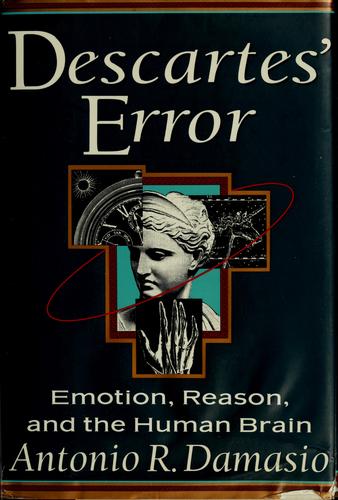
The Body Was Never Descartes’ Error—The Error Was Believing Thought Could Exist Without One
Damasio’s title is often read as a clever provocation, but it names something precise. The “error” is not a philosophical miscalculation to be debated in seminar rooms; it is a neurological fact with civilizational consequences. Descartes’ separation of res cogitans from res extensa—mind as a substance ontologically distinct from body—did not simply produce bad philosophy. It produced a model of rationality that, when instantiated in actual brain damage, reveals itself as a form of psychic death. The patients Damasio studies, particularly Phineas Gage and the pseudonymous “Elliot,” possess intact logical faculties; they can reason, calculate, and articulate options with perfect clarity. What they cannot do is feel their way into a decision, and without that feeling, they cannot act as persons. Damasio demonstrates that the ventromedial prefrontal cortex, where emotion and reasoning converge, is the site where the body’s wisdom enters the deliberative process. Destroy it, and you get a creature that can pass every IQ test but cannot navigate a lunch menu. This is not a footnote to neuroscience. It is a direct empirical refutation of the philosophical tradition that placed certainty in the cogito and treated the body as a source of deception. As von Franz observed in her analysis of Descartes’ three dreams of November 1619, Descartes “tried to grasp them with his thinking only (his superior function) and possibly with his intuition, and he did not consider the feeling and sensation side of his experience.” Damasio provides the neurological evidence for what von Franz diagnosed psychologically: Descartes’ system was built on the systematic exclusion of precisely those functions that make human judgment possible.
The Somatic Marker Is the Depth-Psychological Complex Seen From Below
Damasio’s central theoretical contribution—the somatic marker hypothesis—proposes that emotional signals arising from the body mark certain options as dangerous or advantageous before conscious deliberation begins. The body, in effect, pre-selects the field of rational choice. This is not irrationalism; Damasio is careful to insist that somatic markers enhance and accelerate reasoning rather than replace it. But the implications run far deeper than he explicitly draws out. What Damasio calls a somatic marker, depth psychology has long recognized as the felt dimension of a complex. When Jung described complexes as “feeling-toned,” he was identifying the same phenomenon from the intrapsychic side: an autonomous constellation of meaning that seizes the body before the ego can deliberate. Hillman, pushing further, argued in Re-Visioning Psychology that pathologizing is “a royal road of soul-making” precisely because it forces the psyche to register what the ego would prefer to ignore. Damasio’s patients who lack somatic markers are, in Hillman’s terms, incapable of pathologizing—incapable of being seized, moved, or wounded by their own experience. They inhabit a flattened world without psychic texture. The convergence is striking: what neuroscience identifies as a deficit in emotional signaling, depth psychology identifies as the absence of soul. Bosnak, in Embodiment, makes the parallel explicit from a different direction. His work on embodied imagination insists that intelligence is never disembodied—that “it takes a body to perceive imagination”—and directly names Descartes’ system as “a defense against” the mercurial, deceptive, embodied intelligence that moves through dreams and symptoms. Damasio, working from lesion studies rather than dreamwork, arrives at the same conclusion: the body is not an obstacle to knowing but its precondition.
Phineas Gage as Modern Pathography: What Happens When the Gods Leave the Body
The case of Phineas Gage—the railroad foreman who survived an iron rod through his prefrontal cortex only to lose his personality—functions in Damasio’s text as more than clinical evidence. It operates as a myth of the modern condition. Before the accident, Gage was a capable, socially embedded, morally competent person. Afterward, he retained every cognitive capacity except the one that mattered: the ability to be affected, to be claimed by feeling, to inhabit his own life as a participant rather than a spectator. Hillman’s observation that “the complex that gnaws and makes us peculiar also makes us particular distinct individuals” illuminates what Damasio documents clinically. Gage’s lesion did not destroy his intellect; it destroyed his peculiarity, his capacity to be individuated by suffering. Without somatic markers, Gage could not be wounded into meaning. He became, in the most literal neurological sense, the Cartesian subject—pure thought without body, reason without eros—and the result was not enlightenment but social disintegration. Tarnas, tracing the arc of the modern self from Descartes through Freud, describes the Cartesian cogito as producing “a peripheral epiphenomenon of far more powerful processes working unfathomed beyond the boundaries of its awareness.” Damasio provides the anatomical proof: the cogito was always a peripheral epiphenomenon. The prefrontal convergence zones where emotion and reason meet are phylogenetically newer structures layered atop ancient emotional circuits. Consciousness rides on affect, not the reverse. The Cartesian subject, far from being the ground of certainty, is a late evolutionary arrival utterly dependent on the somatic intelligence it disavows.
Why This Book Remains Indispensable at the Intersection of Neuroscience and Soul
For readers formed by the depth-psychological tradition, Descartes’ Error accomplishes something no work of introspective psychology could: it provides the empirical ground beneath the intuitions of Jung, Hillman, Bosnak, and von Franz about the body’s role in psychic life. It does not replace those intuitions—Damasio has no theory of the imaginal, no account of the archetypal—but it makes the Cartesian position neurologically untenable in a way that philosophical argument alone never could. The book matters not because it tells depth psychologists something they did not already know, but because it closes the escape route. After Damasio, no serious thinker can invoke “reason” as a disembodied faculty without ignoring what happens when the body’s emotional signaling is actually destroyed. The result is not a superior rationality. The result is Phineas Gage, wandering through what remains of his life, intact in every way except the one that makes a life worth calling human.
Sources Cited
- Damasio, A. (1994). Descartes' Error: Emotion, Reason, and the Human Brain. Putnam. ISBN 978-0-399-13894-2.
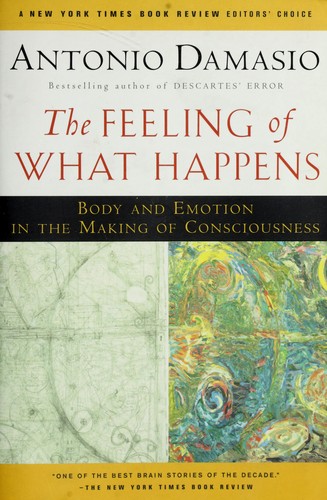
- Damasio, A. (1999). The Feeling of What Happens: Body and Emotion in the Making of Consciousness. Harcourt.
- Craig, A.D. (2015). How Do You Feel? An Interoceptive Moment with Your Neurobiological Self. Princeton University Press.