 Seba.Health

Key Takeaways
- Sacks's clinical portraits function not as medical case reports but as modern mythography—each neurological deficit strips away a psychological function and thereby reveals it as a constitutive dimension of soul, performing the same work Hillman assigns to pathologizing: making the invisible architecture of psyche visible through its breakdown.
- The book's deepest provocation is that identity is not a cognitive achievement but an imaginal one: patients who lose proprioception, memory, or visual recognition do not merely lose "functions"—they lose the capacity to story themselves, exposing narrative as the substrate of selfhood in a way that converges with Hillman's claim that we go to analysis "to be told into a soul story."
- Sacks recovers the Hippocratic tradition of the clinical tale as a genre of soul-writing, standing against the reductive case history of both psychoanalysis and neurology, and in doing so demonstrates that the physician who attends to the patient's imaginative life is practicing a form of depth psychology whether or not he names it as such.
Neurological Deficit as Revelation of Soul: Sacks Inverts the Medical Gaze
Oliver Sacks does not write neurology. He writes phenomenologies of psychic disintegration that expose what the intact mind conceals. Each chapter of The Man Who Mistook His Wife for a Hat presents a patient whose neurological lesion has subtracted some function—visual recognition, proprioception, the sense of temporal continuity, the capacity for abstraction—and in subtracting it, has made that function visible for the first time as a constitutive element of human being. Dr. P., the titular man who mistakes his wife for a hat, has lost the capacity for physiognomic perception: he can analyze visual data but cannot see a face as a face, a glove as a glove. He processes features without gestalt, details without image. What Sacks reveals through Dr. P. is not a curiosity of agnosia but the terrifying dependence of identity on the imaginal faculty—on what Hillman calls the psyche’s capacity to see through surfaces to their essential images. Hillman’s Re-Visioning Psychology insists that “everything we know and feel and every statement we make are all fantasy-based, that is, they derive from psychic images.” Dr. P. has lost precisely this: the ground-floor capacity of psyche to organize perception into meaningful image. He can compute but not imagine, and so the world ceases to be a world. Sacks grasps this with clinical precision, but the implications extend far beyond the consulting room into the territory depth psychology has always claimed: the primacy of the image.
The Case History as Soul Story, Not Data Point
Sacks’s method of narration constitutes a deliberate break from the two dominant genres of clinical writing—the psychoanalytic case history and the neurological report. The psychoanalytic tradition, as Hillman dissects it in Healing Fiction, tends to reduce the patient’s life to theoretical structures: “The lady in the shop window repairing carpets is not that precise image and its metaphorical implications, but is a representation of a nonrepresentational and abstract mother image to which it can be reduced.” The neurological report does something parallel: it reduces the patient to a lesion site, a deficit profile, a data set. Sacks refuses both reductions. His patients are neither exemplars of Oedipal dynamics nor illustrations of cortical geography. They are persons enmeshed in stories that their neurological conditions have ruptured, distorted, or strangely amplified. The man with Korsakov’s syndrome who cannot retain a memory for more than seconds is not a demonstration of hippocampal damage; he is a soul without temporal narrative, a human being for whom the fiction of continuity—the case history of the self—has been dissolved. Hillman writes that “case histories are fundamental to depth psychology” because “they give us a narrative, a literary fiction that deliteralizes our life.” Sacks’s patients have lost this fiction involuntarily, and in losing it they reveal what it does: it holds the soul together. The Korsakov patient is not merely forgetful. He is a man who cannot make soul, because soul-making requires the threading of events into story.
Excess and Deficit: The Full Phenomenology of Psyche’s Architecture
The book’s four-part structure—Losses, Excesses, Transports, The World of the Simple—maps a complete topology of psychic possibility that no other single text in neurology or psychology achieves. The “Excesses” section is particularly remarkable for depth psychology: patients with Tourette’s syndrome, hypermnesic states, or manic disinhibition do not suffer from too little soul but from too much uncontained psychic energy. They are flooded by image, impulse, movement—what Hillman, drawing on the dismemberment of Dionysus, calls “the dissolution and decay in alchemy” and “the Dionysian loosening which releases from overtight constraint.” The Tourettic patient Witty Ticcy Ray lives in a state of perpetual psychic eruption; his tics are not mere motor phenomena but involuntary performances of the psyche’s excess, its refusal to be contained by ego structure. Sacks treats these patients not with contempt for their pathology but with the kind of attention Hillman demands when he writes that “pathologizing is a royal road of soul-making.” The symptom is honored as a revelation, not merely managed as a malfunction. The final section, on autistic savants and “simple” minds, extends this logic further: individuals with profound cognitive limitations who possess extraordinary capacities for music, calculation, or concrete imagination demonstrate that soul is not indexed to IQ. The twins who share prime numbers like a private liturgy, the autistic artist who draws Rome from a single helicopter view—these are not deficits dressed up. They are psyche operating through channels that normative consciousness has foreclosed, what Hillman would recognize as the “nonego imaginal realities” that the strong ego’s integrative apparatus typically suppresses.
The Physician as Phenomenologist of the Imaginal
Sacks’s deepest affinity with the depth psychological tradition lies in his method: he attends to the patient’s subjective experience of their condition as the primary datum, not the lesion. When Christina loses proprioception—the body’s sense of itself in space—Sacks does not simply document her motor deficits. He tracks her terror, her sense of disembodiment, her feeling that she has become a wraith. He follows the phenomenology of her experience into its metaphorical depths, recognizing that proprioception is not just a neurological function but a mode of dwelling in the body that, once lost, reveals the body as an imaginal construction. This is precisely the move Hillman describes in Re-Visioning Psychology when he argues that depth is “not literally hidden, deep down, inside” but rather “a primary metaphor necessary for psychological thinking.” Sacks thinks psychologically even when he writes neurologically. He sees through the clinical surface to the soul’s situation—asks not just “what is damaged?” but “who is this person now, and what has happened to their world?” This is the physician as phenomenologist, practicing what Hillman calls “insearch rather than research.”
For anyone encountering depth psychology today, Sacks’s book does something no explicitly Jungian or Freudian text can do: it demonstrates, through the hard evidence of neurological catastrophe, that the imaginal, narrative, and embodied dimensions of psyche are not metaphysical speculations but structural necessities. Lose them and you do not merely dysfunction—you lose your world. The book is an empirical proof of soul, arrived at not through theory but through the meticulous observation of what happens when soul’s instruments break.
Sources Cited
- Sacks, O. (1985). The Man Who Mistook His Wife for a Hat and Other Clinical Tales. Summit Books. ISBN 978-0-684-85394-9.
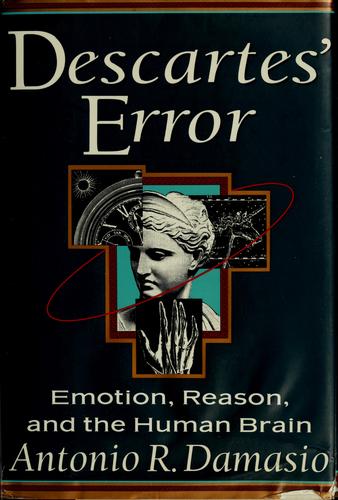
- Damasio, A. (1994). Descartes' Error: Emotion, Reason, and the Human Brain. Putnam.
- Luria, A.R. (1968). The Mind of a Mnemonist: A Little Book about a Vast Memory. Basic Books.
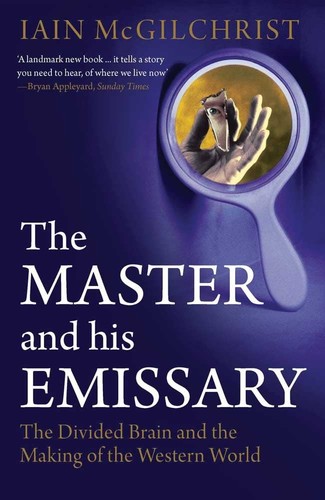
- McGilchrist, I. (2009). The Master and His Emissary: The Divided Brain and the Making of the Western World. Yale University Press.