 Seba.Health
Key Takeaways
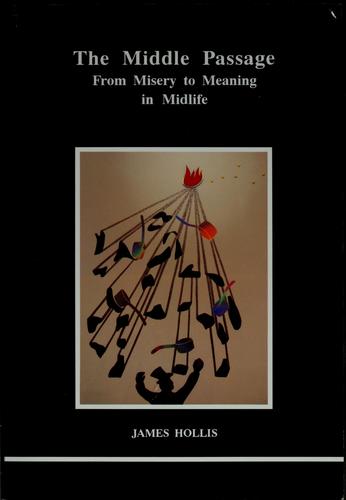
- Hollis reframes midlife crisis not as breakdown but as the psyche's self-correction mechanism — symptoms are not pathology to be eliminated but the Self's strategic maneuver to dethrone an exhausted ego and force a second individuation.
- The book's most radical claim is that the "provisional personality" — the entire edifice of identity built in the first half of life — is not merely incomplete but structurally false, a defense system organized around childhood wounds rather than authentic selfhood, making the Middle Passage not optional growth but necessary demolition.
- By grounding individuation in the concrete phenomenology of midlife symptoms (affairs, substance abuse, job shifts, depression), Hollis accomplishes what Jung's more abstract formulations do not: he makes the ego-Self axis a clinical reality legible to non-analysts, bridging the gap between Jungian metapsychology and lived adult suffering.
The Provisional Personality Is Not a Developmental Stage but a Misdiagnosis of Self
Hollis opens with an image that does more theoretical work than any abstract definition could: glass prisms from submarine periscopes, through which fifth-graders lurch into walls. The metaphor is precise. We do not merely have a partial view of reality; we have been handed a lens — genetic, familial, cultural — and we have mistaken the refracted image for the thing itself. The “provisional personality” is Hollis’s term for this entire apparatus: not a stage one passes through on the way to maturity, but a defensive structure assembled in childhood whose primary function is “the management of the level of distress experienced by the organic memory of childhood we carry within.” This is a sharper formulation than anything in Gail Sheehy’s Passages, which treats midlife transitions as predictable developmental phases. For Hollis, the first adulthood is not development at all — it is a sophisticated avoidance strategy. The persona, the career, even the marriage may represent not growth but the ego’s increasingly desperate effort to outrun the underground pressure of the unlived Self. When he writes that “the unexamined adult personality is an assemblage of attitudes, behaviors and psychic reflexes occasioned by the traumata of childhood,” he is not offering a therapeutic observation but an ontological claim: what we call our identity is, structurally, a neurosis. This positions Hollis closer to Winnicott’s true self/false self distinction than to classical Jungian stage models, though his allegiance remains firmly with Jung’s framework of ego-Self dynamics.
Symptoms Are the Self’s Insurgency Against the Ego’s Occupation
The heart of the book is a reversal that many readers will resist: midlife symptoms — depression, affairs, substance abuse, compulsive job changes — are not problems to be solved but communications to be decoded. Hollis draws explicitly on Jung’s dictum that neurosis is “the suffering of a soul which has not discovered its meaning,” but he operationalizes it with clinical specificity Jung rarely achieved in his published essays. The metaphor of tectonic plates is structural, not decorative: the acquired personality and the deeper Self are two geological formations grinding against each other, and the earthquake is not the catastrophe — the decades of suppressed friction are. “From a therapeutic standpoint symptoms are to be welcomed,” Hollis insists, “for they not only serve as arrows that point to the wound, they also show a healthy, self-regulating psyche at work.” This reframing has direct implications for how one reads Gabor Maté’s When the Body Says No or Bessel van der Kolk’s somatic trauma models: the body’s protest and the psyche’s symptom are not separate phenomena but the same insurgency expressed on different registers. Where Maté locates the origin of disease in emotional repression, Hollis locates the origin of midlife collapse in the exhaustion of the ego’s defensive repertoire. The Self, in Hollis’s formulation, is not passively waiting to be discovered; it actively engineers crisis. It “maneuvers the ego assemblage into crisis in order to bring about a correction of course.” This is not metaphor. It is a model of psychic agency that places the Self in the driver’s seat and the ego in the passenger’s — an inversion that Murray Stein’s In Mid-Life explores mythologically but Hollis renders psychologically concrete.
The Shift from Ego-World to Ego-Self Is the Only Transition That Matters
Hollis distinguishes two axes of psychological life: the ego-world axis, which governs the first adulthood, and the ego-Self axis, which must become dominant in the second. This is his most Jungian formulation, and it does work that Edward Edinger’s Ego and Archetype approaches from a more schematic direction. Edinger maps the ego-Self relationship as an inflation-alienation cycle across the lifespan; Hollis narrows the focus to the specific moment when the ego, having exhausted its strategies, is forced to capitulate to something larger. The distinction between chronos and kairos is central here: the Middle Passage is not a chronological event but a “depth dimension” that intersects the horizontal plane of life. One can reach fifty or sixty without ever encountering it, “so dominated by complexes or collective values that the questions incarnated by the Middle Passage had been kept at bay.” The modern context makes this passage both possible and necessary in ways premodern life did not allow — not only because people now live long enough, but because the collapse of institutional authority (church, family, rigid gender roles) has relocated psychic gravity from collective structures to the individual. Hollis reads this not as liberation but as a terrifying assignment: “For good or ill, the psychic gravity has shifted from institution to individual choice.” This echoes Jung’s observation about modern humanity’s spiritual homelessness, but Hollis grounds it in the specific phenomenology of the consulting room rather than in cultural criticism.
Following Passion Is Not Self-Indulgence but Obedience to the Self
Hollis takes Joseph Campbell’s “follow your bliss” and strips it of its bumper-sticker sentimentality. Passion, for Hollis, “is less a choice than a summons.” He cites Henry Moore continuing to sculpt into his tenth decade, Yeats writing poetry on his deathbed, Kazantzakis urging us to “leave nothing for death to take, nothing but a few bones.” These are not inspirational anecdotes. They are evidence for a specific psychological claim: that passion is the phenomenological signature of the Self’s activity, and that refusing it — out of fear, obligation, or the residual grip of the provisional personality — constitutes a betrayal of individuation. The Gospel of Thomas quotation that serves as one of the book’s epigraphs — “If you bring forth what is within you, what you bring forth will save you. If you do not bring forth what is within you, what you do not bring forth will destroy you” — becomes in Hollis’s reading not a spiritual platitude but a clinical prediction. The unlived life does not simply remain unlived; it metastasizes into symptom, depression, and somatic illness. The shadow, rich in repressed creativity and vitality, will find expression whether or not the ego consents. Conscious engagement with it is not optional; it is the difference between individuation and destruction.
This book matters for contemporary readers because it does what no other single text in the Jungian tradition accomplishes with such economy: it translates the abstract architecture of individuation — ego, Self, shadow, persona — into the specific, recognizable suffering of adults who have done everything right and find that none of it works. Hollis writes for the person who has achieved the provisional life and discovered it is provisional. For anyone encountering depth psychology through the wound of midlife rather than through academic interest, The Middle Passage remains the most direct route from the symptom to the question the symptom is asking.
Sources Cited
- Hollis, J. (1993). The Middle Passage: From Misery to Meaning in Midlife. Inner City Books.
- Jung, C.G. (1933). The Stages of Life. In Collected Works, Vol. 8. Princeton University Press.
- Rilke, R.M. (1910). The Notebooks of Malte Laurids Brigge. Trans. Stephen Mitchell.