 Seba.Health
Key Takeaways
- Liber Novus is not Jung's private diary but a hermeneutic experiment — a text that contains its own interpretation, making it the only work in the Jungian canon where the method of active imagination and its theoretical elaboration occur simultaneously in the same document.
- The entire post-1930 corpus of Jung's published writings — from the alchemy studies to Answer to Job to the synchronicity hypothesis — functions as an extended, allegorical amplification of Liber Novus, meaning the Collected Works cannot be fully understood without the book they were designed to conceal.
- Jung's refusal to identify with "the master" — the figure he believed inspired Buddha, Christ, and Muhammad — constitutes the decisive psychological act of the entire work, and the founding gesture that separates analytical psychology from both religious prophecy and psychotic inflation.
Liber Novus Is Not a Confessional Document but a Laboratory Protocol for the Construction of a Psychology
The persistent misreading of The Red Book treats it as autobiography, as visionary art, or as Jung’s private spiritual journal. All three framings obscure what the text actually is: a controlled experiment in which the investigator deliberately induced fantasy states, faithfully transcribed them, and then layered on interpretive commentary designed to extract general psychological principles. Sonu Shamdasani’s editorial introduction makes this architecture explicit — roughly fifty percent of the Draft material is drawn directly from the Black Books, and the remaining thirty-five sections of commentary represent Jung’s first sustained application of his “constructive method.” The fantasies were not revised, edited for coherence, or aestheticized; word-by-word comparison shows fidelity to the original record. What Jung added was a second hermeneutic layer that interpreted the fantasies on what he called the “collective” level — not reductively, but as symbolic depictions of general psychological functioning and of events about to unfold in the world. This means Liber Novus does not require supplemental interpretation because it already contains its own. The text is simultaneously raw data and first-order analysis, making it structurally unlike anything else in the depth-psychological tradition. Where Freud’s The Interpretation of Dreams analyzes dreams after the fact through a pre-established theoretical lens, Jung’s text builds its theoretical lens in real time out of the material it encounters. The confrontation with the unconscious and the construction of analytical psychology are, in Liber Novus, one and the same act.
The Spirit of the Depths Against the Spirit of the Times: Jung’s Counter-Enlightenment Wager
The opening movement of Liber Novus stages a distinction that would organize Jung’s thought for the rest of his life: the spirit of the times — characterized by use, value, and rational instrumentality — versus the spirit of the depths, which leads to “the things of the soul.” This is not a romantic preference for feeling over thinking. It is a structural claim about the psyche’s compensatory architecture, one that Jung would later formalize as the theory of enantiodromia and the law of psychological types. The spirit of the depths corresponds to what Jung, in Memories, Dreams, Reflections, called Personality No. 2 — the archaic, transpersonal layer of the personality that modernity systematically suppresses. The entire drama of Liber Novus unfolds as an attempt to reconcile these two orientations without collapsing into either. This is the same problem Jung would address through historical analogy in Chapter 5 of Psychological Types (1921), where the resolution of opposites is traced through Hinduism, Taoism, Meister Eckhart, and Carl Spitteler. It is also the engine driving The Undiscovered Self (1957), where Jung argues that mass society’s destruction of the individual stems from the same one-sided dominance of the spirit of the times. Liber Novus is the prototype; everything afterward is commentary, translation, or strategic concealment.
The Refusal of Identification as the Foundational Act of Analytical Psychology
Cary Baynes’s 1923 notes record a pivotal confession: Jung told her that the figures in Liber Novus — Elias, Philemon, and others — were all phases of what he called “the master,” the same force that had inspired Buddha, Mani, Christ, and Muhammad. But where those figures had identified with it, Jung “absolutely refused to.” He insisted he had to remain “the psychologist — the person who understood the process.” This refusal is the hinge on which the entire enterprise turns. In his 1916 essay “The Structure of the Unconscious,” Jung described how assimilating the contents of the collective psyche produces a state of “godlikeness” — a term he borrowed from Goethe and Adler — characterized by alternating inflation and deflation. Edward Edinger would later systematize this dynamic as the ego-Self axis in Ego and Archetype, tracing the catastrophic consequences of identification with archetypal contents. But in Liber Novus, the problem is not theoretical — it is existential and immediate. Jung is standing inside the numinous field, experiencing its full gravitational pull, and choosing to observe rather than merge. This is what Richard Hull grasped when he wrote that the only difference between Jung and “a regular inmate” was “his astounding capacity to stand off from the terrifying reality of his visions, to observe and understand what was happening.” The refusal of identification is not merely a clinical recommendation; it is the act that makes clinical recommendation possible. Without it, there is no psychology — only prophecy or psychosis.
The Allegorical Turn: Why Jung Buried the Source Text Inside Its Own Amplifications
After 1930, Jung stopped working on Liber Novus and turned to medieval alchemy as his primary vehicle for discussing the individuation process. This was not a change of subject but a change of strategy. His commentary on Richard Wilhelm’s Secret of the Golden Flower (1929) was the turning point: rather than revealing the details of his own experiment, Jung used the parallels with the Chinese text as an indirect mode of presentation. Alchemy became the mask through which Liber Novus could speak without exposing its author to charges of madness or prophecy. The entire corpus of Psychology and Alchemy, Mysterium Coniunctionis, and the related lecture series at the ETH are, in Shamdasani’s precise formulation, “an extended amplification of the contents of Liber Novus.” This allegorical method had a further empirical purpose: Jung needed to demonstrate that the individuation process was not unique to him, that mandala symbolism and the reconciliation of opposites appeared spontaneously across cultures and centuries, free from suggestion. He waited thirteen years before publishing his first mandala material precisely to guard against this objection. James Hillman and Shamdasani explored the implications of this strategy in The Lament of the Dead, arguing that Jung’s published works are systematically impoverished versions of the living encounter recorded in Liber Novus — necessary translations, but translations nonetheless.
What Liber Novus Illuminates That No Other Text Can
For anyone encountering depth psychology today, The Red Book does something no other work in the tradition accomplishes: it shows the individuation process from the inside, in real time, before it has been formalized into a transferable schema. It reveals that the concepts filling Jung’s Collected Works — active imagination, the collective unconscious, the transcendent function, the Self, the mandala, the compensatory unconscious — did not arise from clinical observation or scholarly research but from a direct, dangerous, self-induced confrontation with psychic material that could have destroyed its author. The text restores the fire to a body of work that decades of professionalization had cooled into doctrine. It also poses a permanent challenge: the individuation process cannot be fully grasped through concepts alone, because concepts are what the spirit of the times produces when it domesticates the spirit of the depths. Liber Novus is the record of what happens before that domestication, and it remains irreducible to the system it generated.
Sources Cited
- Jung, C.G. (2009). The Red Book: Liber Novus. Edited and introduced by Sonu Shamdasani. Translated by Mark Kyburz, John Peck, and Sonu Shamdasani. W.W. Norton. ISBN 978-0-393-06567-1.
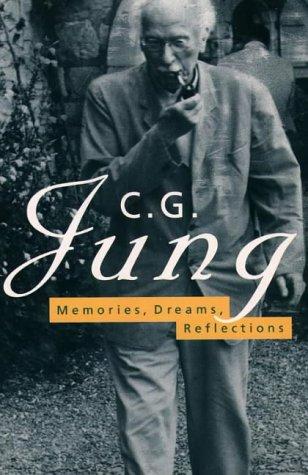
- Jung, C.G. (1963). Memories, Dreams, Reflections. Recorded and edited by Aniela Jaffé. Vintage Books.
- Shamdasani, S. (2003). Jung and the Making of Modern Psychology: The Dream of a Science. Cambridge University Press.