 Seba.Health
Key Takeaways
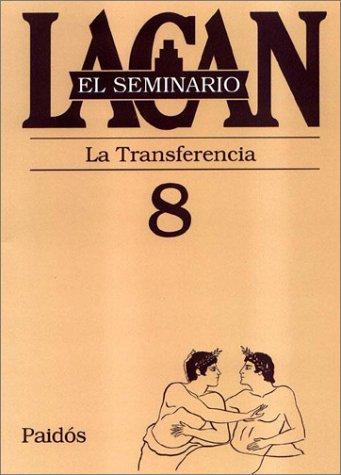
- Lacan's reading of the *Symposium* is not a classical philological exercise but a topological demonstration that love and transference share the same structural impossibility — the substitution of *erastes* for *eromenos* — which no intersubjective framework can accommodate.
- The seminar's true pivot is the thesis that transference is not a distortion to be corrected but a creative fiction: a production in act whose relationship to truth is structurally identical to the relationship between desire and its object in the analytic situation.
- By locating the *agalma* — the hidden treasure inside Socrates' silenus-figure — as the prototype of the partial object (*objet a*), Lacan irreversibly fuses Platonic eros with the Freudian drive, making Book VIII the hinge between his theory of the signifier and his later algebra of jouissance.
Transference Is Not an Intersubjective Relation but a Topological Impossibility
Lacan opens this seminar with a provocation embedded in its very subtitle: la disparité subjective — the subjective oddity or disparity of transference. From the first session, he rejects the notion that transference can be inscribed within an intersubjective framework, calling the analytic setting not a situation but a “pseudo-situation,” a “false situation.” This is not rhetorical posturing. Lacan is dismantling a decade of ego-psychological and relational thinking that had reduced transference to a two-person field governed by symmetry, therapeutic alliance, or mutual emotional regulation. Against Anna Freud’s emphasis on ego defenses and the “therapeutic alliance,” and against Melanie Klein’s insistence on the analyst as good or bad object, Lacan asserts that neither position grasps the constitutive asymmetry at stake. The analyst and analysand do not occupy equivalent positions; they are not partners in a dialogue but participants in a structure where the subject’s desire can only emerge through the fiction of address. This is why Lacan waited eight or ten years into his seminar series to confront transference directly — the topological tools were not yet adequate. What he needed was not a theory of feeling but a formalization of the gap between the lover (erastes) and the beloved (eromenos), a gap that cannot be sutured by empathy, communication, or even interpretation understood as explanation. The disparity is structural, not accidental. This resonates deeply with what Martin Buber struggled to articulate in I and Thou about the irreducibility of encounter, except Lacan strips away Buber’s residual mysticism: the encounter in analysis is irreducible not because of some numinous presence but because of a constitutive absence — the subject is barred from knowing what it desires at the very moment desire speaks.
The Agalma Inside Socrates Is the Partial Object That Ignites the Transference
The sustained close reading of Plato’s Symposium that occupies roughly the first half of Seminar VIII is Lacan’s most elaborate philosophical exegesis and his most consequential. Everything converges on the scene of Alcibiades’ irruption into the orderly procession of speeches on love. Alcibiades, drunk, wounded, confessing publicly his suffering at Socrates’ hands, compares Socrates to a silenus figure — ugly on the outside, containing within it something precious, the agalmata, divine treasures. Lacan identifies this agalma as the structural precursor of the objet a, the partial object that causes desire. This is not analogy but topology: what Alcibiades desires in Socrates is not Socrates-as-subject but something Socrates is supposed to contain without knowing it, something that Socrates himself cannot give because he does not possess it as a good (ktesis). The moment of transference-love, then, is the moment when the analysand attributes to the analyst this hidden treasure — and the analyst’s entire ethical position consists in not identifying with it, not claiming to possess what the patient attributes to him. Lacan’s interpretation of Socrates’ response to Alcibiades — redirecting him toward Agathon, performing an interpretation that reveals the true aim of Alcibiades’ confession — is treated as a proto-analytic act. This reading makes Jung’s concept of the numinosum transferred onto the analyst, as developed in his writings on the transference, look like a half-articulation: Jung saw the projected divine image but lacked the structural account of why the projection necessarily misses its mark. Lacan provides that account through the distinction between desire and demand — what the subject seeks in analysis is what he has but does not know, yet what he finds is what he lacks.
Transference as Creative Fiction Dissolves the Opposition Between Repetition and Love
One of the seminar’s most penetrating interventions is Lacan’s refusal to let transference collapse into either the automatism of repetition or the phenomenon of love, while insisting both are operative. He criticizes Hermann Nunberg for separating transference from repetition compulsion as “two different things” and equally resists reducing transference to mere re-enactment of past object relations. Transference is a reproduction — but reproduction, Lacan insists, contains something creative. It is not passive submission to a signifying chain; it is a fiction produced for someone, constructed to be understood by an Other who is present even when the subject does not know it. This formulation transforms the clinical problem. If transference is creative fiction, then the analyst’s task is neither to decode it as disguised memory (the classical Freudian position in Remembering, Repeating, and Working-Through) nor to metabolize it as a relational event (the contemporary intersubjective position). The task is to occupy the place from which the fiction can unfold without the analyst collapsing into the role the fiction assigns him — neither the parent (against the “parental drive” Lacan excoriates in the Kleinians) nor the all-knowing subject supposed to know. Daniel Lagache’s distinction between “repetition of need” and “need of repetition” comes closer but still misses the point: what drives transference is not need at all but desire, and desire is constituted precisely in the gap between demand and its satisfaction. This gap is what Freud’s concept of Kern unseres Wesen — the kernel of our being — encircles without filling, and what Lacan in the preceding year’s seminar on the ethics of psychoanalysis identified as the ex nihilo at the heart of the human ethos.
The Analyst’s Desire Is the Seminar’s Unanswered and Unanswerable Question
What makes Seminar VIII indispensable is not its reading of Plato, however brilliant, but its relentless insistence that the question of transference cannot be separated from the question of the analyst’s desire. Lacan states this with disarming clarity: it is enough that the analyst, “without knowing it, for an instant, places his own partial object, his agalma, in the patient” for the situation to become a true contra-indication. The analyst acts less by what he says or does than by what he is — a formulation Lacan borrows from his adversaries only to radicalize it, insisting that “what he is” cannot be specified apart from the topology of desire. No other text in the psychoanalytic tradition poses this question with such formal precision. Where Winnicott’s Playing and Reality addresses the analyst’s being through the metaphor of the holding environment, and where Bion’s concept of the analyst’s reverie approaches it through the container, Lacan insists that the question is not metaphorical but structural: the analyst’s being in the transference is a function of his relationship to the objet a, and that relationship is either formalized or it is acted out. For anyone working in depth psychology today — whether Jungian, relational, or Freudian — this seminar forces a confrontation with the question that clinical training perpetually defers: not how to handle transference, but how to inhabit it without becoming its dupe.
Sources Cited
- Lacan, J. (1991). The Seminar of Jacques Lacan, Book VIII: Transference. Edited by Jacques-Alain Miller. Translated by Cormac Gallagher. Unpublished translation from French typescripts.
- Plato. Symposium. Various editions.
- Freud, S. (1915). Observations on Transference-Love. Standard Edition, Vol. 12. Hogarth Press.