 Seba.Health
Key Takeaways
- Von Franz's central claim is not that fairy tales *contain* archetypes but that each tale is a self-contained energetic system attempting to circumscribe the Self — a thesis that reframes interpretation from decoding symbols to tracking the movement of psychic totality through narrative.
- The book's most consequential methodological intervention is its insistence that fairy tale heroes are not egos but archetypal abstractions, which makes personalistic interpretation (whether Freudian or popularized Jungian) not merely incomplete but actively destructive of the tale's healing function.
- Von Franz quietly establishes fairy tales as superior to myths for cross-cultural clinical work precisely because their lack of cultural overlay makes them the "comparative anatomy" of the psyche — a claim that positions folklore not as primitive literature but as the purest empirical data depth psychology possesses.
Fairy Tales Are Not Illustrations of Archetypes but the Collective Unconscious Photographing Itself
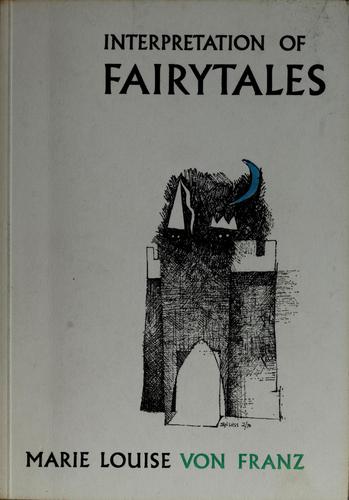
Von Franz opens with a deceptively simple proposition: “Fairy tales are the purest and simplest expression of collective unconscious psychic processes.” What sounds like a standard Jungian framing conceals a radical epistemological claim. She is not saying fairy tales illustrate archetypes the way a textbook diagram illustrates anatomy. She is saying that fairy tales are the collective unconscious in its most undistorted self-expression — closer to the thing itself than myth, legend, religious text, or dream. Myths, she argues, are filtered through “an overlay of cultural material” that makes them more beautiful and more intelligible but less general, less structurally pure. The Odyssey is irreducibly Greek; “The Three Feathers” belongs to everyone. This is why she calls fairy tale language “the international language of all mankind — of all ages and of all races and cultures.” The consequence for clinical practice is immediate: an analyst who knows only the mythology of their own tradition will fail to build “a human bridge” to an analysand from another culture. Fairy tales provide that bridge. This claim quietly overturns the hierarchy assumed by comparative mythologists from Frazer onward, who treated fairy tales as degraded myth. Von Franz inverts the valence: fairy tales are not degraded but distilled. They are what remains when cultural elaboration is stripped away, the skeletal structure of psychic life. Jung’s own phrase — that fairy tales reveal “the comparative anatomy of the psyche” — is not metaphor but methodology.
The Hero Is Not an Ego, and Personalistic Interpretation Destroys the Medicine
The book’s sharpest polemical edge appears in its preface and early chapters, where von Franz confronts what she sees as a dangerous regression within Jungian interpretation itself. Too many interpreters, she warns, “judge the hero or heroine to be a normal human ego and his misfortunes to be an image of his neurosis.” This converts the fairy tale into a case study, a family romance projected backward onto archetypal material. She draws on Max Lüthi’s folkloristic research to insist that fairy tale heroes are “abstractions — that is, in our language, archetypes.” The abandoned hero-child is not a portrait of developmental trauma; it is a statement about where the new god is born — “in the ignored and deeply unconscious corner of the psyche.” To reduce this to the neurotic family novel, she argues, is to “nullify the very healing element of an archetypal narrative.” This critique strikes at Bruno Bettelheim’s The Uses of Enchantment as much as at sloppy Jungian work, though von Franz names Bettelheim only in passing. The deeper target is any hermeneutic that collapses the archetypal into the personal. James Hillman would later formalize a similar objection in Re-Visioning Psychology, insisting that soul-making requires staying with the image rather than translating it into ego-development. Von Franz arrives at essentially the same position from a different direction: the fairy tale’s therapeutic power depends on its not being about you in any personal sense, so that it can speak to what is most impersonally human in you.
Interpretation as Circumambulation, Not Translation
Von Franz’s method chapter is the heart of the book, and its key insight is that interpretation must be circular, not linear. She prescribes amplification — gathering parallel motifs from worldwide folklore — followed by contextual analysis, followed by translation into psychological language. But she immediately undermines any temptation toward interpretive finality: “We know quite well that it is just our myth. We explain an X by a Y because Y seems to click for us now.” This radical epistemic humility — rare in mid-century analytical psychology — protects the method from becoming dogma. The fairy tale, she insists, “is its own best explanation,” a formulation borrowed directly from Jung’s statement about dreams. The interpreter’s task is circumambulation, approaching the meaning from multiple angles without collapsing it into a single proposition. She even admits that her own dreams serve as the final criterion: “If my psyche says, ‘That is all right,’ then I can stop.” This relocates the authority of interpretation from the intellect to the living psyche of the interpreter, a move that Edward Edinger’s Ego and Archetype parallels in its insistence that the ego-Self axis must be experientially encountered, not merely conceptualized. Von Franz’s four-function model of interpretation — thinking tracks structure, feeling establishes value hierarchy, sensation amplifies symbols, intuition grasps the whole — is itself an application of Jungian typology to hermeneutics, and it explains why no single interpreter exhausts a tale. “It is an art which has to be practiced. It cannot be learned.”
Every Fairy Tale Circumscribes One Thing: The Self
The book’s boldest theoretical claim appears almost offhandedly: “All fairy tales endeavor to describe one and the same psychic fact… This unknown fact is what Jung calls the Self.” Different tales illuminate different phases — shadow encounter, anima/animus confrontation, the inaccessible treasure — but each is a facet of a single crystal that can never be seen whole. Von Franz compares the Self to the atom in physics, which “cannot be described as it is in itself because three-dimensional models inevitably distort it.” This analogy is not decorative; it is structural. Just as quantum mechanics requires complementary descriptions that are individually incomplete, the collective unconscious requires thousands of tales and “a musician’s variations” before its content approaches consciousness. The fairy tale is not an artifact to be decoded but a living compensatory process, functioning — even when not understood — like a dream that heals the dreamer in sleep. Von Franz’s comparison to the Prussian chicken breeder’s sounding boards is characteristically earthy: interpretation does not create the healing; it amplifies it.
For readers encountering depth psychology today, this book provides what no other single volume does: a rigorous, replicable method for engaging archetypal material without reducing it to personal psychology, cultural history, or literary criticism. It is the procedural manual that Jung never wrote, grounded in decades of von Franz’s own interpretive practice and cross-cultural comparison. Where Bettelheim offers developmental readings and Hillman offers aesthetic ones, von Franz offers something more fundamental — a way of listening to the collective unconscious on its own terms, through the one medium where it speaks most clearly.
Sources Cited
- von Franz, M.-L. (1970). The Interpretation of Fairy Tales (Rev. ed., 1996). Shambhala. ISBN 978-0-87773-526-7.
- Jung, C.G. (1959). The Archetypes and the Collective Unconscious (CW 9i). Princeton University Press.
- Lüthi, M. (1962). Once Upon a Time: On the Nature of Fairy Tales. Indiana University Press.