 Seba.Health
Key Takeaways
- Von Franz's decisive move is to cleave shadow from evil—not as two degrees of the same phenomenon but as two structurally distinct psychic realities requiring entirely different modes of confrontation, a distinction most Jungian commentators collapse.
- The book demonstrates that fairy tales are not allegories of individual therapy but undigested dreams of the collective unconscious, showing compensatory processes that religious mythologies and alchemical systems have already partially metabolized into conscious reflection.
- Envy, the signature emotion of the shadow figure in fairy tales, is reframed not as moral failure but as a misunderstood compulsion to achieve something within oneself that one has neglected—making the shadow's hostility a diagnostic pointer toward unlived potential rather than a force requiring moral defeat.
The Shadow Is Not Evil, and Confusing Them Is the Central Diagnostic Error of Moral Psychology
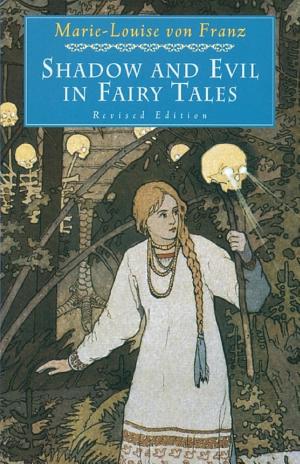
Marie-Louise von Franz opens Shadow and Evil in Fairy Tales with what appears to be a conceptual housekeeping exercise—defining the shadow—but what she actually delivers is a surgical separation of two psychic phenomena that Western moral thought has catastrophically fused. The shadow, as she inherits the term from Jung, is “the dark, unlived, and repressed side of the ego complex,” yet she immediately complicates this by recalling Jung’s own exasperated correction: “The shadow is simply the whole unconscious.” This oscillation is not carelessness. It reflects von Franz’s core thesis that the shadow is a relative, relational concept—its content shifts depending on the analysand’s developmental stage—whereas evil in fairy tales operates as an autonomous, archetypal force with its own intelligence and agency. The book’s two-part structure (Part One: Shadow; Part Two: Evil) is therefore not a pedagogical convenience but an ontological claim. The shoemaker in “The Two Travelers” who gouges out the tailor’s eyes is a shadow figure—envious, destructive, but comprehensible within the economy of ego development. The Baba Yaga who decorates her fence with human skulls operates on a different register entirely: she is an expression of the Great Mother archetype in its devouring aspect, and her demands cannot be met through moral improvement but only through alignment with a deeper instinctual wisdom—the doll Vasilisa carries, given by her dying mother. This distinction has immense clinical consequence. To treat an encounter with genuine archetypal evil as if it were merely a shadow integration problem is to bring a pocketknife to a dragon fight.
Fairy Tales Are Undigested Dreams of the Collective Unconscious, Not Therapeutic Allegories
Von Franz’s most radical methodological claim—one that separates her from popularizers of Jungian fairy tale work like Clarissa Pinkola Estés—is that fairy tales are “a pure nature product” showing “how nature plays with itself.” They are not moral instruction, not individuation narratives mapped onto a heroic arc, but compensatory formations analogous to dreams that are recorded but never reflected upon. Religious mythologies, alchemical philosophies, and theological systems represent the collective consciousness entering into dialogue with such material, metabolizing it into doctrine. Fairy tales, by contrast, remain raw. This is why their endings so often feel incomplete or brutal: the evil witch is executed, “but no sooner is the witch executed in one story than up she pops immediately in the next one.” The destructive archetype returns to latency, not to resolution. Von Franz observes that triadic formations—common in fairy tales—tend to leave this open question mark, while quaternarian structures, more frequent in alchemy and formal mythology, press toward fuller integration. This insight connects directly to Edward Edinger’s work in Ego and Archetype, where the ego-Self axis provides the structural framework for understanding why some compensatory processes reach consciousness and others cycle endlessly. Von Franz is describing what happens when the axis is absent: the unconscious generates compensatory images that no ego receives.
Evil’s Thermal Spectrum: Hot and Cold as Diagnostic Categories for Archetypal Destructiveness
The book’s second half introduces a distinction between “hot evil” and “cold evil” that has no precedent in Jung’s own writing and no real parallel in the broader tradition. Hot evil is affect-driven, explosive, recognizably passionate—the Rauder figure in “Prince Ring” with his red hat and murderous envy, or the impulsive rage of possession states. Cold evil is calculated, dissociated, operating through intellectual cunning and magical contest. Von Franz links this to the modern danger she identifies with startling prescience: “The real danger for us is when these forces combine with high scientific intelligence.” The magical contest motif—shamans and sorcerers competing for dominance—becomes her template for understanding how evil harnesses tradition, knowledge, and systematic thought. Against this, she poses the figure of the horse in the Irish fairy tale, representing “creative, instinctual spontaneity” that “can never be foreseen” and is therefore immune to co-optation. This is not anti-intellectualism. It is an argument that the deepest layer of psychic orientation—what Jung called the Self’s regulatory function—operates below the threshold of any codified system, including Jungian psychology itself. The parallel to James Hillman’s critique of systematic ego-psychology in Re-Visioning Psychology is unmistakable, though von Franz arrives at a similar destination from the opposite direction: where Hillman dismantles the ego’s pretensions from above through polytheistic imagining, von Franz undermines them from below through the instinctual wisdom of animal helpers.
The Shadow’s Envy Is a Map to Unlived Life
Perhaps the book’s most clinically useful insight is von Franz’s reframing of envy. The shadow figure Rauder envies Prince Ring, and this envy “is a misunderstood compulsion to achieve something within oneself that one has neglected. It springs from a vague awareness of a deficiency in one’s character.” This is not a moral observation but a phenomenological one: envy functions as a compass needle pointing toward what the psyche needs to develop. The object of envy embodies “what one might oneself have created or achieved.” This reframing transforms the therapeutic encounter with shadow material. Rather than asking “How do I overcome this darkness?” the analysand learns to ask “What is this darkness trying to build?” The connection to Donald Kalsched’s work in The Inner World of Trauma is illuminating: where Kalsched describes the self-care system’s protector-persecutor as a figure that simultaneously guards and imprisons the personal spirit, von Franz shows the collective unconscious producing structurally identical figures—shadow companions who both torment and catalyze the hero. The difference is scale: Kalsched works at the level of developmental trauma, von Franz at the level of species-wide psychic patterning, but the dynamic is the same.
Why This Book Remains Irreplaceable
What Shadow and Evil in Fairy Tales offers that no other depth psychology text provides is a rigorous phenomenology of collective evil that refuses both theological abstraction and clinical reductionism. Von Franz does not explain evil away as failed development, nor does she inflate it into metaphysical dualism. She shows it operating in fairy tales as an autonomous psychic reality with its own temperatures, its own intelligence, and its own relationship to consciousness—a reality that demands different responses depending on whether one faces a shadow (integrate it), a possession state (resist it), or an archetypal force of genuine cold evil (outmaneuver it through instinctual alignment with the Self). For anyone working clinically with destructive complexes, addictions, or the aftermath of encounters with human malice, this differential diagnosis is not academic. It is the difference between healing and being devoured.
Sources Cited
- von Franz, M.-L. (1974). Shadow and Evil in Fairy Tales. Spring Publications; revised edition, Shambhala, 1995.
- Jung, C.G. (1951). Aion: Researches into the Phenomenology of the Self. In Collected Works, Vol. 9ii. Princeton University Press.
- von Franz, M.-L. (1970). The Interpretation of Fairy Tales. Spring Publications.