 Seba.Health

Key Takeaways
- Rudhyar does not psychologize astrology; he ontologizes it — repositioning the birth chart not as a personality profile but as the archetypal Form of individual selfhood, making astrology a discipline of formal causation rather than empirical prediction.
- The book's central move is to dissolve the boundary between Jung's individuation process and astrological practice by arguing that the natal chart is the mandala of the Self — the very "seed-Image of destiny" that depth psychology can only approach indirectly through dreams and active imagination.
- Rudhyar's concept of "Harmonic Astrology" anticipates by decades the humanistic and transpersonal psychology movements, offering a framework where no planetary configuration is inherently pathological — a position that structurally parallels James Hillman's later insistence that the soul's images must not be corrected but honored.
The Birth Chart as Archetypal Form: Rudhyar Recasts Astrology as a Discipline of Formal Causation
Dane Rudhyar’s The Astrology of Personality is not a book about astrology in any conventional sense. It is a philosophical treatise that reclaims astrology from empiricism and fortune-telling by grounding it in what Aristotle called formal causation — the patterning intelligence that makes a thing what it is. Rudhyar insists that astrology is “the algebra of life,” drawing on the Arabic root al-jebr (the binding together of parts into a whole) to argue that the birth chart is not a catalogue of traits or a probability matrix for events but a structural formula defining the individual’s relationship to the cosmos. Where modern science pursno the material causes of phenomena, astrology addresses what Rudhyar calls the “archetypal Form” of individual selfhood — “the signature of the birth-moment, the form taken by universal Life according to a particular set of time-space values.” This is not metaphor. Rudhyar distinguishes rigorously between form and body, between the blueprint and the building: “Form is an abstraction. It signifies the essential patterning or relationship of parts within a whole by means of which this whole is defined as a particular entity.” The birth chart, then, is a mandala of formal relationships, and astrology’s purpose is to make this form conscious so that the individual can build the psycho-mental organism — the Soul — in accordance with its inherent design. This places Rudhyar’s project in direct structural alignment with Jung’s concept of individuation, but with a decisive advantage: where Jungian analysis must excavate the archetypal pattern from dreams, symptoms, and projections, astrology offers it complete at the moment of birth.
Seed-Psychology Against Psycho-Analysis: Rudhyar’s Inversion of the Depth-Psychological Method
The most radical claim in the book is the proposal of what Rudhyar calls “Harmonic Psychology” or “Seed-Psychology” — a synthetic mode of perception that grasps the individual’s destiny as a unified chord of life-forces rather than dissecting the psyche into fragments. “While psycho-analysis deals analytically and empirically with the many elements that together constitute the human psyche,” Rudhyar writes, “harmonic psychology operates by synthetic perception, establishing itself at a point whence the soul and destiny of man are seen integrated into a fundamental Chord of life-forces, a seed-form, an organic symbol of selfhood.” This is an explicit inversion of the Freudian and even the Jungian method. Where Jung’s analytical psychology begins with the multiplicity of the unconscious and works toward integration, Rudhyar begins with the whole — the birth chart as the already-given image of wholeness — and works to bring that image into conscious alignment with the personality’s lived expression. The implications for depth psychology are profound. Edward Edinger’s Ego and the Archetype locates the drama of individuation in the ego’s progressive encounter with the Self, a process fraught with inflation and alienation. Rudhyar effectively argues that the birth chart is the Self’s blueprint, available from the first breath, and that the ego’s task is not heroic discovery but faithful attunement. “We substitute the vision of the unity of a life-process for the psychological vivisection of man into symbolic fragments.” This is not anti-psychological; it is meta-psychological — a claim that the symbolic system of astrology can hold the totality that analysis can only approach piecemeal.
No Planet Is Pathological: The Ethical Revolution Hidden in Rudhyar’s Holism
Perhaps the most consequential philosophical move in the text is the insistence that no element of the birth chart — no planet, no aspect, no configuration — is inherently malefic. “Every birth-chart is as ‘good’ as any other, in the sense that it symbolizes what the person potentially is and what he is meant to achieve.” This is not naive optimism; it is a rigorous application of Jan Smuts’s holistic philosophy and Jung’s concept of the Self as the totality that includes all opposites. Rudhyar explicitly warns against identification with any single planetary energy: “All (temporary) evil in a life arises from the fact that one type of energy in the personality has grown so strong as to impose its will upon the whole personality.” The integrated person can say “There is hate, or anger, or love rising within me” without collapsing the “I” into that function. This anticipates James Hillman’s Re-Visioning Psychology by four decades. Hillman’s insistence that pathology be “seen through” rather than eliminated, that each symptom carries the soul’s intention, finds its astrological precursor in Rudhyar’s refusal to label Saturn as malefic or the twelfth house as unfortunate. Both thinkers reject the therapeutic imperative to normalize. But where Hillman grounds his argument in the autonomy of the image, Rudhyar grounds his in the integrity of the cosmic pattern. The difficult chart is not a curse but a summons: “an ‘easy’ birth-chart means little release of power from the greater Whole in which we are parts; a ‘difficult’ birth-chart, a great release of such spiritual power.”
Astrology as the Alchemy of Personality: Why This Book Remains Structurally Necessary
Rudhyar closes his treatise with a formulation that crystallizes its entire project: “The goal of astrology is the alchemy of personality. It is to transform chaos into cosmos, collective human nature into individual and creative personality.” This is not a decorative conclusion. The word alchemy carries its full Jungian weight — the opus of transforming base psychic material into the gold of integrated selfhood. What Rudhyar adds to Jung, to Edinger, to Hillman, is a concrete symbolic technology. The birth chart provides what active imagination, dream analysis, and amplification provide only in fragments: a total image of the Self’s formal intention for this life. For anyone navigating depth psychology today, The Astrology of Personality poses an unavoidable challenge. It asks whether the individuation process needs a map that precedes the journey — not a prediction of what will happen, but a revelation of what the soul already is. No other book in the tradition makes this argument with such philosophical rigor, such command of symbolic logic, and such unflinching refusal to reduce the individual to either empirical data or occult dogma. It remains the single most important text for understanding how astrology and depth psychology are not parallel disciplines but two faces of the same commitment to wholeness.
Sources Cited
- Rudhyar, D. (1936). The Astrology of Personality: A Re-Formulation of Astrological Concepts and Ideals in Terms of Contemporary Psychology and Philosophy. Aurora Press.
- Jung, C.G. (1971). Psychological Types. Collected Works, Vol. 6. Princeton University Press.
- Smuts, J.C. (1926). Holism and Evolution. Macmillan.
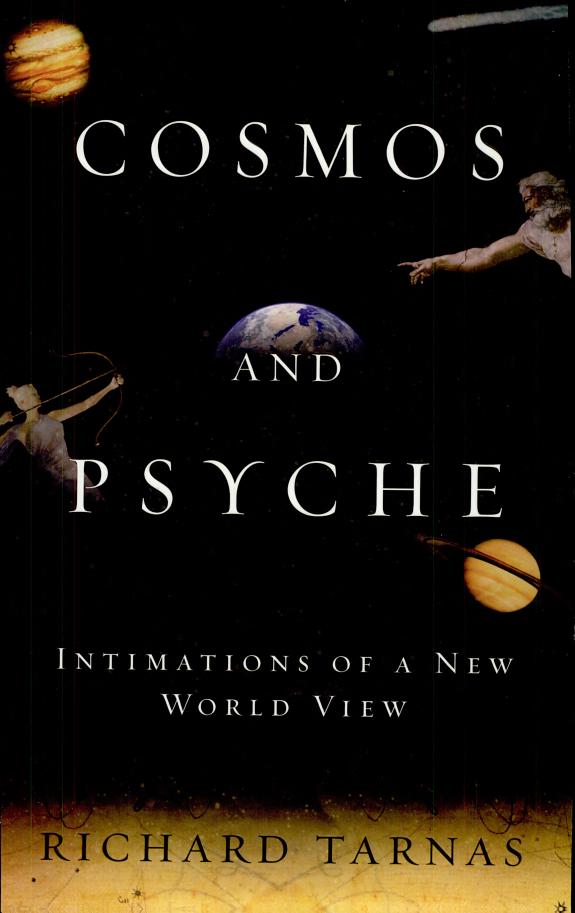
- Tarnas, R. (2006). Cosmos and Psyche: Intimations of a New World View. Viking/Penguin.