 Seba.Health
Key Takeaways
- Damasio's architecture of consciousness—protoself, core self, autobiographical self—provides the neurobiological substrate that Jung intuited as the ego-Self axis, grounding a century of depth psychological theory in the homeostatic imperatives of living tissue.
- The book's most radical claim is that consciousness did not evolve for knowing but for *feeling*—primordial feelings are the foundation, not the byproduct, of mind, which inverts the Cartesian hierarchy that still haunts both neuroscience and psychotherapy.
- By situating the self as a process of continuous biological construction rather than a fixed entity, Damasio converges with Bosnak's "multiplicity of selves" and Hillman's critique of ego-as-unity, yet does so from an entirely different epistemological tradition—making this the essential bridge text between neuroscience and depth psychology.
Consciousness Is Not a Spotlight but a Feeling Body: Damasio’s Overthrow of the Cartesian Theater
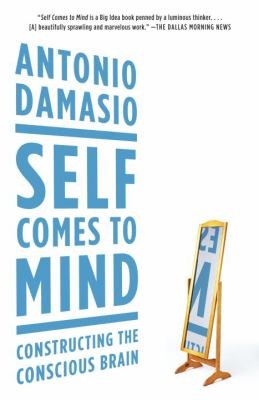
Antonio Damasio opens Self Comes to Mind with a deceptively simple question—how does the brain generate a mind that knows it exists?—and spends three hundred pages demonstrating that every prior answer has been contaminated by the very error it claims to correct. The Cartesian theater, in which a homunculus sits behind the eyes reviewing representations, persists not only in folk psychology but in professional neuroscience, where consciousness is still routinely treated as a property that appears once information is “globally available.” Damasio dismantles this by arguing that consciousness is not an epiphenomenal glow added to neural processing but an ancient biological function rooted in the body’s ceaseless effort to remain alive. The protoself—his term for the integrated, moment-by-moment neural mapping of the organism’s internal milieu—is not a representation of the body but the body’s own self-regulatory intelligence rendered in neural patterns. This is where Damasio meets, without citing, what James Hollis calls the Self that “selves”—“an activity of psyche whose function is to further the development of the individual.” Hollis describes this in the language of archetype and teleology; Damasio describes it in the language of brainstem nuclei and homeostatic regulation. They are pointing at the same phenomenon from incommensurable epistemological positions, and the convergence is more instructive than either account alone.
The Protoself-to-Autobiographical-Self Trajectory Maps Onto the Ego-Self Axis with Startling Precision
Damasio’s three-tiered model—protoself, core self, autobiographical self—is not merely a taxonomy of complexity but a developmental and dynamic sequence. The protoself generates primordial feelings (the dim, wordless sense of existing in a body); the core self arises when the organism registers that something in the environment has changed its internal state; the autobiographical self weaves these episodes into a continuous narrative identity using memory, anticipation, and cultural scaffolding. This sequence maps onto the Jungian ego-Self axis with startling specificity. Murray Stein, explicating Jung’s self theory, insists that “the self is paradoxically not oneself. It is more than one’s subjectivity, and its essence lies beyond the subjective realm.” Damasio’s protoself functions identically: it is the ground of subjectivity that no subject can access as an object. The core self, meanwhile, operates like what Edward Edinger calls the ego’s experience of the numinous—a momentary, affectively charged apprehension that something larger has been encountered. And the autobiographical self is, in Hillman’s devastating phrase, the ego’s “glittering hardness,” the narrative consolidation that simultaneously enables and imprisons. Hillman warns that “where we are most conscious… we are the least reflectively aware,” and Damasio’s neuroscience confirms this: the autobiographical self’s very coherence depends on selective inattention to the protoself’s signals. The ego, neurobiologically speaking, is a story that must forget its own origins in order to function.
Feeling Precedes Knowing: The Neuroscience That Vindicates the Imaginal
The book’s deepest provocation is its insistence that feeling is prior to cognition. Primordial feelings—the vague but persistent sense of being alive, of existing as this body in this moment—are not emotions about objects but the organism’s first-person registration of its own homeostatic state. They are, Damasio argues, the phylogenetically oldest form of consciousness, present in creatures that possess brainstems but lack cerebral cortices. This claim has enormous implications for depth psychology. Robert Bosnak’s practice of embodied imagination rests on the premise that “it takes a body to perceive imagination” and that “images are the embodiments of their own intelligence.” Damasio provides the neurobiological mechanism: the body’s interoceptive maps are the very medium through which images acquire their felt reality. When Bosnak induces a hypnagogic state to access dream figures as quasi-physical presences, he is working at the level of Damasio’s core self, where the organism’s internal milieu is maximally available to perturbation by image. John Beebe, citing Damasio explicitly in his work on typological consciousness, recognizes that the neuroscience of consciousness has renewed depth psychology’s engagement with how people actually know things—not as abstract cognition but as embodied, typologically inflected experiencing. Damasio’s framework makes the case that every cognitive function Jung identified is downstream of a feeling body that never stops monitoring its own survival.
Why This Book Matters: The Missing Bridge Between Soma and Psyche
Wolfgang Giegerich argues that the ego “can at best only preach individuation” because “there is no bridge from the ego to the Self.” Damasio’s work suggests that such a bridge does exist, but it runs through tissue, not concept. The self that “comes to mind” is not an idea but a continuous biological construction—a process that can be disrupted by brainstem lesions, distorted by trauma, and restored through interventions that engage the body’s own regulatory intelligence. For practitioners working at the intersection of neuroscience and analytical psychology, Self Comes to Mind is the indispensable text that translates depth psychology’s most abstract intuitions into falsifiable claims about neural architecture. It does not replace Jung or Hillman; it shows what they were talking about when they spoke of a self that transcends the ego. That self is not metaphysical in Damasio’s account—it is metabolic. And that difference changes everything about how we understand both consciousness and cure.
Sources Cited
- Damasio, A. (2010). Self Comes to Mind: Constructing the Conscious Brain. Pantheon. ISBN 978-0-307-47495-7.
- Damasio, A. (1999). The Feeling of What Happens: Body and Emotion in the Making of Consciousness. Harcourt.
- Damasio, A. (1994). Descartes' Error: Emotion, Reason, and the Human Brain. Putnam.
- Craig, A.D. (2015). How Do You Feel? An Interoceptive Moment with Your Neurobiological Self. Princeton University Press.